Even in 2026, Hyrule's most determined engineers are still finding new ways to make Tears of the Kingdom's physics engine raise an eyebrow. The community's latest obsession is quantum linking, a trick that lets players create invisible connections between objects and then stretch those connections far beyond what Ultrahand seems to allow. The refined version, called stake nudging, works on all game versions and does not require any major glitches. For a sandbox that has already produced hoverbikes, mechs, and flying machines, that is saying something.
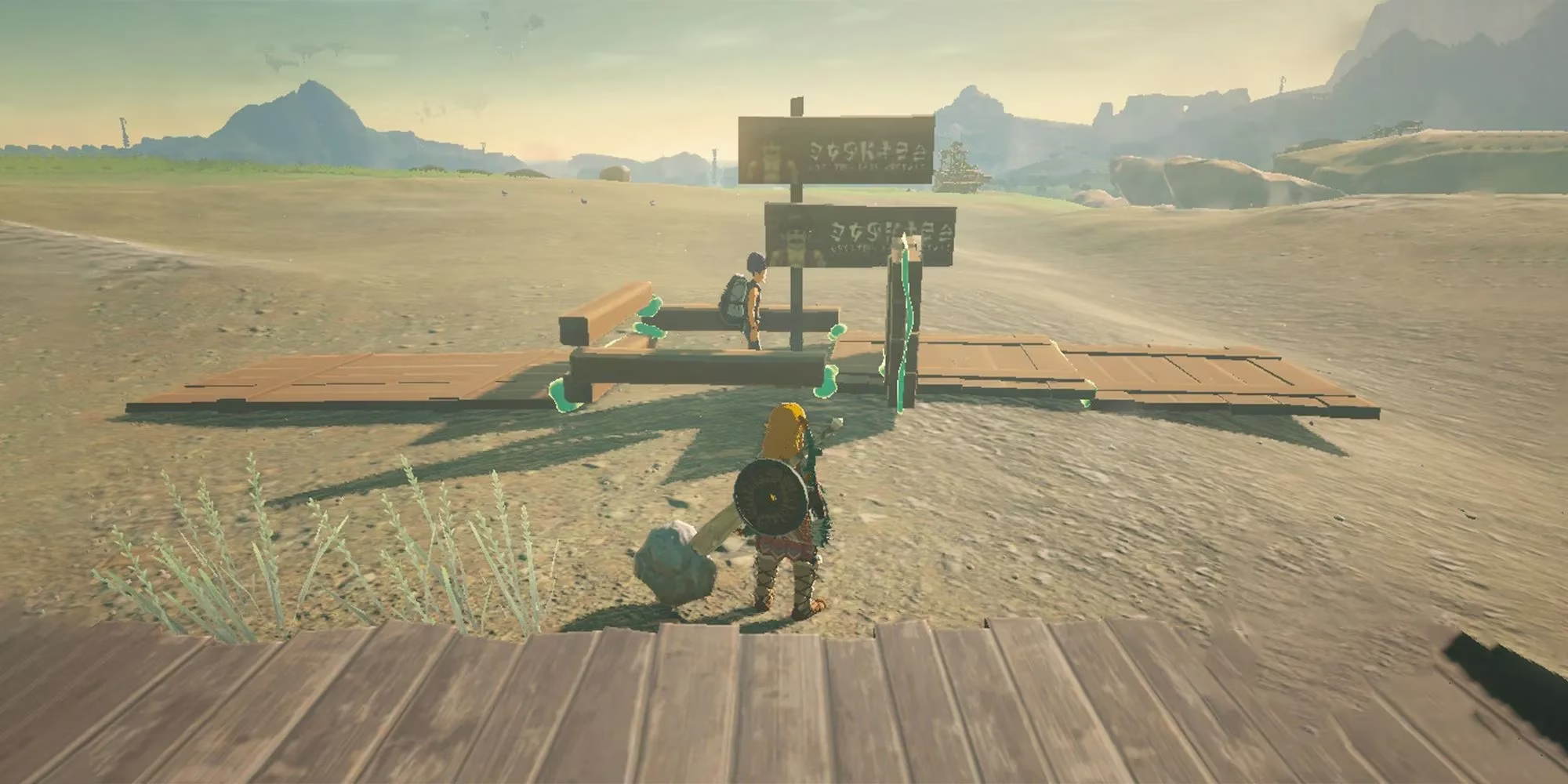
At its heart, quantum linking is a workaround for the game's 21-part limit. Instead of adding more physical pieces, players hide the connection. The components look separate. They are not. The green Ultrahand glue becomes a cosmetic ghost, while the actual bond keeps doing the quiet work. That means a machine can feel larger, stranger, and more efficient than its part count suggests. It also means players can adjust individual components by angles smaller than 45 degrees, something plain Ultrahand refuses to do. The tool has limits. The community keeps finding the seams.
How Stake Nudging Works
Here's the kicker: the process is almost absurdly simple. Secure two objects that need to be pulled apart with a Zonai stake. Then glue a second stake to one of those fixed components from a distance. This creates a small gap and stretches the green glue. The glue is visual theater. The invisible link is the real connection. Next, save the stretched contraption with Autobuild and reassemble it. Autobuild preserves the object positions but ignores glue tension. Repeat the second and third steps, and the gap grows. After several iterations, the green glue disappears. The parts remain linked. No kidding, it looks like the game has simply given up arguing.
| Step | Action | Why it matters |
|---|---|---|
| 1 | Secure two objects on a stake | Creates a stable starting point |
| 2 | Glue a second stake to one object from a distance | Stretches the glue and hides the gap |
| 3 | Save with Autobuild and reassemble | Keeps the stretched positions without tension |
| 4 | Repeat until satisfied | Widens the invisible connection |
Players can repeat the loop until they are happy with the size of the gap. There is no apparent limit, though large gaps are time-consuming because every change is incremental. It is less a single exploit and more a patient negotiation with the physics engine. The engine grumbles. The player nudges. The gap widens.
Why the Building Meta Is Shifting
Quantum linking has already ushered in a wave of ridiculous and impressive community creations. There is a plane made of suspended steaks. There is a gyroscopic hover bike. One player even used the trick as a humorous failsafe mechanism in a plane that only comes into effect once the machine's Zonai Wing disappears. That lets Link keep flying on a suspended Zonai Steering Stick invisibly linked with a pair of propellers. The list of tinkerers who helped develop quantum linking includes Reddit users BlockOfRawCopper, TheArtistFKAMinty, The_Janeway_Effect, PokeyTradrrr, and travvo.
The appeal is easy to understand. A normal build is a conversation with the part limit. A quantum-linked build is a loophole with a smile. Components hang in space. Propellers answer to invisible partners. Link stands on a steering stick that should have fallen long ago, and the machine keeps flying anyway. That's the magic trick. The game sees a small collection of parts. The player sees a machine that should not fit inside the rules.
The Trade-Offs
| Pros | Cons |
|---|---|
| Bypasses the 21-part limit in creative ways | Large gaps take time and repetition |
| Allows sub-45-degree orientation adjustments | The process is fiddly for newcomers |
| Works on all game versions without major glitches | Invisible links can confuse spectators |
| Produces bizarre, memorable machines | The incremental steps demand patience |
Quantum linking is not magic in the literal sense. It is a community name for a stubborn, clever exploit of Autobuild's memory and Ultrahand's glue. The result is a building meta that feels less like construction and more like choreography. A part does not need to touch another part to work with it. It only needs to remember where it was told to stay.
For longtime players, that is the appeal. Tears of the Kingdom was always a game about making the impossible look ordinary. In 2026, the community is still proving that the impossible has a few more inches left in it. Or a few hundred. The sandbox is not finished. It is just waiting for the next nudge.