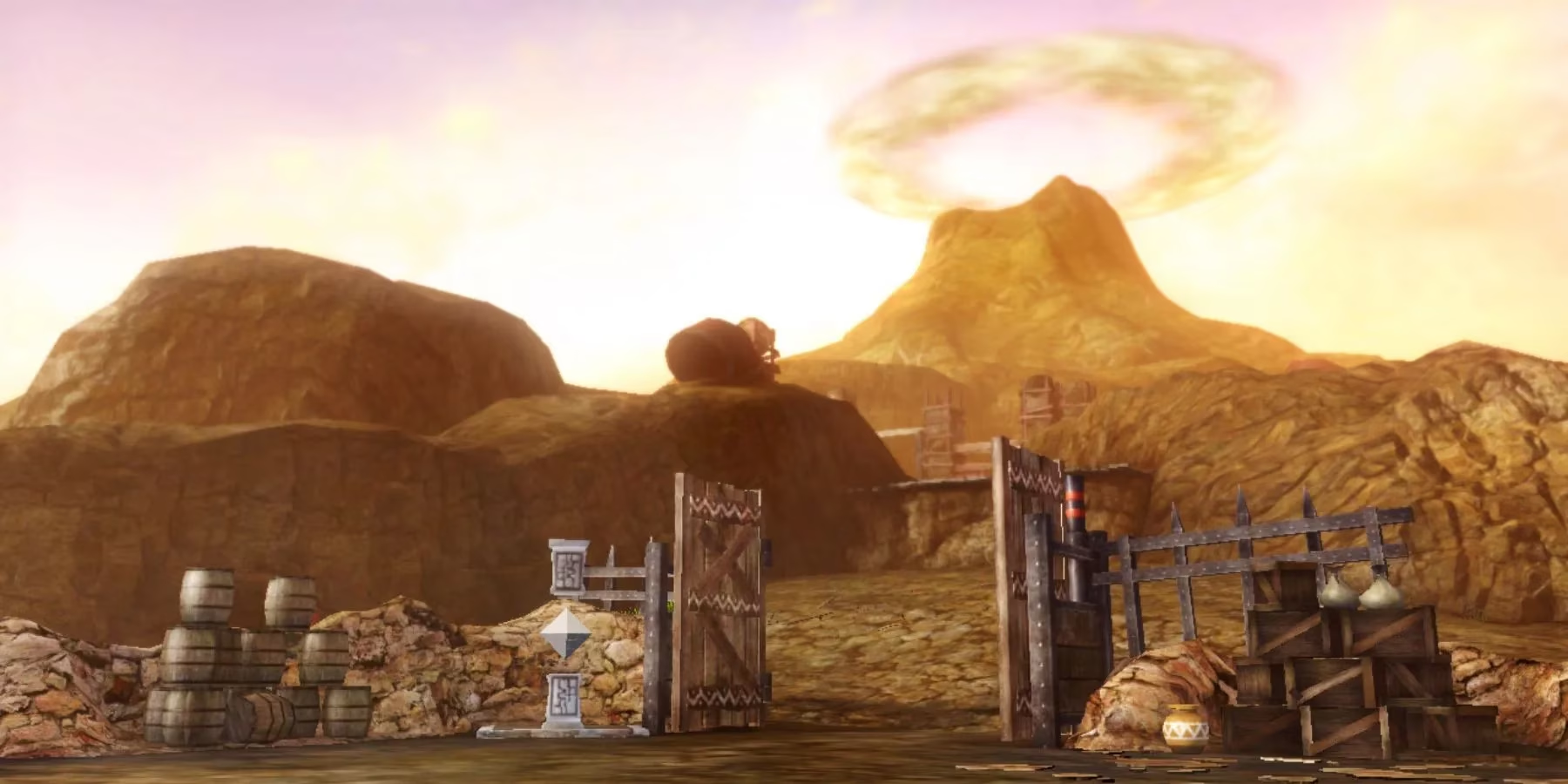
Across the sprawling Legend of Zelda series, few landmarks are as instantly recognizable as Death Mountain. It’s right up there with the Lost Woods, Zora’s Domain, and Hyrule Castle—but unlike those, this fiery peak has a serious identity crisis. 🔥 Have you ever noticed how some games make it a literal gateway to hell, while others turn it into a cozy (if still lava-drenched) home for the Gorons? That’s not an accident. For decades, Nintendo has swung Death Mountain between two wildly different personalities, and exploring that split is like uncovering a secret history of Hyrule itself. Let’s dive into the volcanic lore that has shaped one of gaming’s most dangerous pits—and, weirdly enough, one of its friendliest communities.
A Tale of Two Mountains: The 2D vs 3D Divide
If there’s one constant about Death Mountain, it’s the name. From the 1986 NES original all the way to 2023’s Tears of the Kingdom, this peak has stood for peril. But the flavor of peril? It changed dramatically when the series jumped to 3D. Let’s break it down with a quick overview of the games that feature the mountain most prominently:
| Era | Games with Death Mountain | Key Vibe |
|---|---|---|
| Classic 2D | The Legend of Zelda, The Adventure of Link, A Link to the Past, Four Swords, Four Swords Adventures, A Link Between Worlds | 🏰 Ganon’s backyard, maze-like hellscape, late-game dungeons |
| 3D Glory | Ocarina of Time, Twilight Princess, Breath of the Wild, Tears of the Kingdom | 🦍 Goron civilization, active volcano with trade and friends |
See the pattern? It’s almost like two different mountains sharing the same name. Why the split? The answer lies in how the developers evolved the series’ worldbuilding.
When Death Mountain Was Pure Evil (2D Era)
Back in the NES days, Death Mountain wasn’t just dangerous—it was corrupted. The original Legend of Zelda set the tone: the peak was guarded by those infuriating Lynels 😡 and surrounded by the Lost Hills, a space-warping nightmare zone that worked exactly like the Lost Woods. And guess what? Ganon himself built his Level 9 lair inside the mountain. That’s right—the final dungeon was literally a death fortress. This image stuck like magma. A Link to the Past continued the tradition with a late-game dungeon crawling with evil, and The Adventure of Link turned Death Mountain into a claustrophobic maze of tunnels that could drive any player mad. Even the multiplayer-focused Four Swords Adventures brought back the Lost Hills vibe through Hebra’s Hill. A Link Between Worlds, for all its brilliance, doubled down: not only did you get dungeons in both the Light and Dark Worlds, but the Treacherous Tower gauntlet reminded everyone that this peak respects no one.
In short, 2D Death Mountain was Ganon’s territory. It was where you went to prove you were a real hero—assuming you could even navigate the thing. There were no friendly faces, just monsters, traps, and the constant feeling that you were trespassing on sacred evil ground. And players loved it for that.
Then the Gorons Moved In (3D Revolution)
Ocarina of Time in 1998 changed everything. Suddenly, Death Mountain wasn’t a barren hellscape—it was a society. The Gorons, those lovable rock-eating giants, had built their home right on the volcano’s slope. Yes, it was still treacherous: lava flows, boulders tumbling down, and the occasional Goron rolling downhill like a living wrecking ball. But for the first time, you could walk into Goron City, hear their music, trade goods, and actually feel welcome. 😄
Every 3D Zelda since has followed this template. Twilight Princess gave us a Goron tribe troubled by a erupting mountain, with Link helping them restore peace. Breath of the Wild turned Death Mountain into a sprawling open-air region where you needed special gear just to survive the heat—but once you did, Goron City buzzed with commerce, mini-games, and side quests. Even the recent Tears of the Kingdom (still hot in 2026!) continues the tradition: the mountain is alive, dangerous, and full of friends. There’s always a dungeon or two causing trouble for the Gorons, and Link’s job is to clear it out so the lava hot springs and hearty meals can flow again.
So, what’s the secret sauce? The 3D games realized that a place named “Death Mountain” doesn’t have to be hostile to everyone. It can be a home. The Gorons embody that idea perfectly—they’re tough enough to thrive in an environment that would incinerate a Hylian, and their culture turns a death trap into a memorable destination.
Two Sides, One Legacy
But here’s the thing: even today, the old shadow lingers. In Breath of the Wild, you can still find traces of ancient evil on the mountain. And let’s be honest—every time you see that iconic silhouette smoking in the distance, your heart still pounds a little faster. 🌋 That’s the magic of Death Mountain. It’s a canvas that Nintendo can paint either with absolute dread or with rugged hospitality, and somehow both feel completely true to the name. Whether you’re sneaking past Lynels in 8-bit hell or sharing a grilled rock sirloin with a Goron elder, you’re experiencing the same legendary peak.
And that, fellow adventurers, is why Death Mountain remains one of gaming’s most compelling landscapes. So next time you boot up a Zelda game, ask yourself: which Death Mountain will it be? The villain’s fortress or the Gorons’ eternal barbecue? Either way, you’re in for a climb you won’t forget. 🗡️💀