As I soar through the crisp, thin air of Hyrule’s newly risen Sky Islands in The Legend of Zelda: Tears of the Kingdom, a profound sense of solitude washes over me. The game masterfully continues the franchise's 41-year legacy of weaving new tales into a rich, established tapestry of lore. Like its predecessors, Tears of the Kingdom carves its own compelling narrative while building upon the ever-evolving timeline that connects this beloved universe. Upon the Sky Islands' dramatic emergence during the Upheaval, I, alongside many fans, anticipated groundbreaking revelations that would bridge historical gaps and unify the saga's threads. The introduction of the ancient, enigmatic Zonai civilization and their floating domain seemed poised to answer long-standing questions. Yet, while the story is undeniably gripping, my adventures in the clouds have revealed a puzzling emptiness—a realm of immense potential that feels strangely uninhabited by the vibrant peoples of contemporary Hyrule.
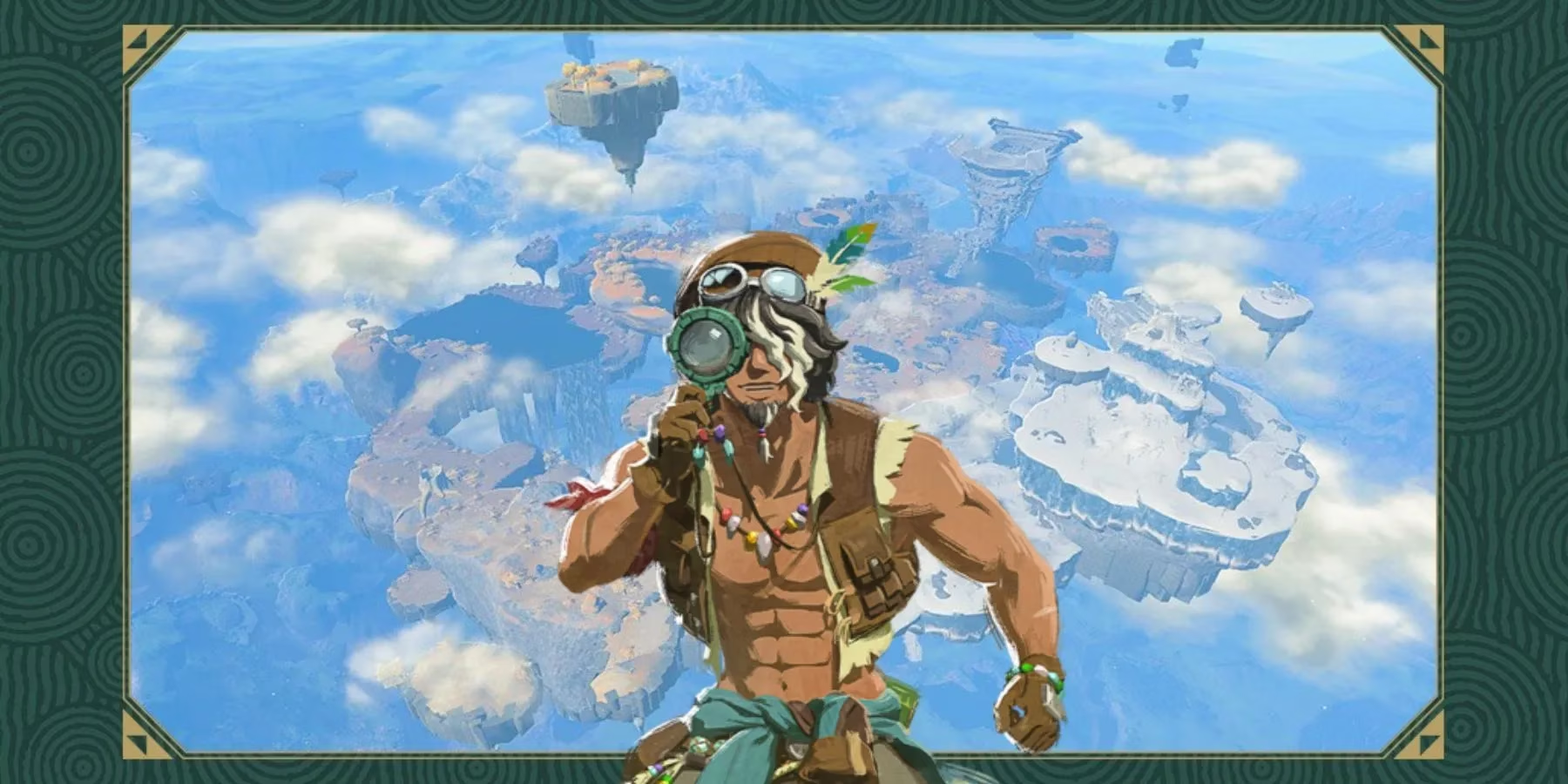
The Sky Islands themselves are breathtaking. They are majestic, fragmented landscapes suspended in the heavens, whispering secrets of the long-lost Zonai. Their aesthetic—ancient stonework intertwined with glowing green technology—immediately evokes memories of the skies from Skyward Sword, though the game wisely leaves any direct connection as an intriguing, unspoken echo for players to ponder. For the people living below on the surface, these sudden apparitions are a source of awe and mystery. Yet, as Link, I am seemingly the only one who can ever reach them. This narrative choice creates a powerful atmosphere of isolation, emphasizing Link's unique role as the hero. However, from a world-building perspective, it also feels like a significant oversight. Hyrule is populated by ingenious and curious races; the idea that not a single other soul could or would attempt to explore these mysterious new lands stretches credibility.
Let's consider the most obvious candidates: the Rito. These proud, bird-like people are literally built for the sky. Their entire culture is centered on flight, making their homes on mountain peaks and soaring through the clouds with grace. It seems a natural, instinctual progression that once the islands appeared, the Rito would be the first to investigate. One can easily imagine Rito scouts being dispatched, forming a vital aerial reconnaissance unit for the restored Hyrule. They could have established outposts, studied the Zonai architecture from a unique vantage point, or even encountered new aerial threats. Their absence is particularly conspicuous during the community efforts seen in the game. When the Rito unite with other Hyruleans, why weren't they enlisted as the premier explorers of the Zonai frontier? While some islands are shrouded in violent storms, vast stretches of the sky are clear and accessible—perfect for Rito wings.
Then there's the dedicated Zonai Research Team. This group's entire raison d'être is to study the Zonai. Their leader, the keen-eyed Robbie, and his associates spend their time on the surface examining ruins and devices. The notion that this team would not make ascending to the primary source of their research—the Zonai homeland itself—their absolute top priority is almost laughable. Hyrule in 2026 is littered with the means to achieve this ascent. The proliferation of Zonai devices provides ample opportunity for clever NPCs to engineer their way skyward.
Key Zonai Devices for Ascent:
🚀 Rocket: For a powerful vertical boost.
🌀 Fan: Provides sustained lift and propulsion.
🎈 Balloon: Offers slow, steady elevation.
✈️ Wing: Enables gliding and longer-distance travel.
Beyond loose devices, completed vehicles like the hot air balloons operated by certain NPCs already exist in the world. It's entirely plausible that adventurous merchants, treasure hunters, or scholars could have retrofitted these for skyward journeys. Think of the possibilities:
| NPC Type | Potential Sky Island Role |
|---|---|
| Merchants | Selling rare Zonai materials or unique sky-forged weapons. |
| Explorers | Setting up camps, providing side quests about island mysteries. |
| Beedle | Of course! "Oh! THANK YOU!" he'd exclaim, selling ancient beetle-shaped artifacts found only in the clouds. |
This lack of living NPC presence means the islands are populated solely by the automated Constructs. While these ancient guardians effectively convey the passage of time and the Zonai's technological prowess, they cannot replace the dynamic interactions that bring Hyrule to life. I miss the chatter of researchers debating a finding, the complaints of a Rito scout about the thin air, or the eager hustle of a merchant who risked it all for sky-bound profits. These interactions are the soul of Zelda's world.
Ultimately, the design choice to keep the skies lonely undoubtedly serves a thematic purpose. It accentuates the feeling that Link is walking in the footsteps of gods, traversing a sacred, abandoned space. The silence up there is palpable and often beautiful. However, it also represents a missed opportunity for richer storytelling and more immersive world-building. The Sky Islands are a phenomenal addition to Hyrule's geography, but in 2026, as we celebrate the depth of this universe, their emptiness highlights a gap between their incredible concept and their lived-in potential. The skies of Hyrule are majestic, but they are, perhaps, too quiet.
This overview is based on reporting from GamesIndustry.biz, and it helps frame why Tears of the Kingdom keeps the Sky Islands so sparsely populated: large open worlds often balance narrative intent against production realities like NPC AI navigation, quest routing, and performance budgets across a vast vertical playspace. In that light, the islands’ quiet, Construct-only design can be read as a deliberate scope choice—prioritizing contemplative exploration and mechanical freedom over adding additional factions (like Rito scouts or research camps) that would demand persistent schedules, dialogue states, and systemic reactivity in the sky.