As the calendar flips to 2026, The Legend of Zelda stands tall as one of gaming's few sure bets for the future. Some franchises come and go like fashion trends, but Zelda's heritage and consistent quality mean it would have to faceplant spectacularly—and repeatedly—for Nintendo to even think about putting it on the shelf. Sure, some folks might argue the series is living its best life thanks to recent innovations, but let's be real: after the earth-shattering success of Breath of the Wild and Tears of the Kingdom, Nintendo finds itself at a genuine crossroads. Do they stick with what's been working like a charm, or heed the siren call for something fresh? The art style is the perfect poster child for this dilemma—it's brilliant in the recent hits, but hey, new toys are always more exciting than the old ones, right?
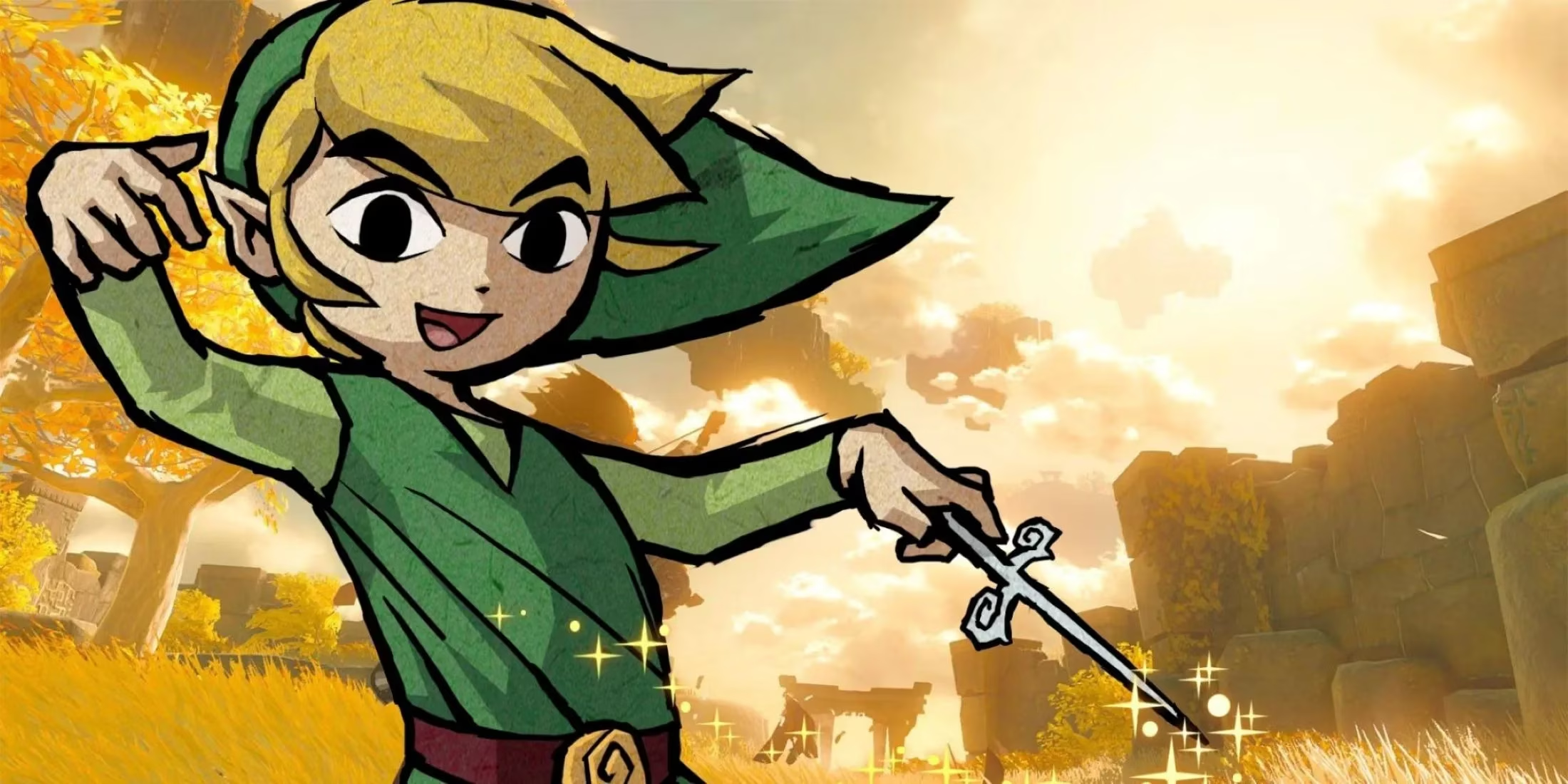
Let's talk about those visuals. Breath of the Wild was a looker—distinctive, beautiful, and cleverly designed to work within the, ahem, "creative limitations" of the Wii U and Nintendo Switch. It had charm for days without trying to compete in the AAA graphics arms race. This smart approach meant it could serve up a massive, environmentally diverse open world without making players twiddle their thumbs through endless loading screens. It was unique in its artistry and kinda future-proof in how it was built. Not too shabby!
Then along came Tears of the Kingdom, which took the same visual recipe but tossed in some new ingredients. By adding the Sky Islands, Zonai elements, and The Depths, it didn't just reheat the leftovers—it cooked up a whole new feast. The Sky Islands had this distinct yellowish tint and funky new plants that felt worlds apart from the ground below. And The Depths? They had their own spooky, mysterious vibe that kept exploration feeling fresh. Together, these two games showed that an art style can get a makeover with new flourishes, making each entry feel like its own thing. So, keeping what Breath of the Wild started doesn't mean Zelda's history of visual variety has to become ancient history.
Now, about that official Zelda timeline... bless its heart, it's a glorious, convoluted mess of wildly different stories. Each game is unique in approach but shares familiar characters and core story beats, making any attempt at a single, consistent timeline feel about as natural as a cucco in a thunderstorm. If Nintendo wants to double down on connecting future games and telling bigger, multi-game narratives, using a repeatable art style—with tweaks in colors or environments—could give The Legend of Zelda a clearer identity. Imagine that!
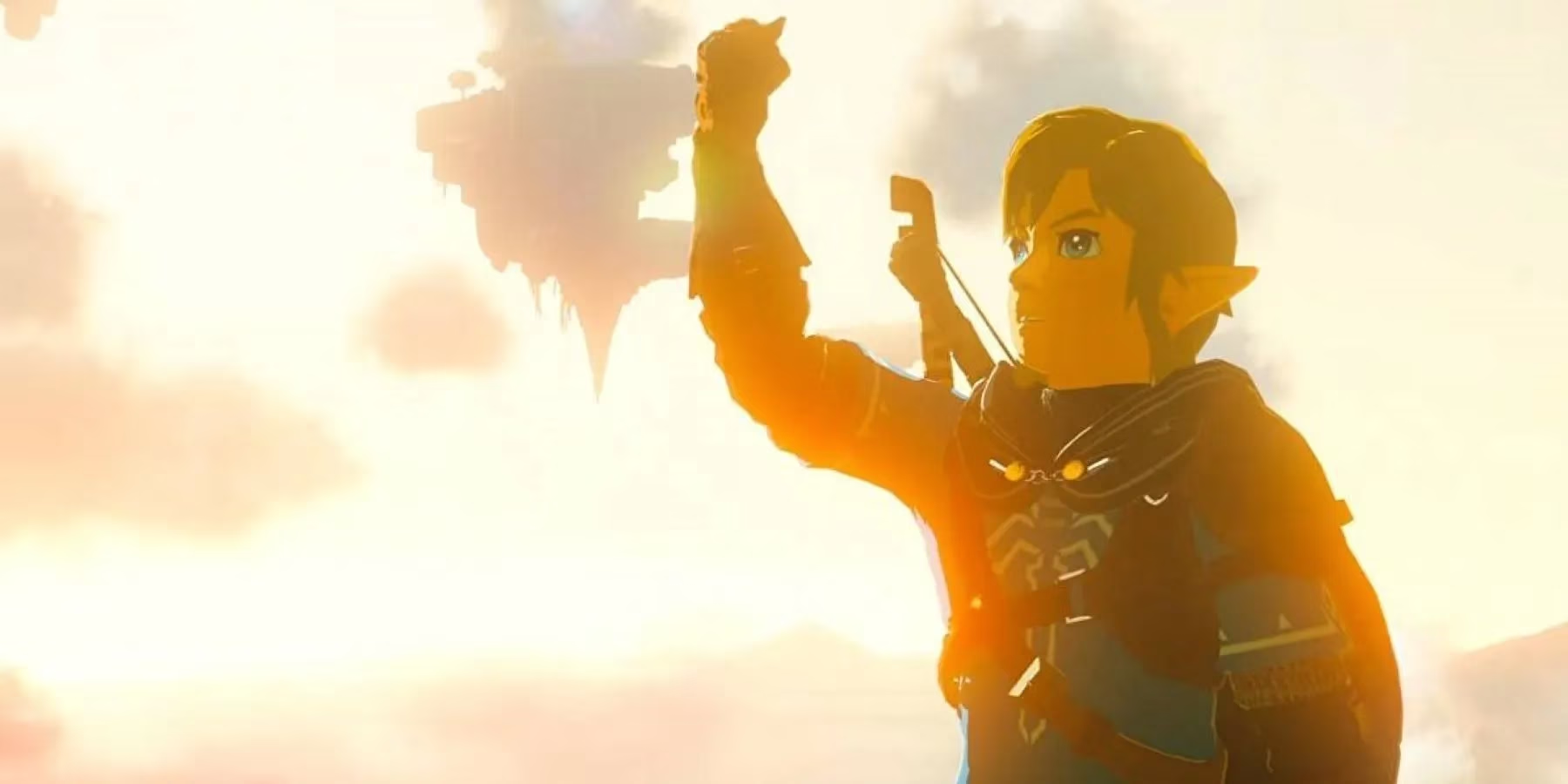
For a big chunk of its life, much like Super Mario, the way each Zelda game looks has been one of the biggest and most exciting surprises before launch. Seeing what weird and wonderful direction the franchise heads next keeps fans on their toes and does a stellar job of ensuring the future always has that layer of "what on earth will they do next?" unpredictability. However—and here's the kicker—Super Mario itself has had its struggles with visuals over the years. Each entry sports a familiar art style, and because of that, they've lost some of the charm and distinctiveness of classics like Super Mario Bros. 3 and Yoshi's Island, which all feel iconic in their own right. Zelda should do its darndest to avoid tripping into that same trap.
It's not just about Zelda, though. The different visual styles are often major landmarks for Nintendo as a whole. Each new Zelda title is a milestone and a crucial part of each Nintendo system, quickly becoming synonymous with the hardware. Some fans are instantly whisked back to the GameCube era just by the cel-shaded visuals of The Wind Waker. Similarly, the darker, moodier themes of Majora's Mask are etched into the identity of its Nintendo era. These games aren't just games; they're time capsules.
So, where does that leave us in 2026? Here are the key points to chew on:
-
The Art Style Crossroads: Nintendo can either evolve the successful BotW/TotK style or swing for a completely new look. Both paths have risks and rewards.
-
Technical & Artistic Balance: The current style proved you can have beauty without bleeding-edge hardware demands. Future tech (hello, Switch successor!) might change the game.
-
Identity vs. Variety: A consistent style could strengthen the series' identity for interconnected stories, but radical changes keep the brand feeling fresh and unpredictable.
-
The Mario Precedent: Learning from Mario's visual journey—where consistency sometimes cost distinctiveness—is crucial for Zelda's future.
-
Hardware Synergy: Zelda visuals often define Nintendo console generations. The next art direction will likely be tied to the capabilities of Nintendo's upcoming hardware.
At the end of the day, Zelda's visual future is more than just picking a color palette or a rendering technique. It's about crafting an identity that can carry the series forward while honoring its legacy of surprise and wonder. Whether Nintendo decides to refine its current masterpiece or paint on a brand-new canvas, one thing's for sure: all eyes will be on what Link wears—and explores—next. The adventure, as always, continues.
This overview is based on evaluations from Eurogamer, and it frames Zelda’s visual “crossroads” as a balancing act between continuity and reinvention: keeping the BotW/TotK look can preserve readability in a systems-heavy open world while letting Nintendo iterate through bold environmental palettes (Sky/Depths-style contrasts), but a sharper pivot in art direction could also become the defining signature of the next hardware era—especially if Nintendo wants each new entry to feel like an unmistakable generational landmark rather than a comfortable extension.