As a lifelong fan who's spent countless hours exploring Hyrule in both its ruined and reconstructed states, I've been thinking a lot about where The Legend of Zelda goes from here. With the Nintendo Switch's successor now a reality and whispers about new hardware capabilities growing louder, the community's excitement for the next mainline Zelda adventure is palpable. Looking back at the monumental success of Breath of the Wild and Tears of the Kingdom, it's clear to me that their connected story structure wasn't just a happy accident—it was a blueprint for the future. While Nintendo has always been about innovation, sometimes the best path forward is to refine a winning formula.
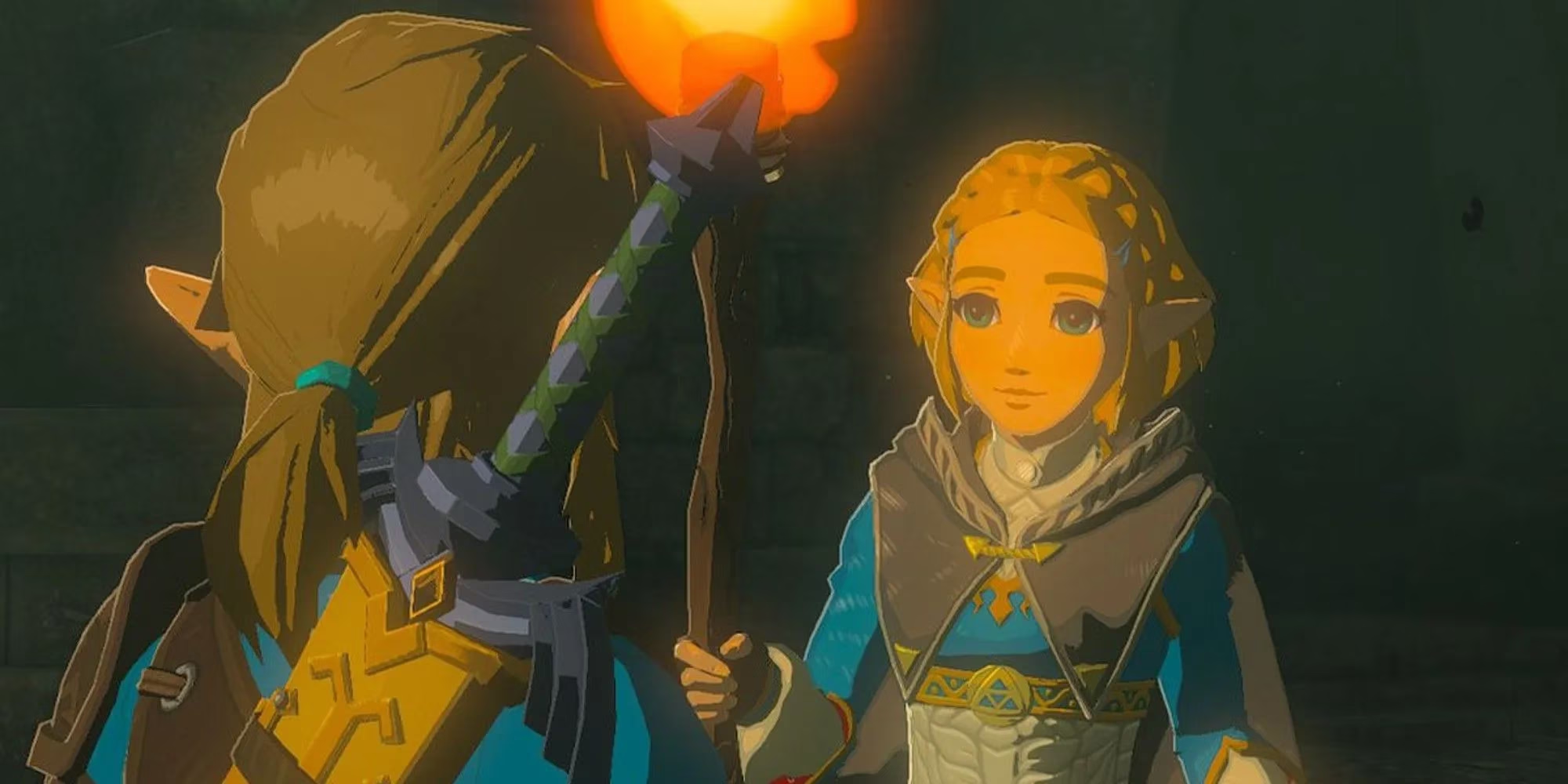
Why a Connected Saga Makes Sense in 2026
Let's be real—developing a massive, groundbreaking open-world game like Tears of the Kingdom takes years. Nintendo's development cycle for these titles shows they only move forward when they have a crystal-clear vision for both story and gameplay. A two-part saga allows them to think bigger. Imagine building an entire world in the first game, then using the sequel not to start from scratch, but to deepen and expand everything that came before. We saw glimpses of this with the Depths and the Sky Islands building on the foundation of Hyrule. In the future, this approach could mean:
-
Deeper character arcs where supporting characters from Game 1 become central to Game 2's plot
-
Evolving mechanics where a travel or combat system introduced in the first entry gets radically expanded in the second
-
Environmental storytelling where locations change meaningfully between games based on narrative events
Learning From the "Glorified DLC" Critique
Okay, I need to address the elephant in the room. Some players—myself included at times—felt Tears of the Kingdom borrowed too much from its predecessor. Eiji Aonuma himself admitted the game started as DLC before growing into its own beast. For a future two-part series to truly shine, the sequel needs its own strong identity. This doesn't mean throwing everything out, but rather:
-
Introducing significant new visual and gameplay assets that feel fresh
-
Ensuring the sequel's core premise stands independently while honoring the first game's story
-
Giving players new reasons to care about returning to a familiar world
The Side Quest Problem: Quality Over Quantity
Can we talk about Korok seeds? Please? I love Hestu. I really do. But collecting 1,000 of anything with a reward that's... let's say 'underwhelming'... feels like busywork in 2026. If future Zelda games keep their massive scope, side content needs to evolve:
| What We Had | What We Need |
|---|---|
| Hundreds of repetitive collection tasks | Fewer, more narratively-rich side adventures |
| Rewards that don't match the effort | Meaningful rewards that change gameplay or expand lore |
| Isolated activities | Side quests that tie into the world's evolving state between games |
A smaller number of truly memorable side stories would be far more impactful than a map littered with icons.
Building a Legacy, Not Just a Sequel
The speculation within the Zelda community right now is incredible. Theories about timelines, ancient civilizations, and unexplored regions of Hyrule are everywhere. A two-game structure directly fuels this engagement. The first game can plant mysteries, and the second can solve them while planting new ones. It creates a living conversation between the games and the players. This approach allows for:
-
Richer world-building where history feels continuous and consequential
-
Enemy evolution where foes from Game 1 return in Game 2 with new behaviors and weaknesses
-
Mechanical depth where players master systems in the first game, then see them transformed in the second
The Path Forward
As we stand in 2026, the gaming landscape is different than it was when Breath of the Wild launched. Players expect continuity, depth, and worlds that feel alive beyond a single 100-hour playthrough. A connected, two-game Zelda saga delivers exactly that. It respects the development team's time by allowing them to build upon their creations, and it respects the player's investment by making that world matter beyond a single title. Whether the next game is a standalone or part one of a new duology, the lessons from Link's last two adventures should light the way: build a foundation worth returning to, tell a story with room to grow, and always, always give us a reason to believe that adventure is still out there, waiting.