The expansive world of Hyrule, as shaped by The Legend of Zelda: Breath of the Wild and its direct sequel Tears of the Kingdom, stands at a narrative crossroads. While these titles redefined open-world adventure, their direct continuity presents a unique challenge for any potential successor. The established trick of transforming the same landscape—adding skies above and depths below—was masterfully executed in Tears of the Kingdom, but it's a formula not easily repeated. With Nintendo's recent clarification placing the BOTW/TOTK saga in a timeline separate from the rest of the convoluted Zelda chronology, the narrative is liberated from the weight of series-wide continuity. This freedom opens the door for a bold, century-leaping sequel that could fundamentally reimagine a core tenet of Zelda lore: the cyclical prophecy of the Gerudo.
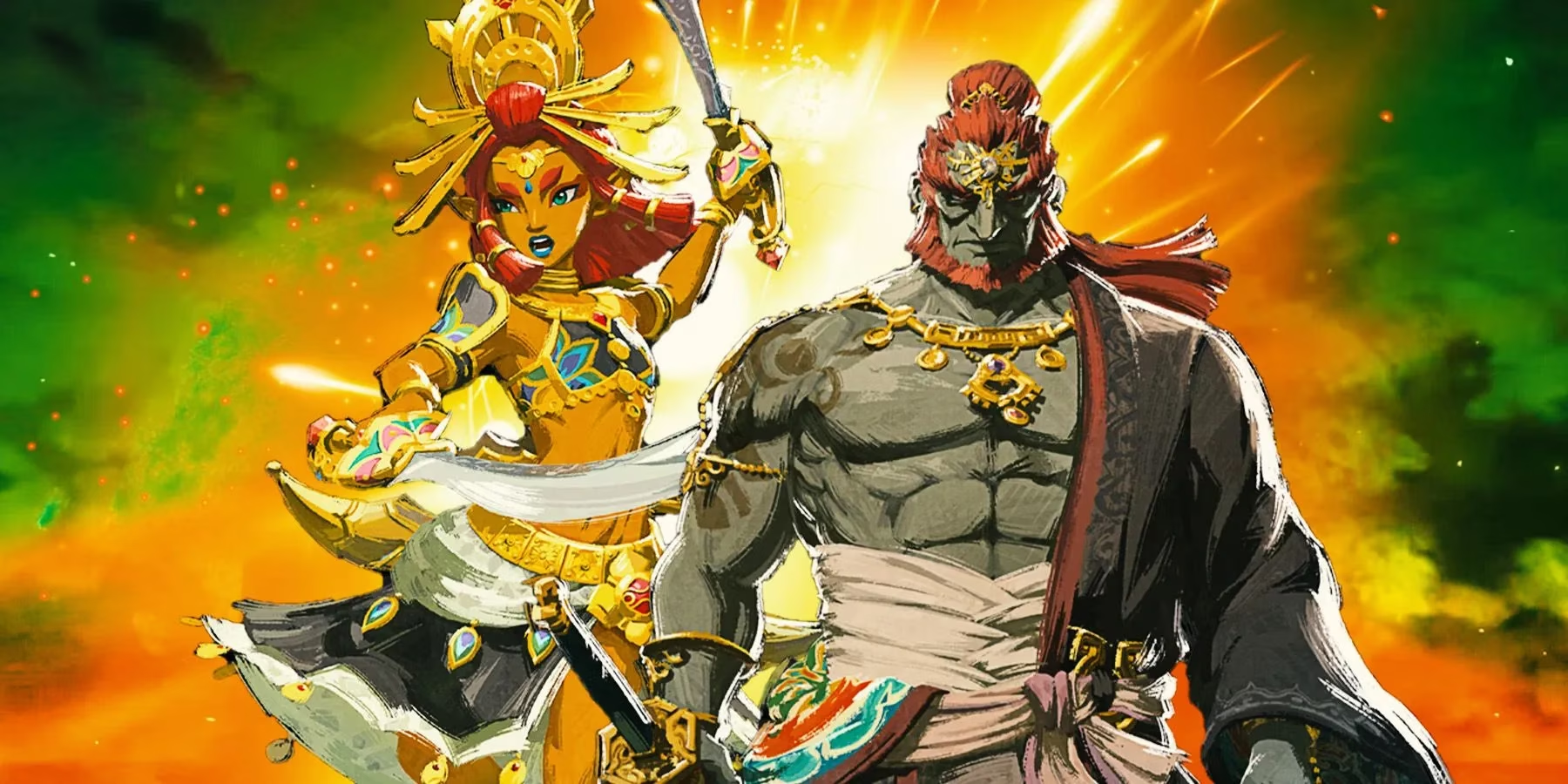
A sequel set 100 years into the future is a narratively elegant and thematically rich proposition. This timeframe is deeply embedded in Hyrule's history, most notably through the legend that a male is born to the Gerudo tribe only once every century. Traditionally, this male has been synonymous with the embodiment of the Demon King, Ganondorf. Tears of the Kingdom, however, presented a seemingly definitive end for this incarnation of Ganondorf, effectively resetting the infamous cycle. This creates a pristine narrative opportunity: the birth of a new Gerudo male king in a world where the shadow of Ganondorf has faded, but not been forgotten.
The Gerudo Prophecy: A Key to New Narratives
This concept is the linchpin for a fresh story. A new Gerudo monarch could walk a path utterly divergent from his infamous predecessor. The legacy of Ganondorf would loom over him, but it could manifest in countless compelling ways:
-
A Reluctant Heir: Burdened by the expectations and fears of a world that remembers only evil from Gerudo kings, he might strive to prove his worth as a benevolent or neutral leader.
-
A Reformed Antagonist: He could initially embrace a destiny of conquest, only to be redeemed through narrative events, becoming an unlikely ally to Link and Zelda.
-
An External Catalyst: The prejudice and fear from other Hyrulean races could ironically push a well-intentioned king toward conflict, exploring themes of destiny versus choice.
The Zelda series has a celebrated history of memorable villains beyond Ganondorf, such as the sorcerer Vaati or the flamboyant Ghirahim, proving that compelling antagonism doesn't require the Demon King. A Gerudo king who isn't Ganondorf could introduce a different kind of villainy—perhaps more political, strategic, or tragically misguided—or could even become a pivotal ally, adding a complex new dynamic to Hyrule's power structure.
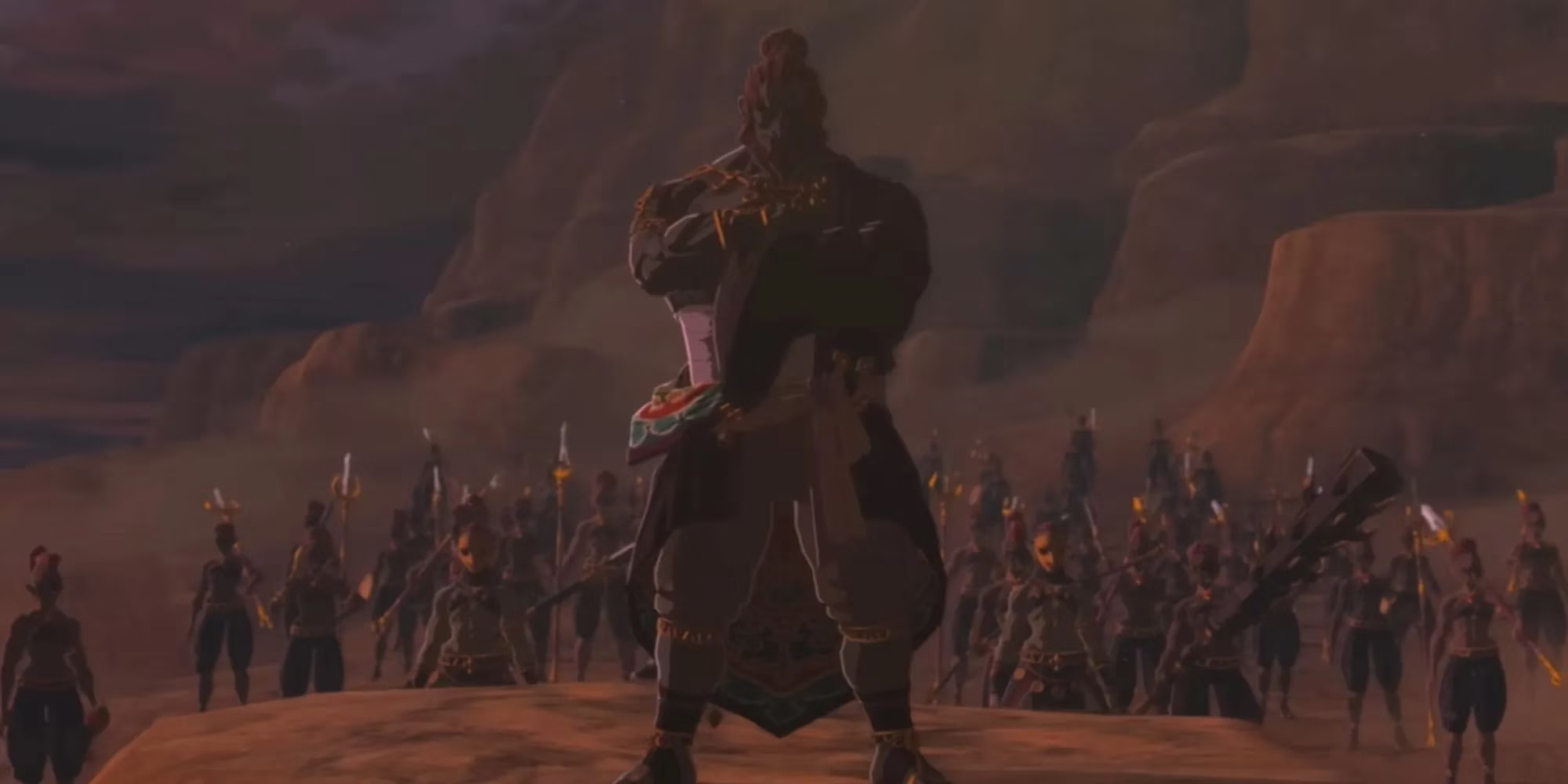
A Transformed World: 100 Years of Change
Leaping a century forward allows for another sweeping overhaul of Hyrule's geography and society, avoiding the pitfall of simply re-treading the same map. The passage of time facilitates profound change:
-
Societal Evolution: Villages like Hateno or Tarrey Town could have expanded into bustling cities. The Zora's Domain might have developed new aquatic technologies, while the Rito could have established sky-borne trade networks.
-
Environmental Shifts: Geological events, magical phenomena, or the lingering effects of the Upheaval from TOTK could have reshaped continents, creating entirely new regions to explore.
-
Technological Advancement: The Sheikah and Zonai technologies, now better understood, could have led to a new industrial or magical renaissance, changing how people live and travel.
The threat could be equally transformative. Instead of a rehashed Calamity, a new antagonist—perhaps the Gerudo king himself, or a threat he unleashes or tries to stop—could provoke a Third Great Calamity or an event that fundamentally alters the laws of nature in Hyrule. The story could also break free from Hyrule's borders entirely, propelled by new motivations into uncharted continents or realms.
Breaking the Formula: A New Timeline's Freedom
Nintendo has demonstrated a newfound willingness to experiment with core franchise formulas, as evidenced by the groundbreaking release of The Legend of Zelda: Echoes of Wisdom, which features Zelda as the primary protagonist. This sets a precedent for rule-breaking within standalone continuities. The BOTW/TOTK timeline, now officially distinct, is the perfect canvas for such innovation.
Without the constraints of a connected timeline, the developers can upend the central myth. What if the 100-year Gerudo male cycle was a misinterpretation? What if this new king's birth signals a different, perhaps even benevolent, cosmic event? The possibilities for subversion are endless:
-
A story where Link and Zelda must guide and protect the young Gerudo king from external forces that seek to destroy him for his lineage.
-
A narrative where the king's power is needed to unite the realms against a common, extra-dimensional foe.
-
A game that explores the internal politics and culture of the Gerudo in unprecedented depth, with the player navigating complex alliances.
Conclusion: The Perfect Setup for a New Legend
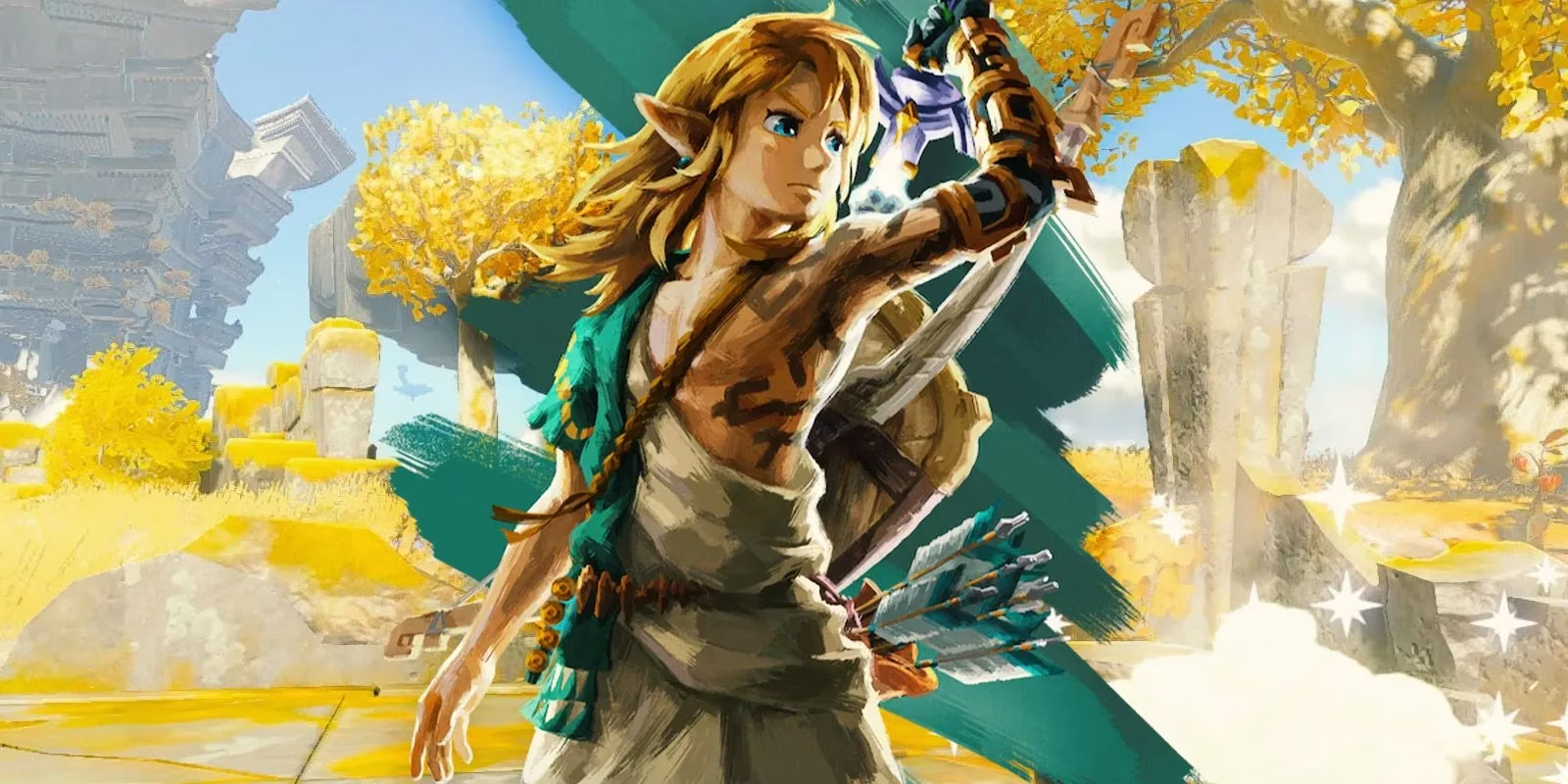
While Nintendo may choose to leave this version of Hyrule behind for a return to a more classic style, the narrative foundation laid by Breath of the Wild and Tears of the Kingdom is ripe for a forward-looking sequel. A jump of 100 years, centered on the enigmatic arrival of a new Gerudo male, provides the perfect catalyst to:
-
Refresh the World: Allow Hyrule to evolve naturally, offering players a familiar yet fundamentally new environment to discover.
-
Explore New Themes: Delve into legacy, prejudice, destiny, and the weight of history from a fresh perspective.
-
Introduce Novel Gameplay: New societies and technologies could enable unique mechanics, travel methods, and combat styles.
-
Honor and Subvert Lore: Respect the series' deep mythology while having the creative liberty to twist it in unexpected, exciting directions.
In 2026, the legacy of Tears of the Kingdom endures. A sequel embracing this century leap would not be a mere continuation but a renaissance, using the rich soil of the past to cultivate a future for Hyrule that is as unpredictable as it is thrilling. The cycle is broken; the future is unwritten.