The skeletal remains of colossal creatures scattered across the lands, skies, and depths of Hyrule continue to be one of the most compelling unsolved mysteries in The Legend of Zelda: Tears of the Kingdom. As of 2026, despite the game's expansive exploration of ancient history through the Zonai and the Imprisoning War, the origins, nature, and ultimate fate of the beings known as Leviathans remain shrouded in enigma. The developers' deliberate choice to deepen rather than resolve this lore has proven to be a masterstroke in environmental storytelling, leaving players with a profound sense of a world with secrets older than recorded time.
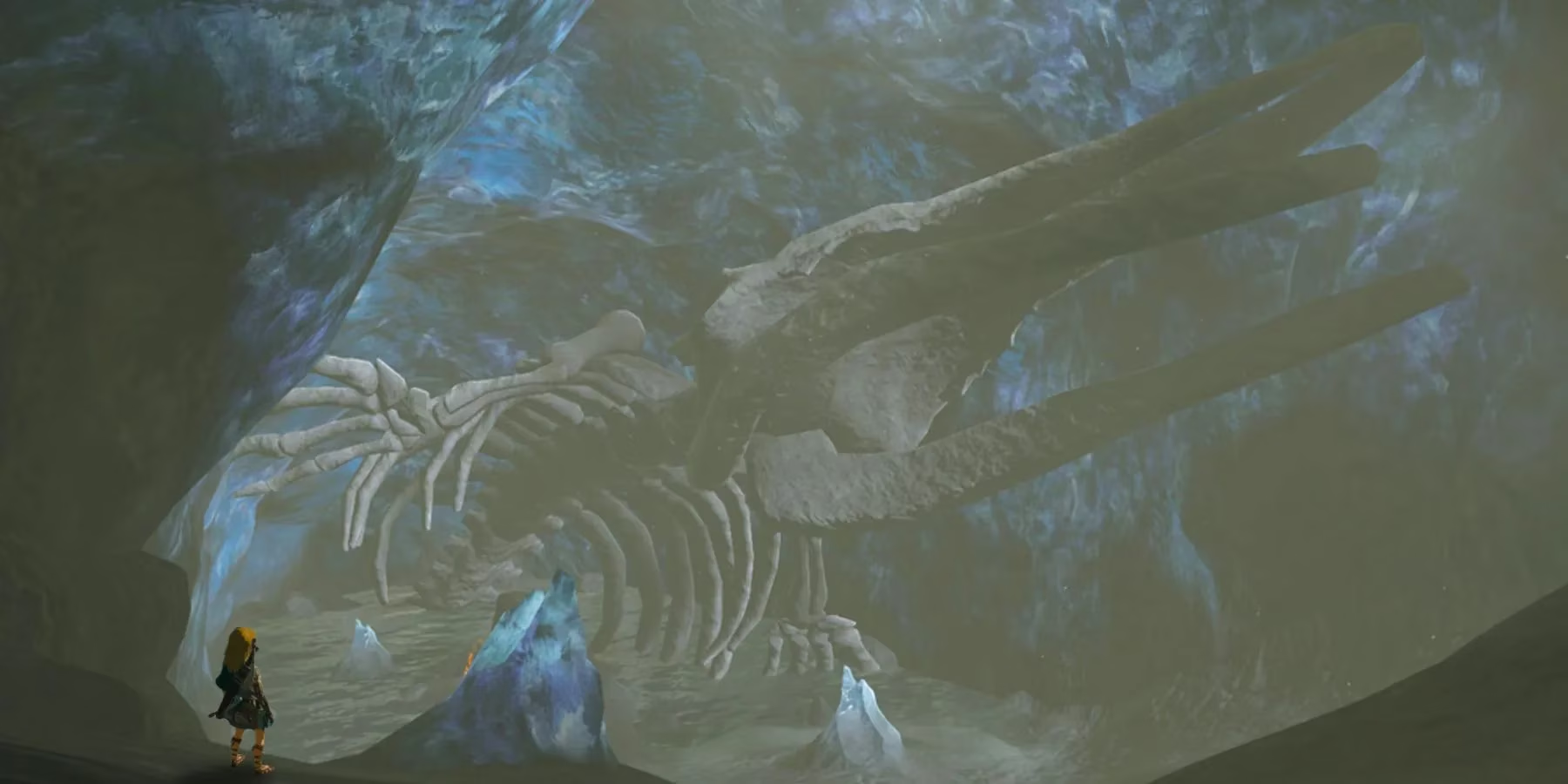
While Tears of the Kingdom expanded upon countless elements from its predecessor, Breath of the Wild, it notably maintained—and even amplified—the mystery surrounding the Leviathans. The game's primary narrative, focused on Ganondorf's return and the forgotten Zonai civilization, already wove a complex tapestry. Introducing a detailed subplot about the Leviathans might have overcrowded the story. Instead, their silent, monumental presence serves as a haunting backdrop, a reminder that Hyrule's history contains layers even its most ancient records do not touch.
The journey to understand these beings begins with their first explicit appearance in Breath of the Wild, where three gigantic skeletons were discovered in remote regions:
-
Hebra Skeleton: Located in the frigid north.
-
Eldin Skeleton: Found in the volcanic Death Mountain region.
-
Gerudo Skeleton: Resting in the desert sands.
These locations were often near places of power like Shrines or Great Fairy Fountains, hinting at a sacred or divine status. The side quest "Leviathan Bones" did little to provide answers, instead emphasizing that even Hyrule's scholars knew virtually nothing about them, solidifying their status as relics of a lost age.
Tears of the Kingdom's introduction of the sky islands and the vast subterranean Depths presented the perfect opportunity to shed light on this mystery. Yet, the game cleverly subverted expectations. Instead of providing clear answers, it added new, perplexing layers. The most significant development comes through the three-part "Colossal Fossil" side quest. Here, Link uses his Ultrahand and Fuse abilities to physically reassemble the skeletal remains from the previous game, offering players a stunning, tangible glimpse of the creatures' immense scale and structure.
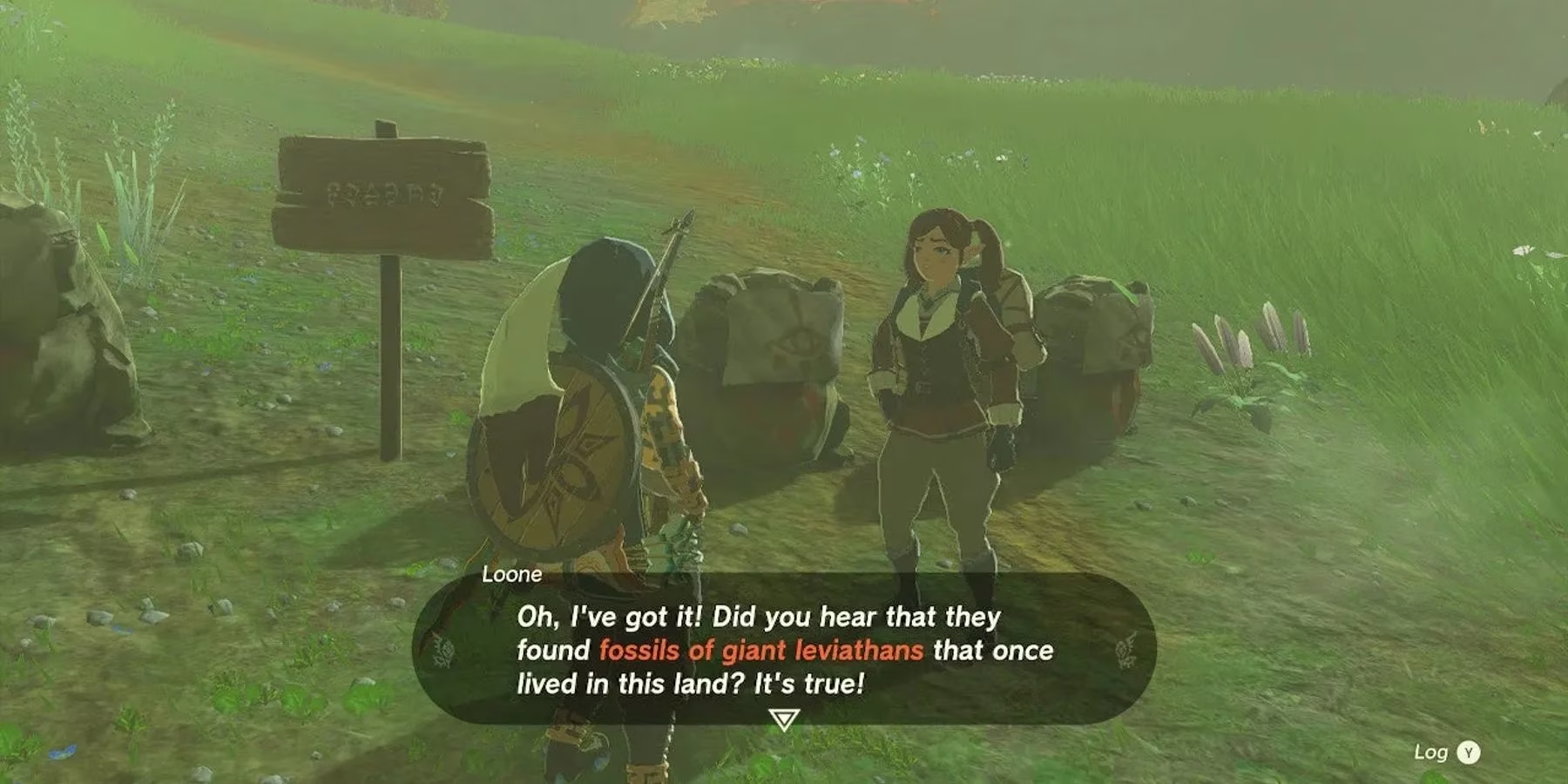
The quest-giver, the eccentric researcher Loone, provides intriguing, if theoretical, commentary. Upon completing the third fossil, she refers to it as a "Leviathan child." This offhand remark is a lore bombshell, suggesting that Leviathans were not monolithic giants but a race capable of reproduction, with varying sizes and potentially life stages. Furthermore, the fact that Ganondorf—a demon king who reanimates skeletal Stal enemies at will—never attempts to corrupt these particular bones is telling. It implies the Leviathans existed on a plane of power or sanctity beyond his reach, reinforcing their likely divine or pre-historic origins.
The mystery took a darker, more expansive turn beneath Hyrule. In the gloom-infested Depths, players discovered even larger, shadowy versions of these skeletons. These "dark" Leviathan remains, corresponding to the Hebra, Eldin, and Gerudo regions above, served as eerie landmarks and housed pieces of the valuable Armor of the Wild set. Their presence underground raises profound questions: Are they the same entities? Were they buried in a cataclysm? Or do they represent a different, parallel lineage? The game offers no clarification, only atmosphere.
| Leviathan Type | Location | Key Feature |
|---|---|---|
| Surface Skeletons | Hebra, Eldin, Gerudo | Reassembled in "Colossal Fossil" quest |
| Depths Skeletons | Hebra, Eldin, Gerudo (Underground) | Larger, shrouded in Gloom, hold armor |
This environmental storytelling is a hallmark of the series' modern era. The Leviathans are not explained through cutscenes or scrolls but through the player's direct interaction with the world. Their skeletons are puzzles in the landscape, silent narrators of a history so old it has faded from myth. By tying their remains to exploration and side quests rather than the main plot, the games create a sense of personal discovery. The mystery belongs to the player, not just to Link.
As of 2026, the Leviathans stand as a brilliant example of restrained world-building. They connect Tears of the Kingdom to the deep, often ambiguous lore of the entire Zelda franchise—where entities like the Wind Fish from Link's Awakening or the Ocean King from Phantom Hourglass have sparked similar theories. Their unresolved story teases that Hyrule is a living world with an endless past. Some secrets are meant to be pondered, not solved, ensuring that the sense of wonder and the drive to explore every corner of the map remains as potent as ever. The Leviathans, in their eternal silence, remind us that some legends are written not in words, but in bone and stone.