In the vast, ever-evolving landscape of video games, few series have managed to redefine their genre and captivate audiences across generations like The Legend of Zelda. As of 2026, looking back at the Nintendo Switch's illustrious library, two titles stand as colossal pillars of its success: Breath of the Wild and Tears of the Kingdom. The former arrived in 2017 as a seismic shift, shattering conventions with its boundless open world that quickly became the new gold standard. Its successor, arriving in 2023, didn't just build upon that foundation; it launched players skyward and into the depths below, empowering them with revolutionary tools like the Ultrahand ability. This wasn't merely an expansion—it was a masterclass in player-driven creativity, setting a precedent that the industry is still striving to match. Yet, for all their monumental achievements, a poignant reality has settled in: The Legend of Zelda: Tears of the Kingdom is almost certainly the franchise's final major adventure on the Nintendo Switch. What does this mean for the future of Hyrule, and how did we arrive at this turning point?
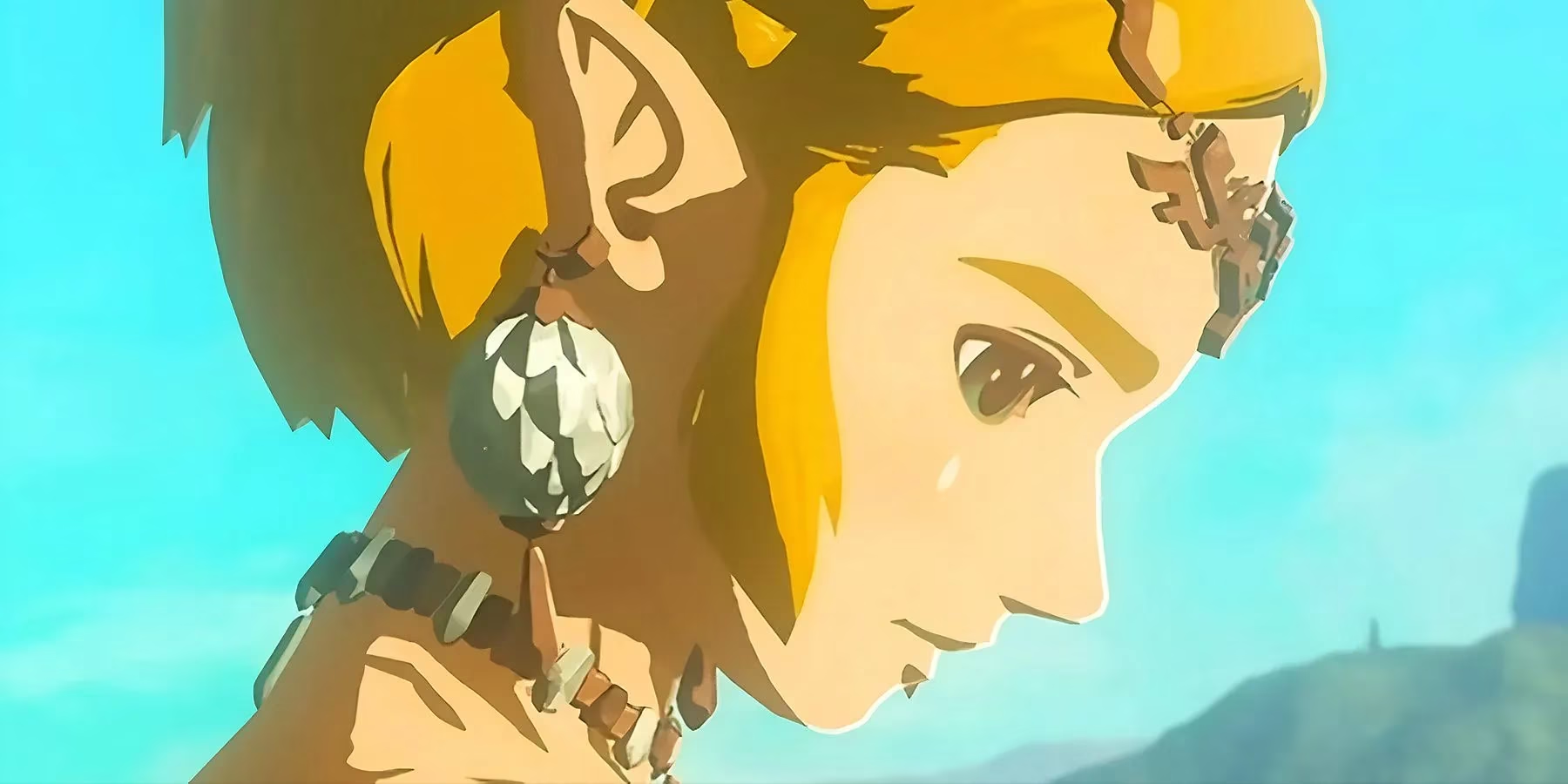
The Switch's Zelda Legacy: A Duology for the Ages
The journey of Zelda on the Switch is a story of two chapters that felt like an entire saga. Breath of the Wild's release was nothing short of a revolution. It asked a simple, profound question: what if the entire kingdom of Hyrule was your playground from the moment you stepped off the Great Plateau? The answer reshaped open-world design, emphasizing emergent gameplay, physics-based puzzles, and a sense of awe-inspiring discovery. Six years later, Tears of the Kingdom answered with its own query: what if we gave players the tools to build their own solutions, to literally reshape the world? With the introduction of the Zonai devices and abilities like Ultrahand and Fuse, the game transformed players from explorers into inventors. This one-two punch didn't just dominate sales charts; it captured the imagination of millions, creating memories that define the Switch era. But all great stories must eventually find a conclusion, or at least, an intermission.
Why Tears of the Kingdom Marks the End
Several key factors solidify Tears of the Kingdom's position as the swan song for Zelda on the Switch:
-
The Official Word on DLC: Nintendo made it explicitly clear that, unlike Breath of the Wild, Tears of the Kingdom would receive no post-launch expansions or DLC. This was a significant departure from standard practice for a blockbuster title, especially one set in such a rich world. It signaled that the development team had said all they intended to say on this hardware.
-
The Inevitable Hardware Transition: The Nintendo Switch 2, released in early 2025, has ushered in a new generation of gaming. The development cycle for a mainline Zelda game is notoriously long—the six-year gaps between Skyward Sword (2011), Breath of the Wild (2017), and Tears of the Kingdom (2023) are a testament to that. For Nintendo to create a new experience that truly leverages new hardware capabilities, resources must shift forward. Could they have squeezed another massive title onto the original Switch? Perhaps, but would it have done justice to the franchise's legacy of innovation?
-
A Crowded Release Schedule: Even before the Switch 2's launch, Nintendo's pipeline was filled with other major projects. Games like the long-awaited Metroid Prime 4 demanded attention and resources. Developing a new Zelda of the scale we've come to expect is an all-hands-on-deck endeavor, making a swift follow-up on aging hardware impractical.
So, does this mean Hyrule falls silent? Far from it. The end of one era simply marks the deliberate, exciting beginning of the next.
Looking Ahead: The Future of Zelda in the Switch 2 Era
If history is our guide, the wait for the next groundbreaking mainline Zelda adventure will be a long one. Based on the established six-year development patterns, fans can realistically expect the next installment sometime between 2028 and 2029. This extended timeline, while challenging for eager fans, is ultimately a promise. It promises that Nintendo is not rushing. It promises that the team is taking the necessary time to once again reimagine what a Zelda game can be, fully harnessing the power of the Switch 2. What new horizons will open up with enhanced processing power, faster loading, and potentially new forms of interaction? The possibilities are as vast as the Depths beneath Hyrule.
However, a multi-year hiatus doesn't mean a complete absence of the Triforce. Nintendo is keenly aware of the franchise's immense popularity and is unlikely to leave such a valuable table unturned.
What Can Fans Expect Before the Next Mainline Game?
The gap will likely be bridged by celebrated revisits to Hyrule's past. Persistent and credible rumors suggest that beloved classics are being prepared for modern audiences:
| Rumored Title | Original Release | Potential Format | Fan Anticipation |
|---|---|---|---|
| The Wind Waker | 2002 (GameCube) | Full Remaster / Port | ⭐⭐⭐⭐⭐ (Highly beloved art style & adventure) |
| Twilight Princess | 2006 (GameCube/Wii) | Full Remaster / Port | ⭐⭐⭐⭐⭐ (Dark tone and epic scope are fan favorites) |
These titles received HD versions on the Wii U in 2013 and 2016, respectively, but their reach was limited by the console's audience. Bringing them to the Switch ecosystem—potentially as enhanced ports or full remasters for the Switch 2—would allow a new generation to experience these iconic adventures. Imagine sailing the Great Sea or exploring the Twilight Realm with modern visual polish and quality-of-life improvements. These releases would serve as perfect custodians of the Zelda flame, keeping the community engaged and celebrating the series' rich history while the next evolution cooks in the development oven.
Conclusion: A Bittersweet Farewell for the Best Possible Future
Therefore, while it is bittersweet to acknowledge that Tears of the Kingdom is the final original Zelda chapter for the original Nintendo Switch, this conclusion is not born from weakness but from strength and foresight. The Switch's Zelda journey was a masterful duology that pushed the boundaries of game design and left an indelible mark on players worldwide. Ending on such a high note preserves the legacy's integrity. It allows the franchise the breathing room and technological canvas it needs to reinvent itself once again. The future of The Legend of Zelda is not in jeopardy; it is being meticulously crafted for a new dawn. The question now is not if we will return to Hyrule, but how spectacular that return will be when Link next draws his sword under the banner of a new console generation. The wait may be long, but if the past is any indication, it will be worth every single moment. 🗡️🛡️✨