As I sit here in 2026, reflecting on the landscape of gaming, the words of Eiji Aonuma still resonate. The era of Zelda defined by Breath of the Wild and Tears of the Kingdom has been declared complete. Aonuma described Tears of the Kingdom as the apotheosis, the ultimate expression, of that formula. For a series with Nintendo's legendary penchant for reinvention, this isn't an end, but a fascinating new beginning. The question now isn't if the next chapter will be different, but how radically it will diverge. Will we look back on the last decade as a singular, golden age of open-ended Hyrule exploration? As a player who lived through this transformative period, I can't help but analyze what made these games so special and ponder what must fundamentally change for the series to evolve once more.
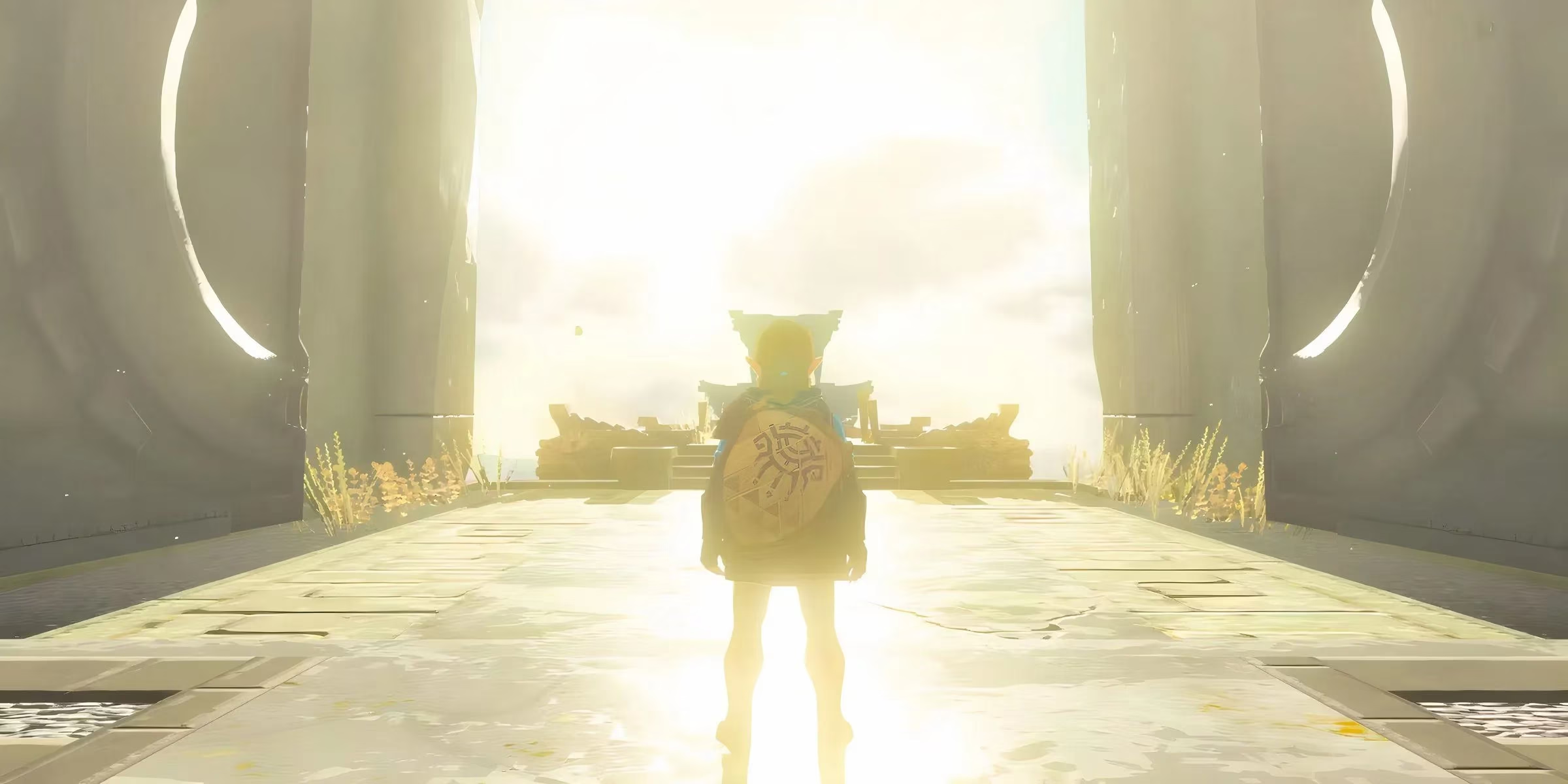
When we examine the seismic shift that Breath of the Wild represented, it's natural to focus on the obvious gameplay revolutions. But isn't that just the tip of the iceberg? The game's core pillars—total open-ended exploration, a non-linear narrative discovered at the player's pace, and systemic physics-based creativity—didn't just change how we played. They fundamentally altered the series' very soul: its narrative delivery, its tonal atmosphere, and its visual presentation. The freedom to go anywhere and do anything came with a cost to other traditional Zelda elements. Let's consider what was left behind:
-
Themed Dungeons: Gone were the intricate, bespoke temples dedicated to elements or concepts, each with a unique boss key and a culminating item.
-
Metroidvania-Style Progression: The classic loop of "find item in dungeon A to access area in dungeon B" was dismantled in favor of immediate, tool-based freedom.
-
Item-Based Puzzles: The Hookshot, the Spinner, the Dominion Rod—puzzles built around specific, progression-gating tools were replaced with the multi-purpose runes and, later, Ultrahand.
But here's the crucial realization: these weren't just gameplay mechanics. They were narrative and tonal delivery systems. A haunted forest dungeon built a sense of horror. A watery temple created a feeling of pressurized isolation. The order in which you experienced these places was carefully curated to tell a story and modulate emotions. Breath of the Wild and Tears of the Kingdom traded that curated, cinematic pacing for emergent, player-driven stories. Their narratives became minimalist, archaeological—fragments of a past calamity to be pieced together while you forged your own path. The tone became one of serene, melancholic exploration. Could a story with urgent, immediate stakes (e.g., "Ganon is destroying Castle Town RIGHT NOW!") truly coexist with a design that encourages you to spend 50 hours building absurd flying machines or hunting Koroks? The two philosophies seem intrinsically at odds.
This leads me to the next logical question: if the gameplay of the next Zelda makes a leap as dramatic as the one from Skyward Sword to Breath of the Wild, what else must change? We've established that gameplay, narrative, and tone are deeply intertwined. A radical new gameplay core would necessitate a radically new narrative structure and emotional palette. Perhaps we'll see a return to a more guided, intense story? Or maybe Nintendo will discover a new way to blend urgency with freedom that we haven't yet imagined.
And then there's the world itself—how it looks and sounds. The beautiful, cel-shaded art style of the BOTW/TOTK era wasn't just an aesthetic choice; it was a practical one. That style allowed the vast landscapes of Hyrule to be rendered smoothly, maintaining a consistent, painterly feel across great distances. But what if the next game isn't about traversing a massive continent? What if it's set in a dense, layered city, or a series of interconnected, intricate realms? A more focused scope could allow for a completely different visual approach—perhaps something more detailed, more realistic, or even more abstractly stylized. The art style of BOTW was a bold declaration of a new beginning. The next game's visuals will need to perform the same function, signaling a clear break from the now-familiar look of the past decade.
The music, too, followed the gameplay's lead. The sparse piano notes of BOTW's overworld reinforced the feeling of solitude and discovery. A more narrative-driven, character-focused game would likely demand a different sonic identity—one with more pronounced themes, leitmotifs, and dramatic crescendos.
So, as we stand on the precipice of a new Zelda era, what can we, as players, expect? We know Nintendo thrives on surprising us. We know the BOTW formula has been put to rest. The table below summarizes the potential axis of change we might see:
| Feature | Breath of the Wild / Tears of the Kingdom Era | Potential Directions for the Next Era |
|---|---|---|
| Core Gameplay | Systemic, physics-driven sandbox; Ultrahand creativity | Could shift to tighter, more guided design, or a new, unforeseen systemic pillar |
| Narrative Structure | Minimalist, environmental, non-linear | Potentially more direct, character-driven, and sequential |
| Tone & Pacing | Serene, meditative, player-paced | Could embrace urgency, higher drama, or a completely new mood (e.g., mystery, horror) |
| World Design | Vast, seamless open world with free climbing/gliding | May shift to a series of large, intricate hubs, or a more traditionally structured world |
| Visual Style | Cel-shaded, painterly, optimized for vast landscapes | Could adopt greater realism, a new stylized look, or detailed intimacy for a smaller scope |
In the end, Tears of the Kingdom wasn't just a sequel; it was a finale. It took the tools of Breath of the Wild and pushed them to their logical, glorious extreme. To build something new, Nintendo must now put those tools away and forge a new set. The legacy of the last decade is secure—it redefined open-world gaming and brought a sense of wonder back to a generation of players. But true to the spirit of The Legend of Zelda, the only constant is change. I'm not mourning the end of this era; I'm electrified by the possibilities of the next. What incredible new version of Hyrule awaits us? What new lessons will Link—and we as players—have to learn? The future of Zelda is a blank slate, and if history is any guide, Nintendo is about to paint another masterpiece.