In a narrative maneuver that left the gaming community utterly flabbergasted, The Legend of Zelda: Tears of the Kingdom unveiled its most profound and bewildering enigma: the Secret Stones and their cataclysmic draconification process. This was not merely another magical artifact for the Hero of Hyrule to collect; it was a paradigm-shattering concept that plunged the very foundations of Zelda's mythology into a whirlpool of cosmic questions. While the series has a storied tradition of mystical plot devices, the Secret Stones ascended beyond mere narrative tools, weaving a tale so intricately crafted that it forced a complete re-evaluation of divinity, immortality, and the tragic price of ultimate power within the legendary franchise.
The Terrifying Metamorphosis: From Mortal to Mindless God
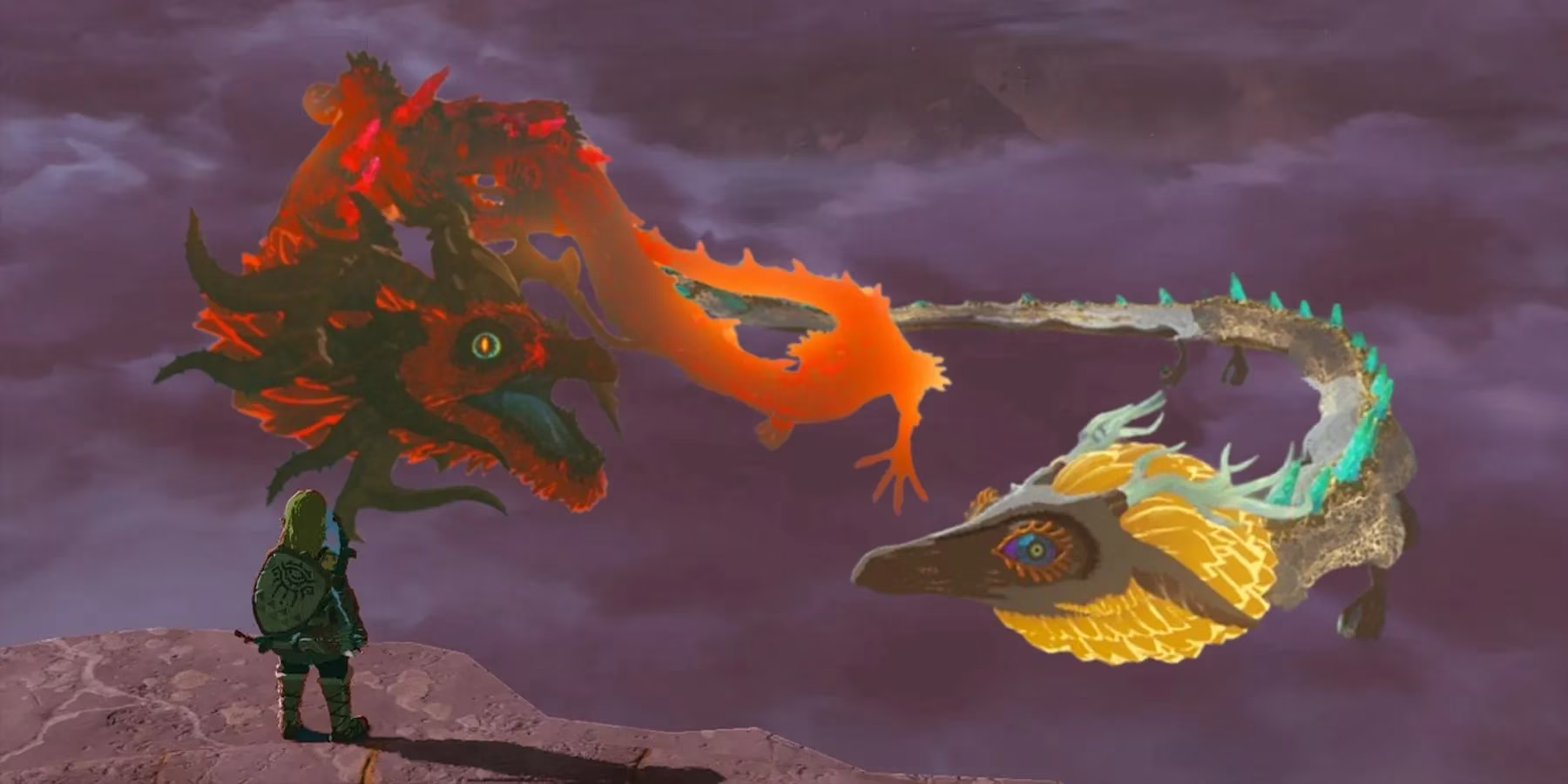
The core mechanism of this arcane phenomenon is as simple as it is horrifyingly irreversible. An individual need only consume a Secret Stone to trigger an apotheosis of the most tragic kind. The bearer is transmuted into an immortal, elemental dragon—a being of immense, primal power—but at the devastating cost of their sentience, memories, and very identity. This process, witnessed in heart-wrenching detail within Tears of the Kingdom, creates entities that are less conscious deities and more forces of nature, eternal yet empty. The implications are staggering:
-
The Ultimate Sacrifice: Power is not granted freely; it demands everything. The self is the currency for godhood.
-
A New Class of Immortality: Unlike the blessed eternal life of deities, this draconic existence is a cursed eternity, a fate arguably worse than death.
-
Recontextualizing Series Icons: This revelation casts a haunting new light on the majestic dragons that have soared through Hyrule's skies for generations.
Zonai Enigma: The Divine Architects of a Dragon's Curse
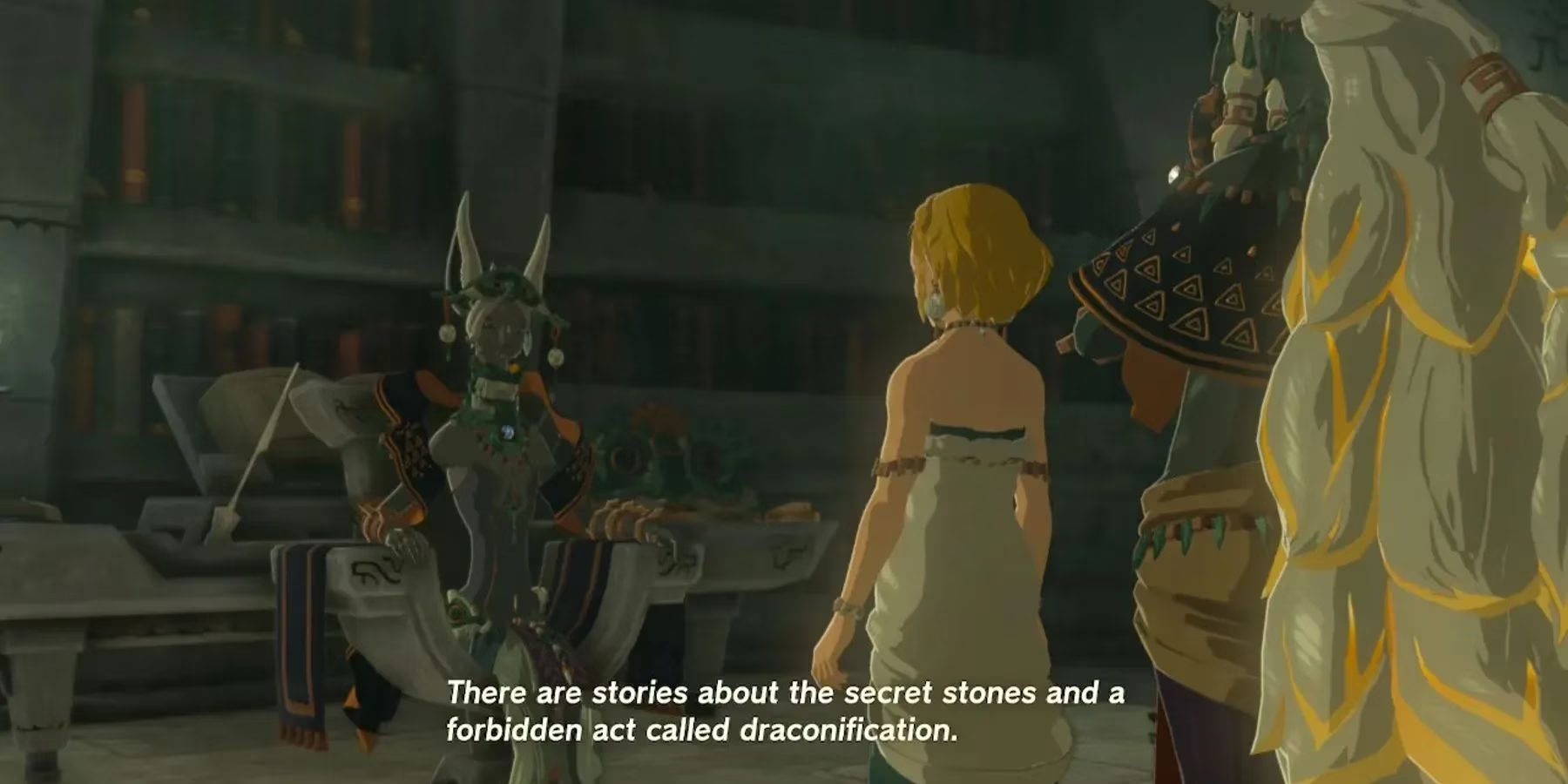
The origins of the Secret Stones are shrouded in the same impenetrable mist that surrounds their creators, the Zonai. Touted as "treasures of the gods," these luminous orbs present a colossal paradox. The Zonai themselves are depicted with a caprine, almost divine visage, yet their greatest artifacts facilitate a transformation into serpentine draconic forms. This stark dichotomy fuels rampant speculation: were the Zonai merely the custodians of these stones, or were they themselves the product of a higher, perhaps draconic, power? The stones do not generate power; they magnify and focus the innate abilities of the wielder, suggesting they are conduits for a fundamental, pre-existing cosmic energy—an energy intrinsically linked to draconic essence.
| Zonai Trait | Draconic Result | Implied Paradox |
|---|---|---|
| Goat-like, "divine" appearance | Creation of serpentine dragons | Mismatch between creator form and creation |
| Masters of advanced technology | Stones enable primal, biological transformation | Conflict between tech and nature |
| Worshiped as gods | Stones may channel a power above them | Question of true divinity |
Draconic Deities: Rewriting Hyrule's Theological Canon
The most earth-shattering implication of the draconification process is its potential to redefine the nature of divinity in the Zelda universe. For decades, the Triforce stood as the undisputed, ultimate font of divine power—a wish-granting relic of the Golden Goddesses. Now, the Secret Stones present a parallel, yet diametrically opposed, path to godhood. Consider the profound parallels and contrasts:
-
Triforce: Grants a mortal's greatest wish while preserving their identity.
-
Secret Stone: Grants immortality and immense power by erasing the mortal's identity.
This positions the dragons of Zelda not as mere powerful beasts, but as potential avatars or even the true, base forms of the world's deities. The elemental dragons Dinraal (fire), Farosh (lightning), and Naydra (ice) are no longer just scenic wildlife; they are now tragic figures, possibly ancient mortals or lesser gods who underwent this agonizing transfiguration. It forces fans to ask harrowing questions: Were they once wise sages, desperate heroes, or arrogant kings? Their endless, mindless flight is not majesty—it is an eternal prison.
The Lore-Quake: Ripples Through Time and Timeline
The introduction of draconification doesn't just add a new story element; it detonates a lore bomb that sends shockwaves through the entire series' history. Tears of the Kingdom's complex relationship with time travel and its nebulous place in the official chronology means this process might be unique to its era. Yet, the mere possibility forces a radical re-examination of every dragon ever encountered:
-
Valoo from The Wind Waker: Why does this Great Valoo retain his intelligence and personality, unlike the mindless dragons of Tears of the Kingdom? Did he use a different method? Is he a "complete" deity?
-
The Light Dragon (Zelda): Her transformation is the emotional core of the game, a sacrifice of self to become a guiding light across millennia—a literal deus ex machina woven into the world's fabric.
-
Historical Speculation: Could the great beasts and calamities of Hyrule's past, like the shadowy demise of the Zonai, be linked to failed or corrupted draconification rituals?
This mechanism has effectively retconned our understanding of Hyrule's ecosystem. The dragons are no longer part of the scenery; they are the scenery's forgotten architects, living monuments to sacrifices too terrible to remember. As the Zelda series inevitably marches forward beyond 2026, the specter of the Secret Stones and their dreadful price looms large. They have introduced a new, darkly poetic layer to the mythos: that in this world, the highest forms of power and the most tragic forms of loss are two sides of the same, shimmering, cursed stone.