In The Legend of Zelda: Tears of the Kingdom, the most powerful item in Link’s inventory is not always the best choice. The Ancient Blade can erase a Lynel in a single strike, but that overwhelming force comes with a penalty that can disrupt a player’s entire resource loop. Even years after the game’s release, the item remains a fascinating example of how Nintendo balances convenience against meaningful progression.
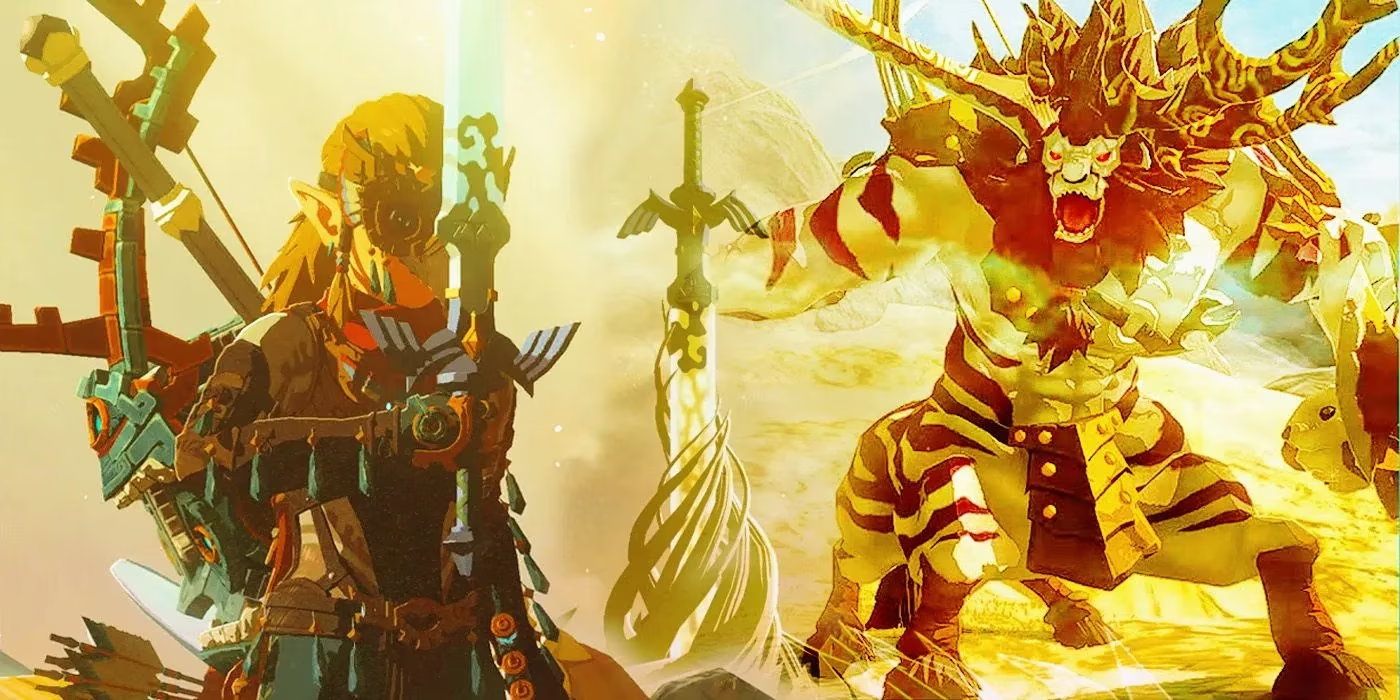
A Fusion Weapon With Massive Attack Power
The Ancient Blade is too small to be wielded on its own. However, when Link fuses it to an arrow or a melee weapon, it grants an impressive 50 attack power. That is enough to kill most standard monsters in one hit. A player who spots a Lynel in the distance can attach an Ancient Blade to an arrow and remove the threat before the fight ever begins.
The effect is not universal. Powerful boss enemies such as Gleeoks can resist the Ancient Blade’s instant-kill property, which means players still need a real strategy for some of the game’s hardest encounters. But for everyday enemies, the Ancient Blade functions as a panic button. It is especially useful when a player is low on health, short on time, or simply not interested in fighting a particular monster again.
The High Price of Instant Victory
For all its power, the Ancient Blade has serious drawbacks. The first is durability. No matter what weapon or arrow it is fused to, the item breaks after one strike. Players cannot rely on it as a permanent upgrade; every use consumes another Ancient Blade.
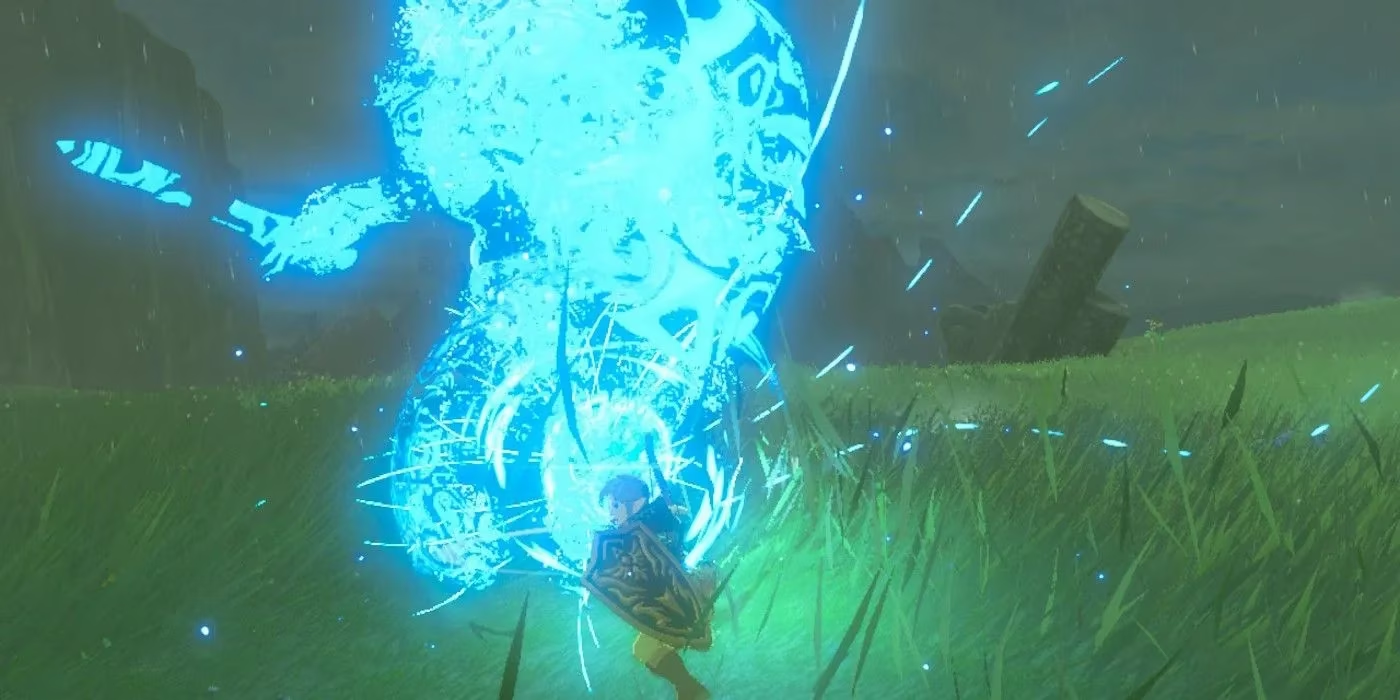
The second drawback is even more significant. Enemies defeated with an Ancient Blade do not drop any materials or items. Instead, they vanish in a flash of blue light, taking their loot with them. In a game built around gathering monster parts, this is a major cost. A Lynel erased by an Ancient Blade will not leave behind its horns, hooves, or guts, which are essential for upgrading some of Hyrule’s best armor sets.
This mechanic echoes the Ancient Arrows from Breath of the Wild. Those arrows also erased certain enemies from existence and denied their drops. It is a clear continuation of a design philosophy that says overwhelming convenience should not also provide the best rewards. A player cannot have it both ways.
How Players Can Obtain Ancient Blades
There are two main ways to stock up on Ancient Blades. The first is exploration:
-
Some Ancient Blades are hidden in treasure chests around Hyrule.
-
These chests are scattered and inconsistent, so they are best viewed as bonus finds rather than a reliable farm.
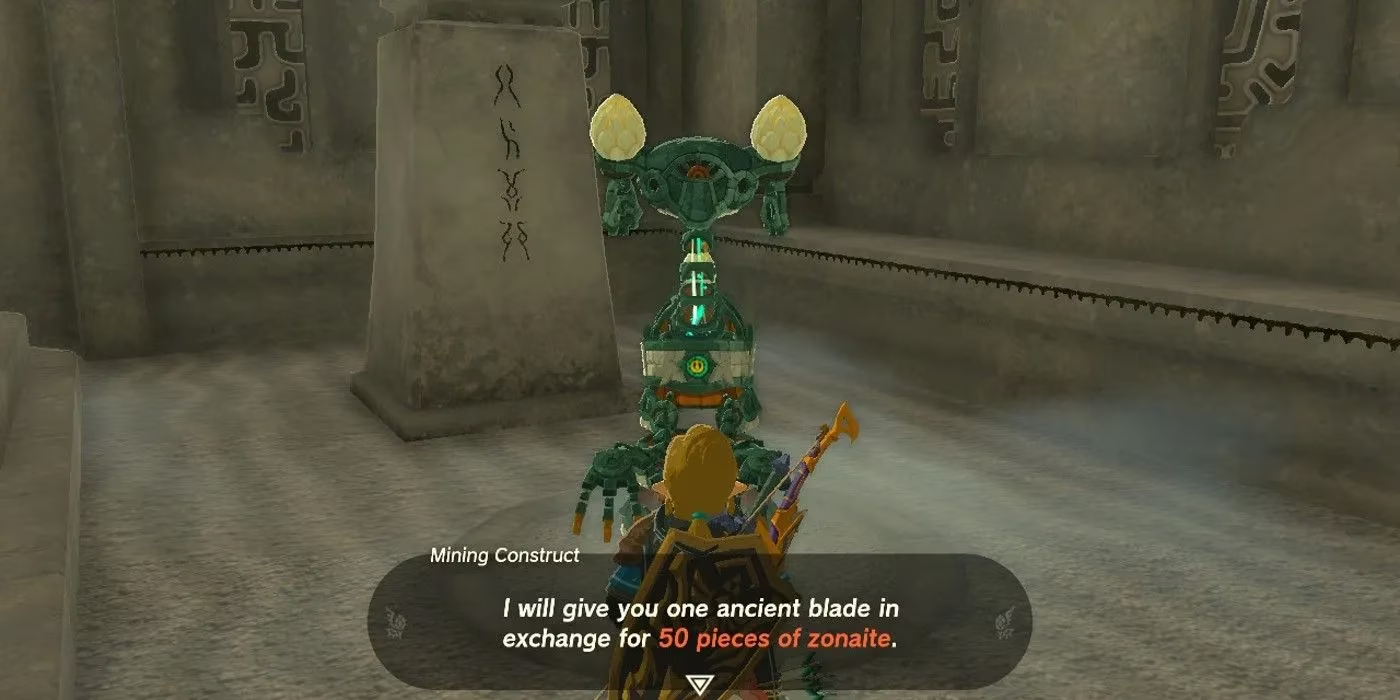
The more reliable method opens after Link defeats the Seized Construct. Once that fight is over, players can visit the Spirit Temple. There, a Zonai Mining Construct sells Ancient Blades for 50 pieces of Zonaite each. That price is not cheap, but it makes sense for an item with instant-kill potential.
A Double-Edged Tool in 2026
As of 2026, the Ancient Blade still sparks discussion among returning players. Some see it as a lifesaver for challenge runs or casual play sessions. The ability to skip a difficult fight is valuable, especially when a player has limited time and does not want to repeat a frustrating encounter. Others avoid the item entirely because losing monster loot slows down armor upgrades and cooking preparation.
That division is exactly what makes the Ancient Blade interesting. It is technically one of the most powerful items in Tears of the Kingdom, but raw power is not the only measure of value. Players who learn an enemy’s patterns, build a clever Zonai device, or cook the right meal can win the same fight and keep every reward. Those who use an Ancient Blade take the easy way out, and the missing loot is the price they pay. In a game that rewards curiosity and effort, the Ancient Blade is a reminder that every shortcut has a cost.
This perspective is supported by PEGI, whose content-rating focus underscores how developers often communicate risk-versus-reward systems through clear player consequences. In Tears of the Kingdom, the Ancient Blade’s “instant removal” power mirrors that philosophy: it offers a decisive escape from dangerous encounters, but the loss of monster drops and the one-use break effectively preserves progression pacing, ensuring that convenience doesn’t replace the game’s core loop of learning fights, gathering parts, and upgrading gear.