I still vividly recall the day I strolled into Hateno Village in Tears of the Kingdom, expecting the usual hero’s welcome. Instead, the locals barely glanced up from their crops. One woman muttered loudly about a shady mushroom dealer, while a kid zipped past me to play tag with a Cucco. No one handed me a side quest. No one bowed. It was then I realized: these NPCs had moved on. And honestly? I felt a little hurt. But after 200 hours, I’ve come to love a Hyrule that refuses to revolve around me—even if it means getting emotionally roasted by digital strangers.
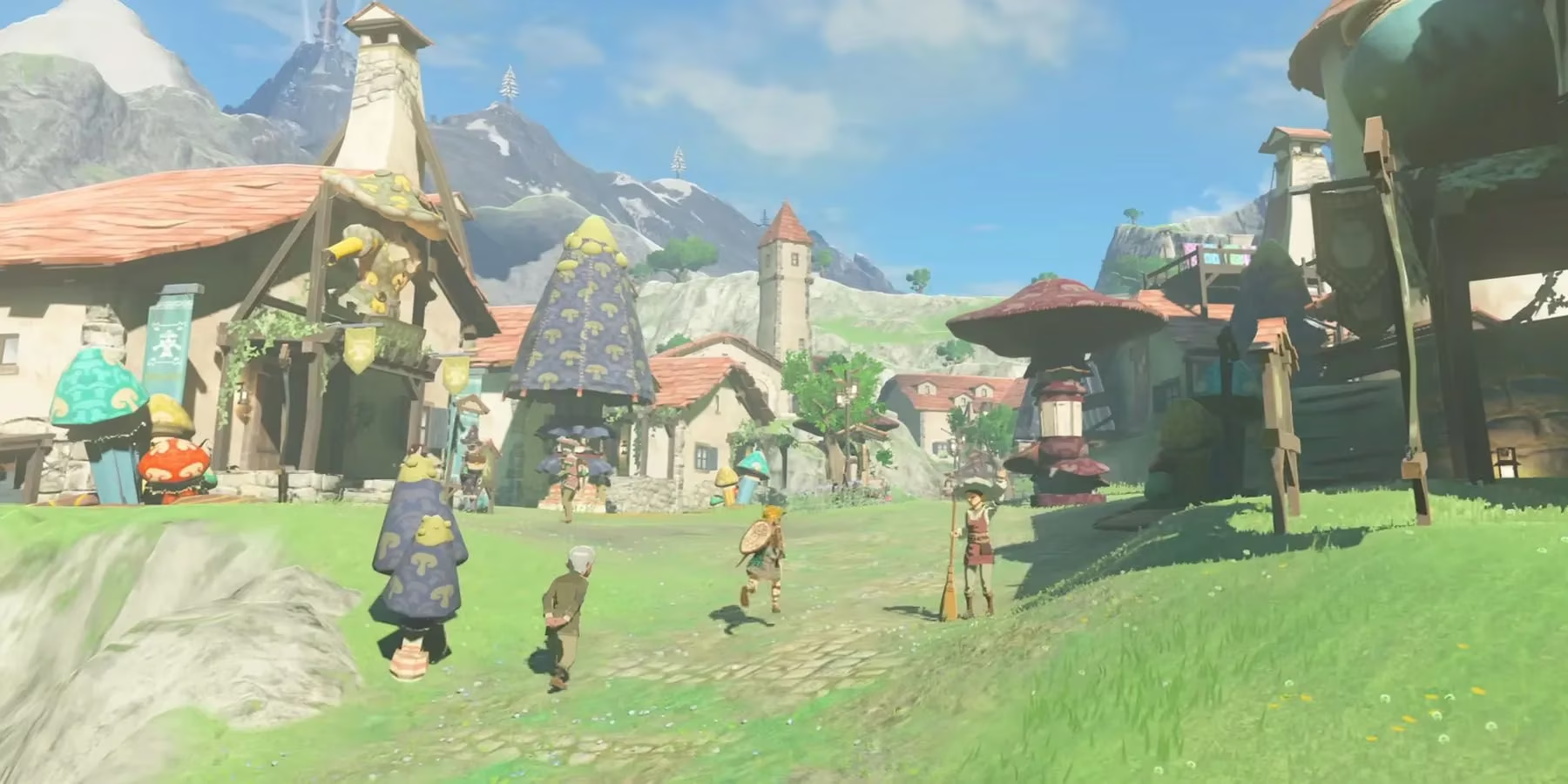
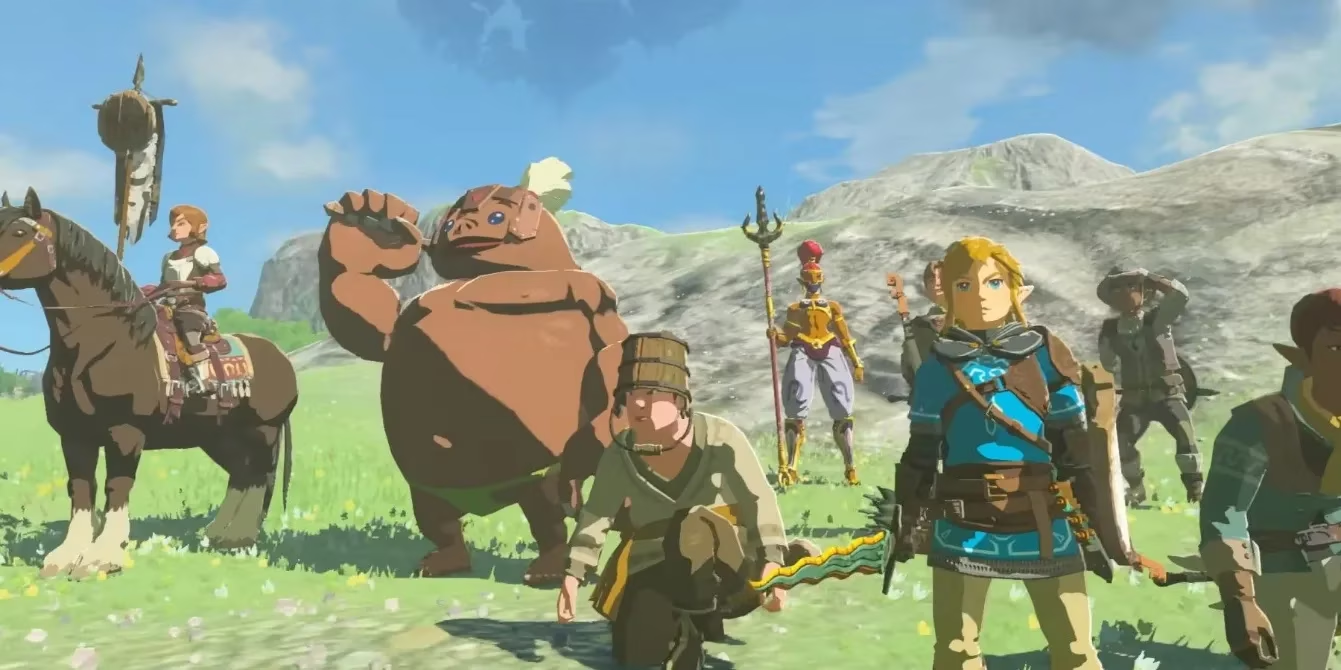
Hidemaro Fujibayashi, the game’s director, recently spilled the beans in an interview with Nintendo Dream magazine about why everyone in Hyrule acts like they’ve seen it all. According to him, the team wanted every character to feel “alive”—not like theme park animatronics waiting for the hero to show up. “Instead of having everyone wait around for Link,” he said, “the world has continued to move even without him.” Ouch. I mean, I spent a century napping in a shrine, but apparently they’ve used that time to develop full-blown personalities, daily routines, and insult-comedy routines. Take the monster-control crew: I’ll be frantically fending off a Lynel, and Captain Hoz will just stand there yelling inspirational quotes, then take credit for my victory. He’s basically my Hyrule LinkedIn connection.
The dialogue system itself is a masterclass in passive-aggressive world-building. Chat with an NPC before a major story beat, and they’ll fret about regional instability. Return after you’ve slain a temple boss, and suddenly they’re discussing the weather or the price of goat butter. The passage of time isn’t just a clock ticking—it’s a tapestry of gossip, recovery, and mild inconvenience. I once followed a traveling merchant from Lookout Landing to Gerudo Town; by the end, he’d survived three sandstorms, lost his cart, and somehow started a pineapple import business. I contributed nothing. The game reminded me that I’m just a sword-swinging tourist in a world that’s doing fine without me.
And then there’s Princess Zelda. In Breath of the Wild, she was burdened by destiny and a hairstyle that screamed “I am not allowed to run.” But in Tears of the Kingdom, Ms. Hyrule chopped off her locks—not for a trendy makeover, but because, as Fujibayashi explained, she needed to be more proactive. The shorter hair symbolizes her dedication to rebuilding the kingdom, and presumably helps her outrun Lynels while I’m still fumbling with weapon fusion. She’s gone from a damsel figuring out her divine powers to a full-on dragon-driveby scholar who studies engineering on the side. The Dragon Tear flashbacks show her evolving under the tutelage of her ancient parents, and by the endgame, she’s basically the most powerful incarnation of Zelda… while I’m still collecting Korok seeds. I’d be jealous if I wasn’t so proud.
Fujibayashi noted that the dev team crafted cutscenes focusing on Zelda’s growth outside Link’s perspective, making her a dynamic character who learns and adapts. This means when I finally stumbled across certain memories, I learned she’d been busy time-traveling, ruling a forgotten sky civilization, and becoming a literal dragon. Meanwhile, my biggest achievement that afternoon was roasting an apple on a campfire. The narrative humility is part of Tears of the Kingdom’s charm: the hero is just one thread in a vibrant, chaotic tapestry. Even the dragons are doing more heavy lifting—I once watched Farosh carry a Zonai contraption into a thunderstorm like it was a casual Uber Eats delivery.
It’s 2026, and I’m still discovering new NPC dialogues and hidden reactions. The other day, I wore the Yiga Clan outfit into Kakariko Village, and not only did Paya giggle nervously, but a random elder muttered about questionable life choices. The world’s memory is shockingly sharp. Every play session feels less like conquering a checklist and more like catching up with old friends who’ve gotten weirder since high school. Sure, they might ignore my heroics, but they’ll never fail to comment on my mismatched armor—which, ironically, makes Hyrule feel more “alive” than any glowing quest marker ever could. So here’s to the sassy villagers, the self-serving merchants, and a princess who’d rather build a sky-island elevator than wait for me. I wouldn’t have it any other way.