Link stood at the edge of the Great Sky Island, the wind tugging at his tunic as he gazed down at the shattered remains of Hyrule. Below him, the land he had once saved from Calamity Ganon was scarred by a new disaster: the Upheaval. But his mind was not on the monsters or the gloom. It was on Zelda. She had vanished, pulled into a chasm beneath Hyrule Castle, and when he finally found traces of her, they were not in the present. They were in the distant past, thousands upon thousands of years ago, at the very founding of Hyrule. How could a knight save a princess who was not just missing, but lost in time itself?
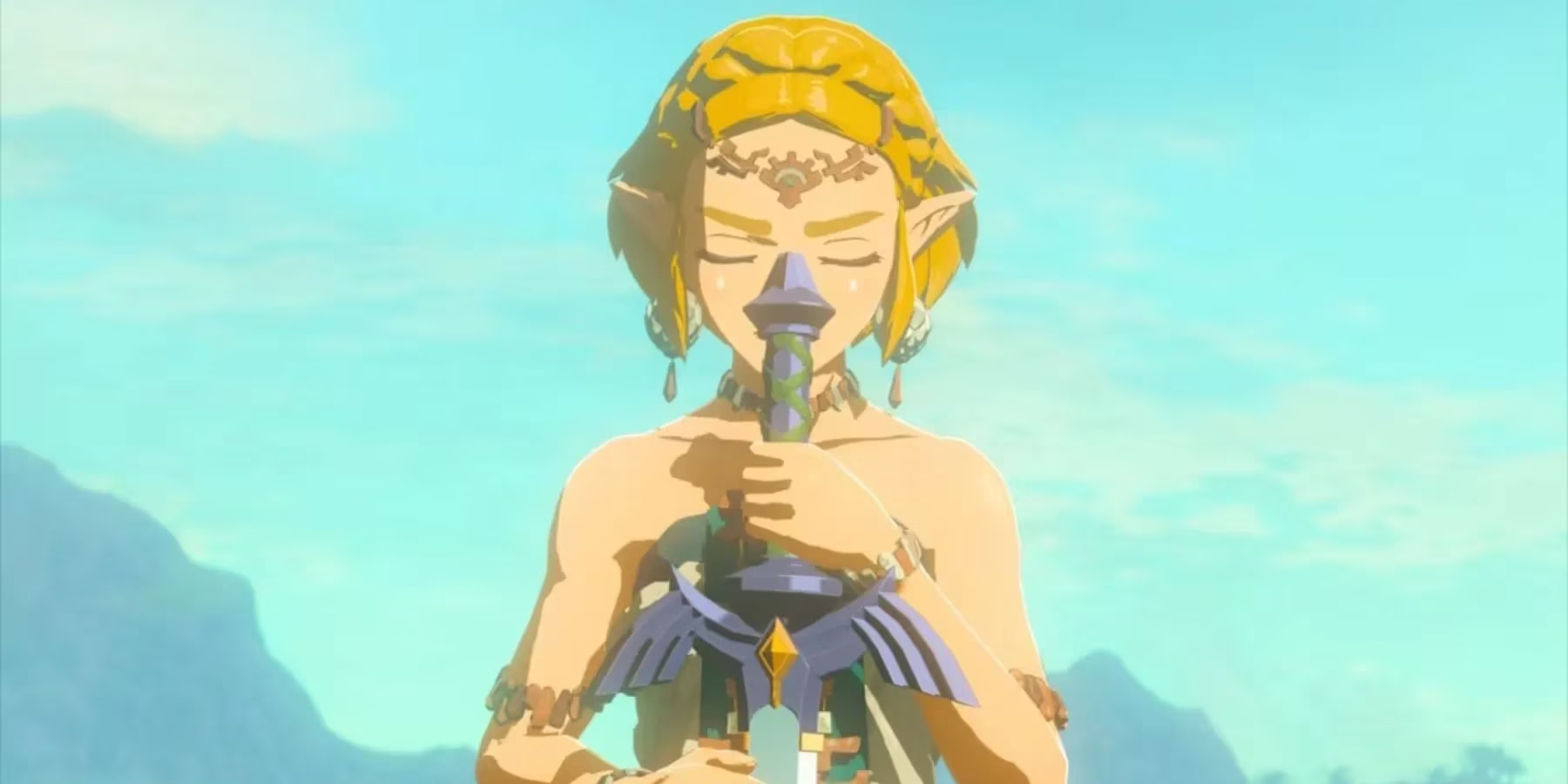
The Legend of Zelda: Tears of the Kingdom, released in 2023, is a game that understands its own history. As the latest entry in a franchise spanning more than 35 years, it cherry-picks concepts from across the series while forging something new. It is a direct sequel to Breath of the Wild, yet it brings back classic enemies like Gleeoks, Gibdos, and even Ganondorf himself. Locations reference past games, and the sky islands feel like a full homage to Skyward Sword. But where Tears of the Kingdom most leans on its legacy is in its structure and story. It maintains Breath of the Wild's non-linear elements as a callback to the NES original and A Link to the Past, while also using classic dungeon design alongside the Divine Beast format. The Sage powers, comparable to dungeon items, show that the game upholds franchise traditions. Yet one story element goes far beyond recalling old trends, and it may remain the most intense instance for years to come.
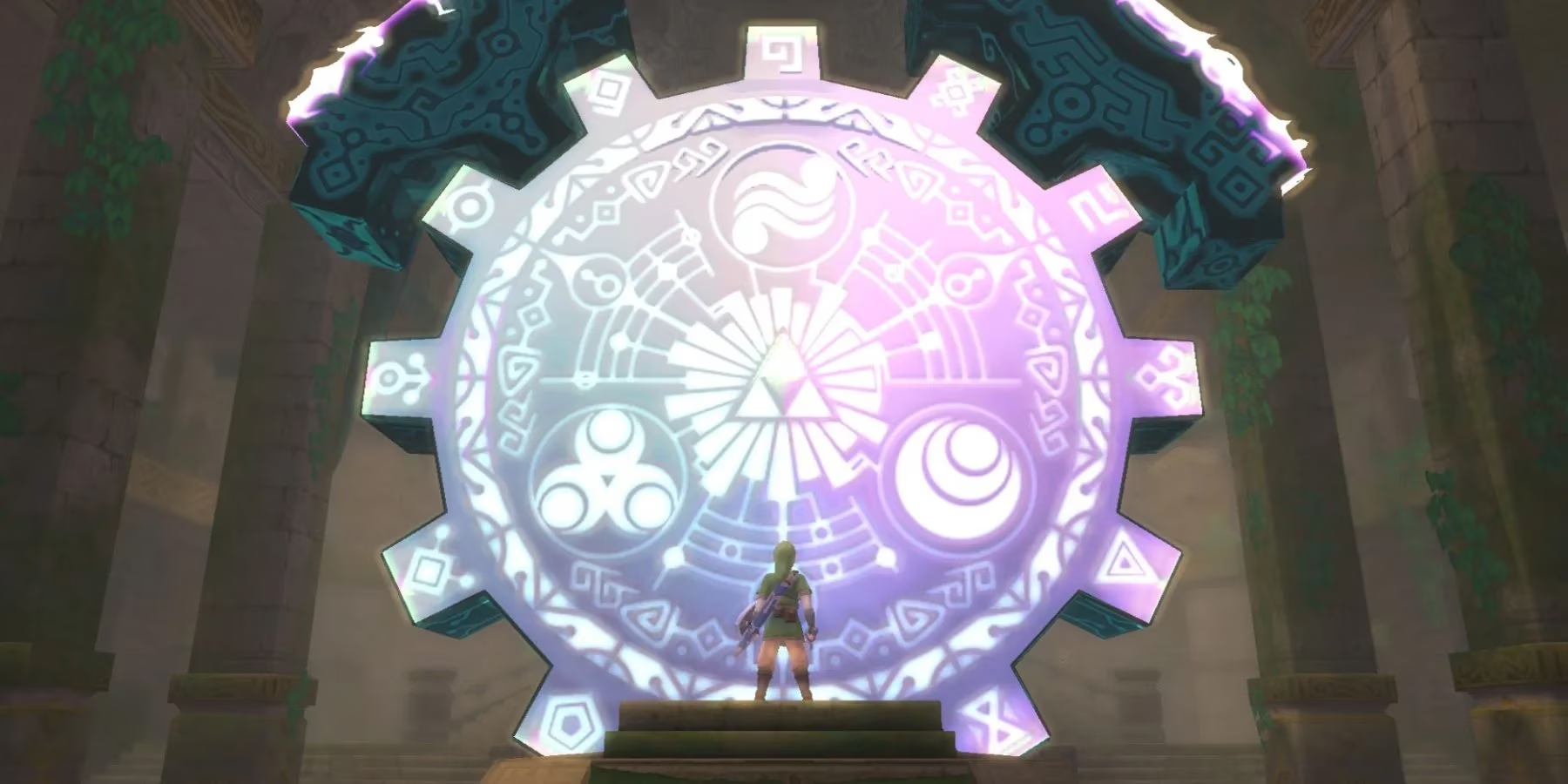
Time travel has been a staple of 3D Zelda games ever since Ocarina of Time. With a few exceptions, the series has repeatedly used time as a narrative device. Ocarina of Time involved a few years of travel upon drawing or returning the Master Sword. Majora's Mask famously took place in a three-day cycle. In hindsight, those were just the series getting warmed up. Skyward Sword used Timeshift Stones in the Lanayru region, allowing Link to visit pockets of an advanced past. There was also a time portal used to travel back to when Demise was first sealed. Zelda herself waited out the difference between that age and the present, but she did so in stasis. It was unclear how large those time gaps were, but Skyward Sword remained a prominent example of time travel in Zelda. After that, it almost came as a shock that the only equivalent in Breath of the Wild was Link flashing back to his life 100 years prior.
Tears of the Kingdom more than makes up for this, however, by spanning the widest known amount of time in the Zelda franchise. When Zelda travels back to the founding of Hyrule, she ends up 10,000 years or more in the past. It is there that Ganondorf's role as Hyrule's ultimate evil and recurring Calamity is established. Zelda's long path back to the future with the Master Sword begins as she becomes an immortal, mindless dragon. Even after Skyward Sword expanded its story across hundreds if not thousands of years, Tears of the Kingdom still blows it out of the water. That Princess Zelda lives out its entire time period, even if she is not aware or affected by it, is also a novel move for the series. While time travel has become a tradition in The Legend of Zelda, it is unlikely that future games will surpass the scale found in Tears of the Kingdom's age-spanning narrative.
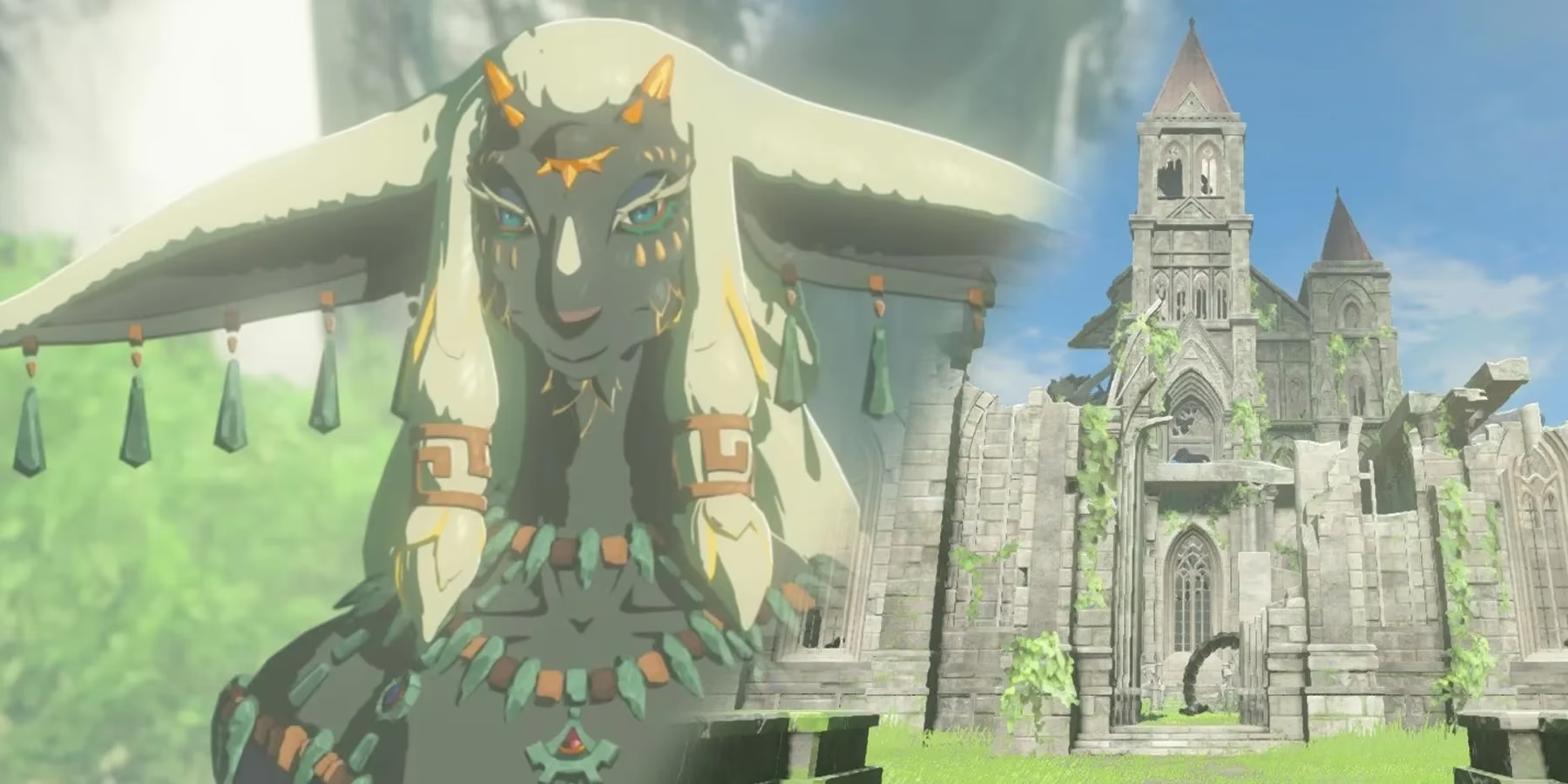
What does it mean for a princess to live through millennia while her knight remains in the present? Zelda's sacrifice is not just physical; it is temporal. She becomes a dragon, losing her sense of self, just to restore the Master Sword and give Link a chance. Meanwhile, Link travels across the surface, the skies, and the depths, awakening Sages and gathering allies. He learns of Rauru and Sonia, the first king and queen of Hyrule, and sees echoes of a past he can never truly visit. The game's structure allows players to experience both timelines: the present struggle and the ancient tragedy. It is a narrative braid that only works because of the franchise's long history with time travel.
In 2026, three years after its release, Tears of the Kingdom still stands as the most ambitious time-travel story in Zelda. It respects the past while pushing the boundaries of what a Zelda story can be. The game is available on Nintendo Switch, and its legacy continues to shape discussions about the franchise's future. Will the next Zelda game try to outdo this temporal epic? Or will it return to smaller, more personal time loops? Only time will tell. But for now, the tale of a princess lost in the dawn of Hyrule remains the series' most dramatic form of its oldest tradition.