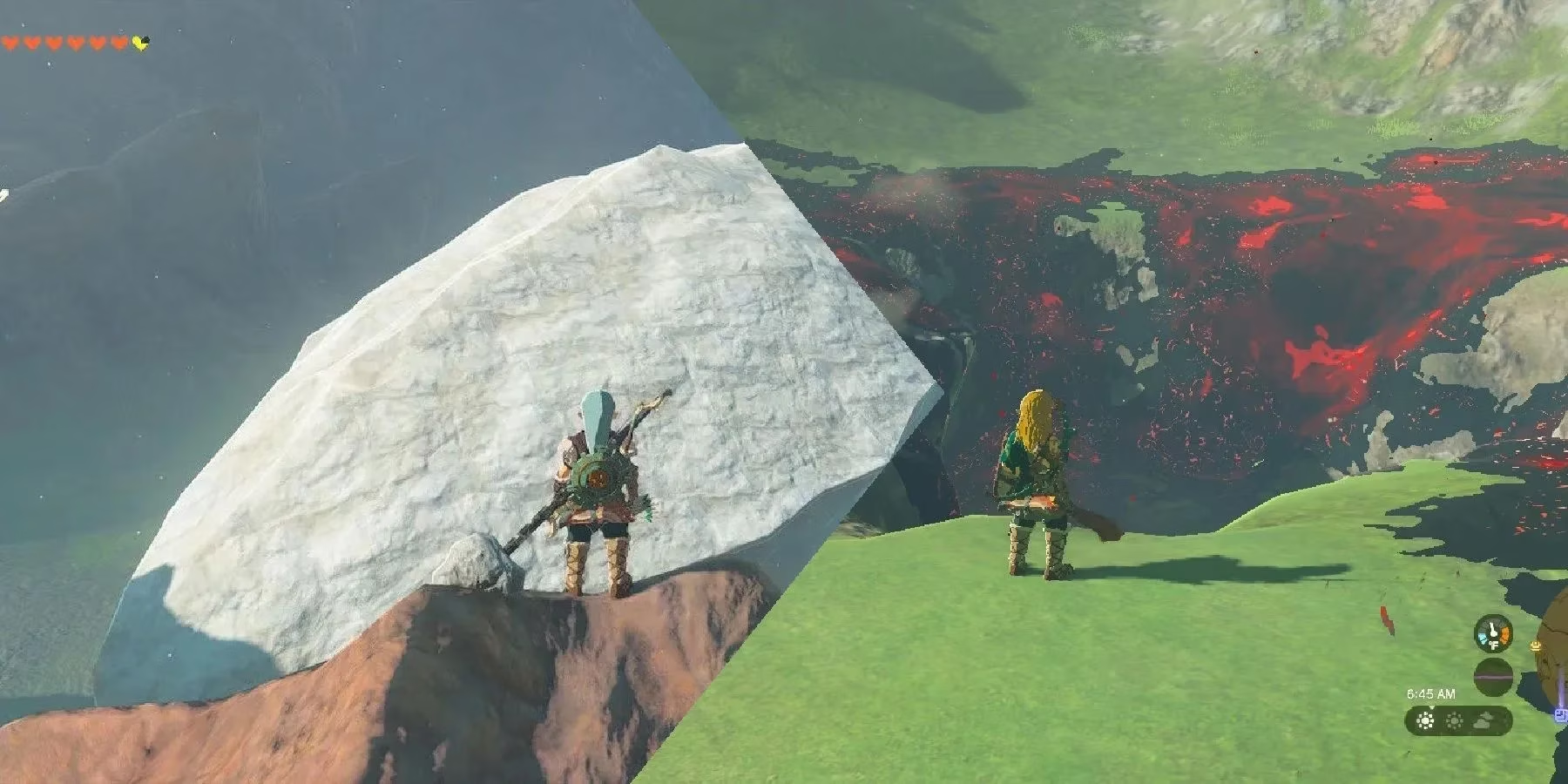
Hyrule has a bone problem. Not the kind that requires calcium supplements, but the kind that requires a lore theorist, a whiteboard, and perhaps a stiff drink. In The Legend of Zelda: Tears of the Kingdom, the Depths doubled the size of the world by adding a gloomy underground mirror of Hyrule. That alone was enough to keep fans busy. Then Nintendo went and placed three Leviathan skeletons down there, directly beneath the three Leviathan skeletons from Breath of the Wild. In 2026, years after launch and after the Switch 2 Edition gave the game a fresh coat of polish, these bones remain one of the most deliciously weird mysteries in the series.
The Leviathans Were Already Weird in Breath of the Wild
Back in Breath of the Wild, the three great skeletons were not just oversized fossils. They were love letters to older Zelda lore, or at least creepy postcards from it. The Eldin Great Skeleton has a faceplate that looks suspiciously like Levias from Skyward Sword. The Gerudo Great Skeleton has wings, which led many fans to call it the Wind Fish from Link's Awakening. The Hebra Great Skeleton? Some believe it is Oshus from Phantom Hourglass. None of these are confirmed with a neat little plaque, because Hyrule's ancient history apparently hates clear labels.
| Skeleton | Location | Possible Identity | Vibe |
|---|---|---|---|
| Eldin Great Skeleton | Eldin Mountains | Levias from Skyward Sword | Faceplate says sky whale, bones say ancient |
| Gerudo Great Skeleton | Gerudo Desert | The Wind Fish | Wings, sand, and existential dread |
| Hebra Great Skeleton | Hebra Mountains | Oshus | Cold, lonely, possibly a retired sea god |
These skeletons helped support the idea that Breath of the Wild sat at the end of the timeline, a distant future where even the gods had become fossils. Tears of the Kingdom kept them in place, which was fine. Then it added more.
The Depths Said, Copy My Homework
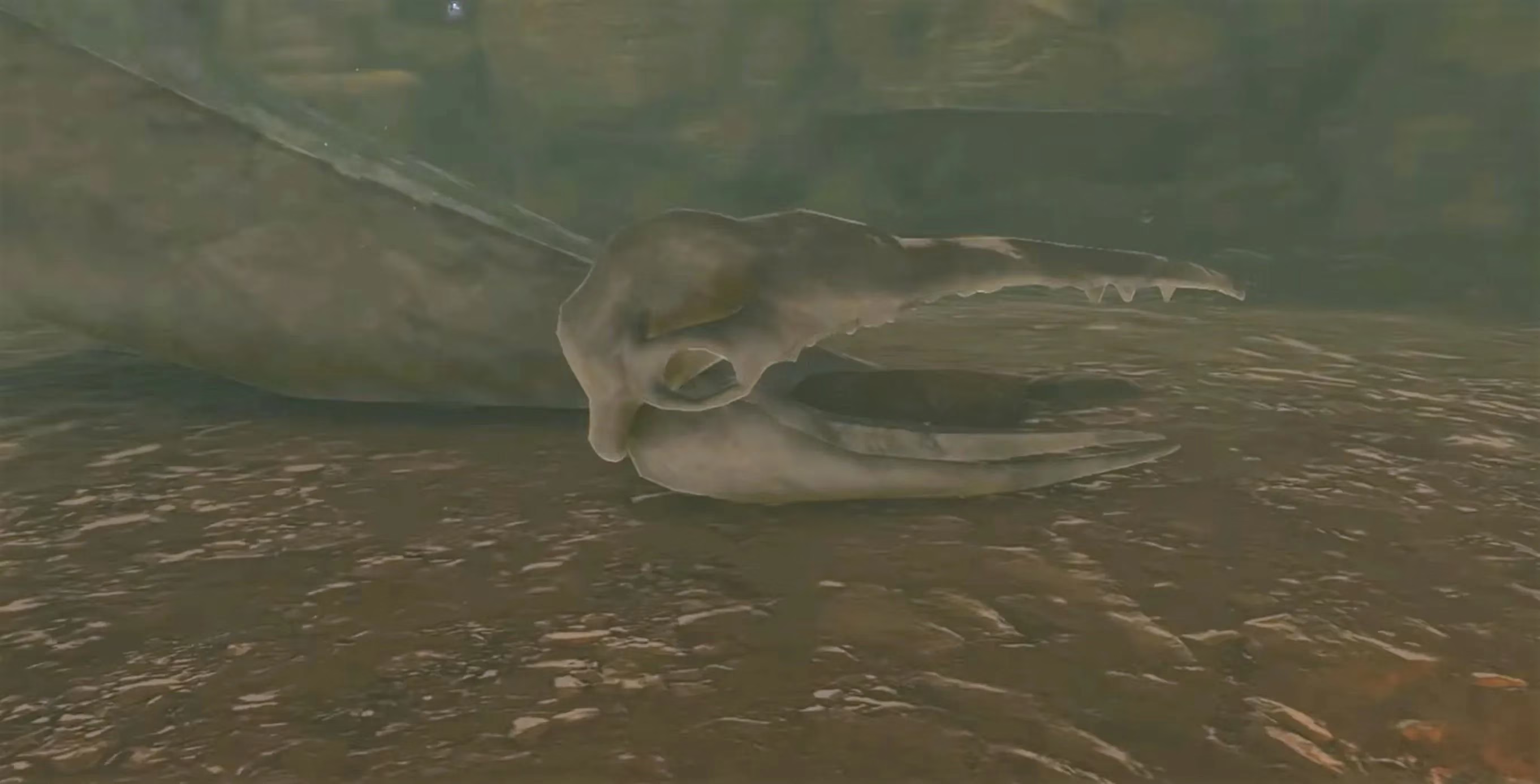
The new Leviathan skeletons in the Depths appear in mirrored locations to their surface counterparts. The Eldin skeleton has a shadow. The Gerudo skeleton has a shadow. The Hebra skeleton has a shadow. No big deal, right? Except the Depths are not a normal basement. They are a dark reflection of Hyrule. Lightroots correspond to surface shrines. Mountains become valleys, rivers become inverted, and the whole place feels like someone flipped the world upside down and forgot to turn off the gloom.
Personification time: the Depths clearly enjoy copying the overworld's homework, but changing just enough details to avoid getting caught. The mirrored Leviathans suggest that the ancient history of the Depths followed the same pattern as Hyrule's history. Not just similar geography, but similar deities. Separate deities, perhaps. Parallel deities. The kind of thing that makes a lore fan's eye twitch in the best way.
Why Mirrored Bones Matter
The implications are huge. If the Depths had its own Leviathans, then the underground world was not always a dark, monster-filled mirror. It may have had its own age of gods and monsters, its own myths, its own giant dead things. This is similar to how the Light World and Dark World worked in A Link Between Worlds, where two realms reflected each other but still had distinct histories.
-
🌑 Light and dark reflections: The Depths may be a literal shadow of Hyrule, not just a cave system.
-
🐉 Parallel deities: The surface Leviathans reference Levias, the Wind Fish, and Oshus. The Depths versions imply similar beings existed below.
-
⏳ Timeline trouble: If both layers have matching fossils, the history of Hyrule might be doubled, not singular.
-
🦴 DLC dreams: The reference article suggested this could point to DLC. In 2026, no DLC arrived, so the mystery remains a loose thread. Spoiler alert: Nintendo is good at leaving those.
The Dragons, the Chasms, and the Awkward Silence
Tears of the Kingdom's dragons fly through the sky and cross through chasms, connecting surface and Depths. If even living divine creatures have to commute between layers, then finding matching skeletons in both places raises a question: did the Leviathans die above and below at the same time? Did they fall? Did they have cousins? Did the Depths simply order the same fossil from a catalog? The game does not say. The game just leaves the bones there, covered in gloom, and lets players spiral.
What 2026 Adds to the Conversation
The Switch 2 Edition of Tears of the Kingdom has made returning to Hyrule smoother, prettier, and less likely to make the framerate wheeze like a tired Bokoblin. But the lore has not changed. The mirrored Leviathans are still there. The Lightroots still match the shrines. The Depths still feel like Hyrule's shadow self, and the skeletons still refuse to explain themselves.
For longtime Zelda fans, this is familiar. The series loves to bury its biggest revelations in optional caves, behind a pile of rubble, next to a chest containing a rusty halberd. The Leviathans are no different. They are not quest markers. They are not boss fights. They are just bones with opinions, and those opinions are loud.
The Takeaway
The Leviathan skeletons in Tears of the Kingdom are more than creepy set dressing. They connect Breath of the Wild's timeline theories to the Depths' mirrored geography. They suggest that Hyrule and the Depths shared a history, or at least a very committed interior decorator. They also prove that Nintendo can make players argue about fish gods and sky whales for years.
Will the mystery ever be solved? Maybe. Maybe not. In a series where timeline placement is basically a contact sport, some bones are destined to stay buried. But for now, the Depths' Leviathans remain a wonderful, gloomy, double-sized puzzle. And somewhere in Hyrule, a historian is crying into a Zonai notebook... which is exactly how the best Zelda lore works.
Research highlighted by CNET - Gaming helps frame why Tears of the Kingdom’s Depths feel like more than a simple subterranean map expansion: the mirrored structure (Lightroots-to-shrines, inverted terrain, and repeated points of interest like the Leviathan skeletons) reads as a deliberate systems-and-worldbuilding choice that invites players to treat the underworld as a parallel layer of Hyrule’s history rather than mere set dressing—making those duplicated bones a long-term lore hook instead of a one-off visual gag.