Everyone loves a glow‑up story, and in the kingdom of Hyrule, few transformations hit as hard as that of Tulin. Back in Breath of the Wild, this pint‑sized Rito was just a chirpy fledgling trailing his dad Teba, occasionally puffing out his feathers and pretending to be a big deal. Fast‑forward to Tears of the Kingdom, and the kid returns as a genuine warrior – bowstring taut, wind at his wings, and a battle cry that could scatter a flock of Keese. More importantly, Link finds himself in an unfamiliar position: the strong, silent mentor figure. Yes, the same Link who once woke up in his underwear and got lessons from an old man now gets to play the wise elder. Tulin’s arc isn’t just a side quest – it’s a blueprint that could rewrite the Hero of Hyrule’s résumé for decades to come.
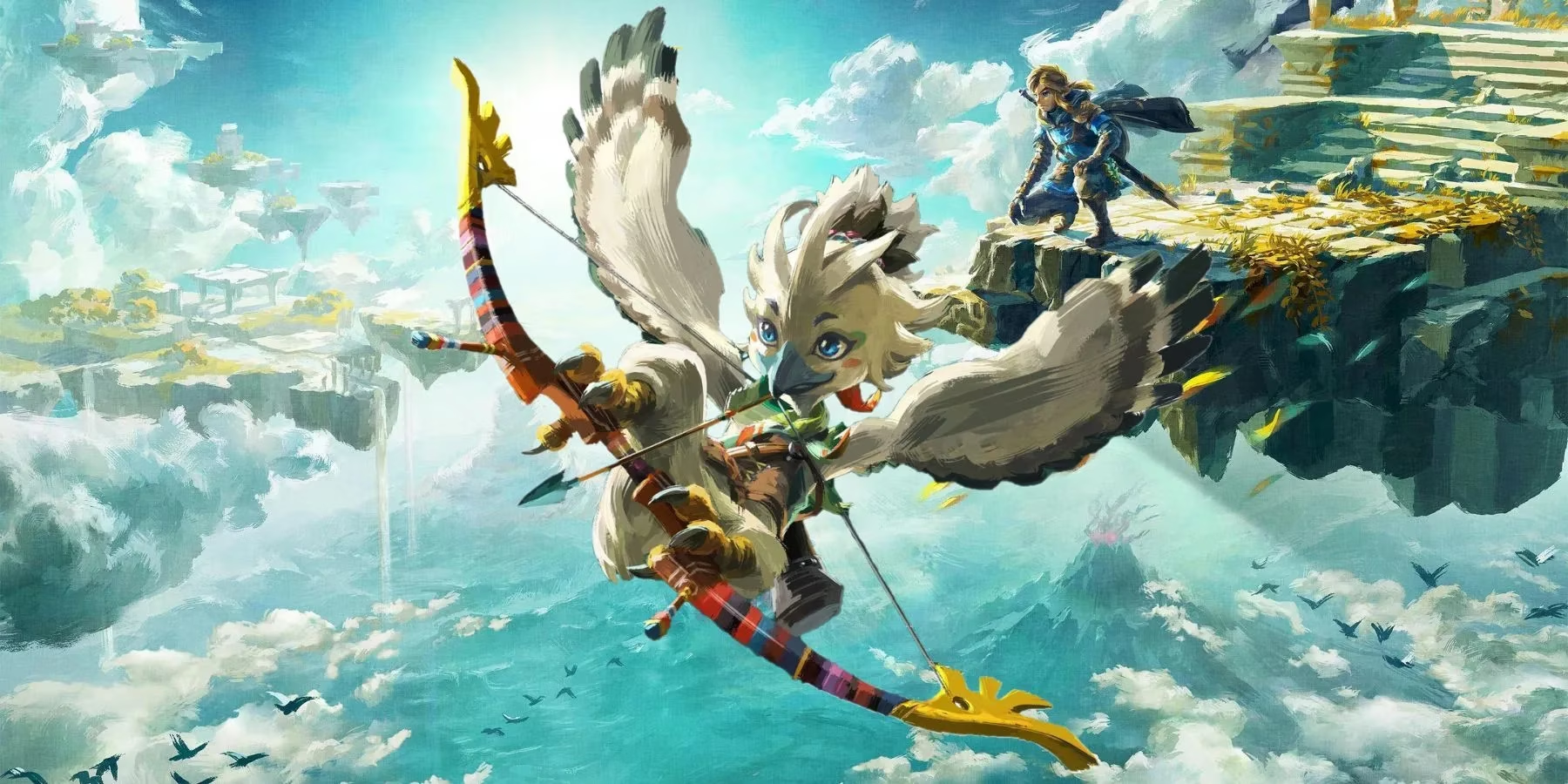
The Zelda series has never been short on young characters, but the dynamic has almost always flowed the other way. From Navi’s incessant “Hey, listen!” to the King of Red Lions’ nautical nagging, Link has historically been on the receiving end of guidance. Even the lofty Hero of Time needed a fairy to tell him which way the wind blew. So watching Link – champion of Hyrule, master swordsman, and part‑time gourmet chef – take a fledgling under his wing (pun absolutely intended) in Tears of the Kingdom is weirdly endearing. He doesn’t give long speeches; he just stands there, probably thinking about paraglider upgrades, while Tulin watches and learns. It’s the most stoic mentoring in video game history, and it works.
The accidental mentor
What makes this relationship so fresh is that Link never asked for it. Tulin essentially appoints himself Link’s aerial backup, and before anyone can protest, the two are carving through the skies of Hyrule together. One moment Link is scavenging for mushrooms, the next he’s teaching a teenage bird how to snipe a Gleeok without getting flambéed. Nintendo, perhaps accidentally, stumbled onto something profound: the Hero doesn’t always need to be the student. By 2026, with the Zelda series forever rumored to be on the cusp of another reinvention, fans can’t help but imagine a game where Link’s default state is “grizzled veteran.” Picture a Hyrule where the green tunic is worn by a slightly older, slightly crankier hero who’s done this whole “save the princess” thing a few too many times. His new sidekick? A starry‑eyed youngster who hasn’t yet learned that cuccos are not to be trifled with.
Tears of the Kingdom gave us a taste of what a more companion‑centric Zelda could look like through its Sage system. The party members might have been glowing spectral forms that occasionally got in the way of a good selfie, but the bones were there. A future title – let’s call it The Legend of Zelda: Echoes of Wisdom for the sake of wild speculation – could expand this into a fully‑fledged adventuring party. Instead of solving every puzzle alone, Link could travel with a ragtag group of protégés, each looking to him for guidance. The stoic swordsman would finally have to communicate more than just grunts and nods. The horror! Yet that’s exactly what the franchise needs to keep its silent protagonist from feeling like a museum piece.
Time paradoxes and parental advice
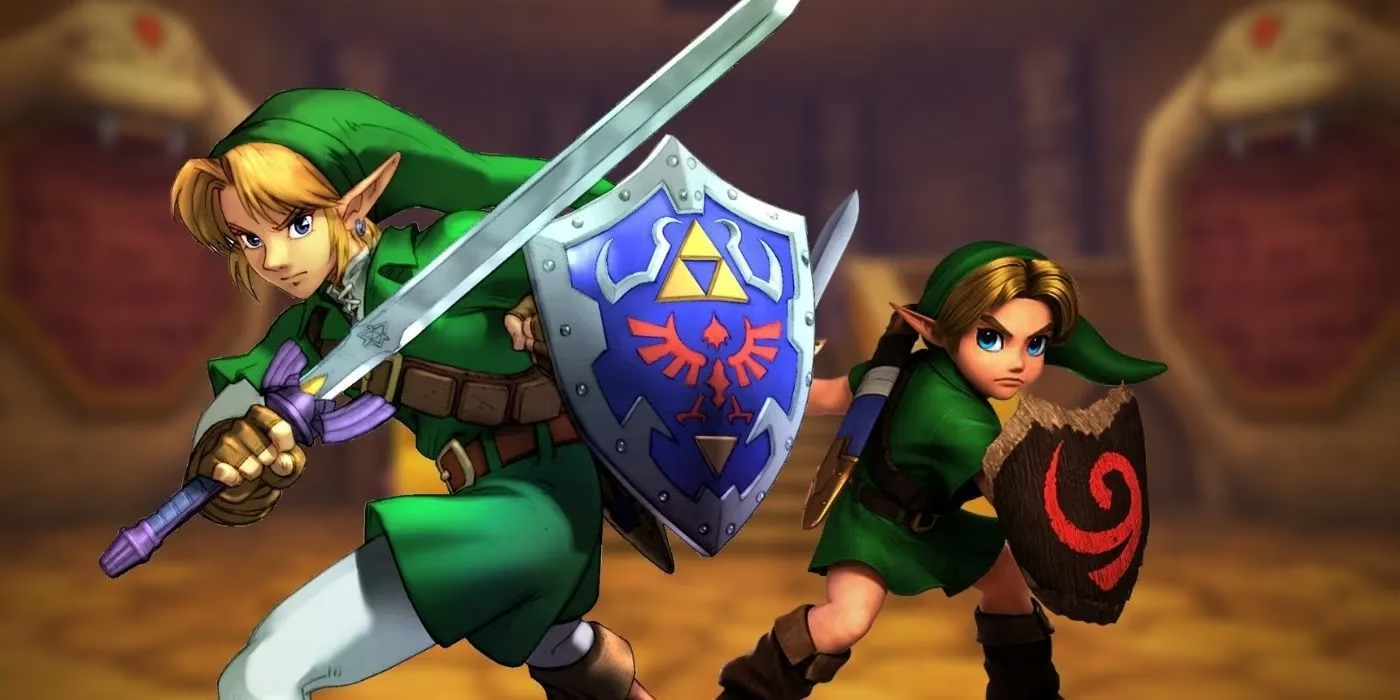
Then there’s the glorious mess that is Zelda’s timeline. If a future game wanted to get really weird, it could borrow a page from Twilight Princess, where the ghost of the Hero of Time drops in to teach a new Link a sword technique or two. With time‑traveling already a staple, why not have a twenty‑something Link mentor a younger version of himself? It would be the ultimate “take your kid to work” day, complete with paradoxes, awkward family reunions, and probably a timeline split that leaves the lore enthusiasts weeping into their Hylian shields. Tulin’s growth proves that players are absolutely here for a hero who learns from someone else’s scars, not just their own.
The real magic of Tulin’s role is that it sneaks in genuine character development for Link. The Hero of the Wild doesn’t need to speak to show he cares. He buys arrows for the kid’s practice sessions. He builds strange flying machines just so Tulin can show off mid‑battle. He endures an endless barrage of enthusiastic chirps without ever throwing his Master Sword in frustration. In a series that often treats its protagonist as a blank canvas for the player, Tears of the Kingdom sketches in a few telling lines. Link, apparently, makes a halfway decent role model. Who knew?
Looking ahead from 2026, with the Nintendo Switch’s successor humming along and fan expectations at a fever pitch, the idea of a Zelda game centered on mentorship is more tantalizing than ever. It could be an older Link training the next generation of Hyrule Field adventurers, or maybe a story where the sage spirits are replaced by living, breathing apprentices who level up alongside you. Tulin’s journey from background extra to indispensable ally shows that the smallest characters often hold the biggest potential. The little Rito didn’t just earn his place in the sky – he cracked open a door that future Zelda games would be foolish not to fly through.