Fast forward to 2026, and the gaming community still buzzes about the visual fireworks that lit up The Game Awards 2023. Art direction remains the secret sauce that turns a good game into an unforgettable experience – it’s not just about raw polygon counts or ray-traced reflections, but how those tools conjure a mood, a world, a feeling. Three years ago, five extraordinary titles battled for the trophy in a category that often separates the merely pretty from the truly artistic. Grab a cup of coffee (or a thermos of Bright Falls brew) and let’s dive into this time capsule ✨.
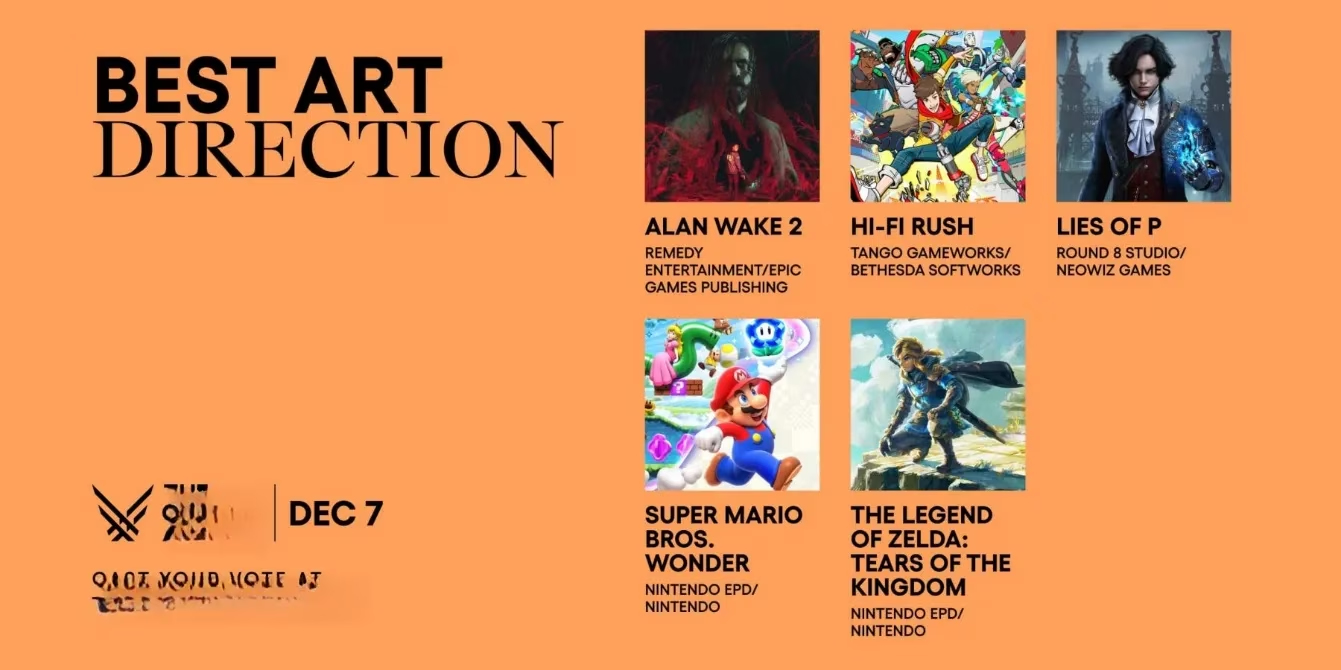
Back then, the industry had already learned that hyper-realism alone wasn’t enough to earn a standing ovation. Alan Wake 2, Hi-Fi Rush, Lies of P, Super Mario Bros. Wonder, and The Legend of Zelda: Tears of the Kingdom each approached visual storytelling from wildly different angles. Every single one of them could’ve walked away with the prize, which made the ceremony on that December night one for the history books.
🎨 The Nominees: A masterclass in visual identity
Let’s beam ourselves back to the mood boards and concept art that defined these gems.
Alan Wake 2 – Remedy Entertainment went all-in on surreal-realism, a style that feels like a David Lynch movie injected straight into a game engine. Alan Wake 2 doesn’t just want you to see the darkness; it wants you to feel it crawling under your skin. The art team balanced two distinct planes: the rainy, neon-soaked Pacific Northwest town of Bright Falls, and the nightmare dimension of the Dark Place, which drips with noir-inspired shadows and grainy film texture. Character models were hyper-detailed, weighty animations gave every flashlight swing a sense of dread, and the dynamic lighting system made every corner feel dangerous. It was less a video game and more an interactive psychological thriller painting. 🌑
Hi-Fi Rush – If Alan Wake 2 was a brooding arthouse film, then Tango Gameworks’ surprise drop was a Saturday morning cartoon on a sugar high. Hi-Fi Rush embraced a cel-shaded aesthetic so unapologetically bold that every frame could be a poster on a kid’s bedroom wall. Over-the-top attack animations, laser beams that popped like neon bubblegum, and characters that moved in sync with the beat – it wasn’t just a visual style, it was a full-body rhythm. The art direction turned a hack-and-slash into a living comic book, where even the environment pulsed to the music. It proved that cohesive cartoony flair can be just as technically impressive as realism. 🎸☀️
Lies of P – Neowiz’s Soulslike put a twisted fairy-tale spin on the Gothic dread made famous by Bloodborne. The city of Krat was a puppet-infested labyrinth of cobblestone streets, ornate ironwork, and gas lamps flickering against endless night. While the influence of FromSoftware was unmistakable, Lies of P carved its own identity through a peculiar brand of macabre elegance – mechanical butterflies, violin-string tendons, and a protagonist whose very design asked what it means to be human. Lighting played a starring role: a perpetual twilight that made the mechanical monstrosities both beautiful and horrifying. It was art direction that whispered, “Come closer… but watch your step.” ⚙️🦋
Super Mario Bros. Wonder – After a decade of 3D adventures, Nintendo reminded everyone that 2D could still drop jaws. Super Mario Bros. Wonder took the vibrant, toy-box aesthetic of modern Mario and injected it with a dose of pure imagination. Each level felt like a pop-up storybook where flowers sang, pipes warped reality, and every animation had that Nintendo squishy-ness that radiates joy. The art direction didn’t just serve the gameplay – it was the gameplay. Transforming Mario into an elephant wasn’t just a fun mechanic; it was a visual punchline that only Nintendo could pull off. The game screamed that color and whimsy could be just as award-worthy as gloom and grit. 🌼🐘
The Legend of Zelda: Tears of the Kingdom – Building on the beloved Breath of the Wild, this sequel once again proved that cel-shading could deliver epic scale without torturing the Nintendo Switch hardware. Hyrule soared into the skies and plunged into the depths, all while maintaining a painterly softness that made sunsets over Lookout Landing feel like a watercolor masterpiece. The visual language was smart – clear silhouettes, readable enemies, and a world that invited exploration without visual clutter. It wasn’t the most pixel-packed game of 2023, yet every frame was a breathtaking postcard. That kind of efficiency is the hallmark of masterful art direction. 🏞️🗡️
🏆 And the winner is…
When the confetti settled at The Game Awards 2023, the trophy for Best Art Direction went to Alan Wake 2. At the time, many debated whether Zelda or Hi-Fi Rush deserved it more, but looking back from 2026, the choice feels almost obvious. Alan Wake 2 wasn’t just visually stunning – it weaponized its art direction to blur the line between gameplay and narrative. The shift from the analog horror of Bright Falls to the disorienting studio backlots of the Dark Place was a creative gamble that paid off, leaving players unsure what was real and what was a manuscript page come to life. The game’s integration of live-action footage, layered environmental storytelling, and lighting that felt like a character in itself pushed the medium forward.
Even today, developers reference Alan Wake 2 in GDC talks about using art to build dread without traditional jumpscares. Its influence shows up in newer titles that mix found-footage aesthetics with polished game engines. Meanwhile, Hi-Fi Rush is still the benchmark for rhythm-action visual cohesion, and Lies of P’s mechanical puppetry has inspired a wave of folktale horror. The other nominees aged beautifully too – Super Mario Bros. Wonder remains a couch co-op visual treat, and Tears of the Kingdom’s sky islands still break hearts with their painterly splendor.
🧩 Why this category still matters in 2026
Fast-forward to the present, and the conversation around video game art direction has only gotten louder. With AI-assisted asset creation and Unreal Engine 5 becoming the default, it’s more important than ever for studios to wield a strong visual signature. The 2023 showdown teaches us that technical fidelity is a tool, not a destination. Whether you’re rendering millions of raindrops on Alan Wake’s coat or making Mario stretch into a wonder flower, what sticks with players is a cohesive vision – a style that tells a story all on its own.
So, next time you boot up a blockbuster and admire the scenery, spare a thought for the art directors, concept artists, and lighting wizards who painted that world. Because without them, even the highest frame rates would feel, well, a little empty. And if you haven’t revisited Alan Wake 2 lately, maybe it’s time to go back to Bright Falls. Just remember to bring extra batteries for that flashlight 🔦.