Ever wondered how a game as vast and intricate as The Legend of Zelda: Tears of the Kingdom comes together? It seems the answer involves less of a mystical Triforce and more of a brilliantly organized internal social network. Back in 2026, looking at the legacy of this modern classic, the story of its development tools remains a fascinating blueprint. Who would have thought that the secret weapon behind Hyrule's latest adventure was a custom-built forum where 'likes' were paid in rupees?
During a behind-the-scenes talk at the Computer Entertainment Development Conference (CEDEC), the game's director, Hidemaro Fujibayashi, and engineer Kenichi Hirose pulled back the curtain. They revealed that Nintendo crafted its very own Zelda-themed social media platform to streamline the creation of Tears of the Kingdom. Forget watercooler chats; this was next-level collaboration.
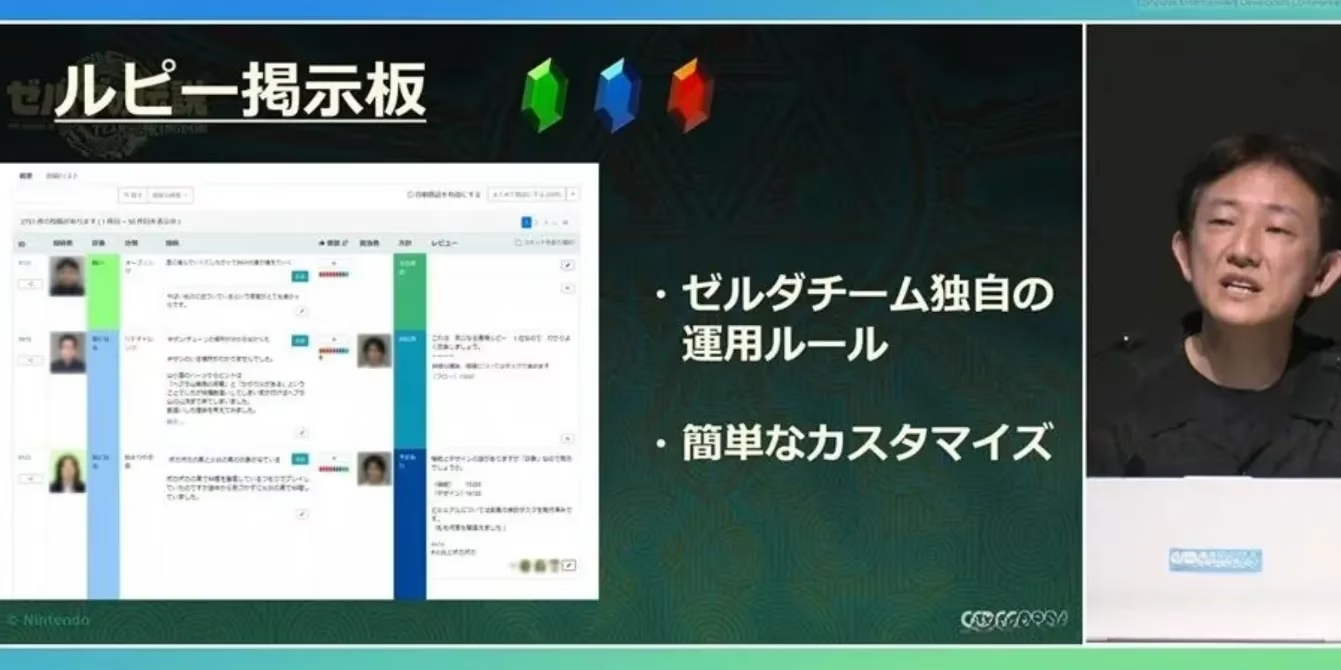
The Rupee Bulletin Board: Collaboration, Currency-Style
This internal hub, affectionately dubbed the 'Rupee Bulletin Board,' was the digital heart of the development team. Modeled after the game's iconic currency, it functioned like any modern message board—but with a distinctly Hylian twist. Developers could create posts, comment on threads, and express approval not with a simple thumbs-up, but by awarding a little digital rupee. Can you imagine your performance review being based on how many virtual gems your bug reports collected?
The primary use was rapid, efficient sharing. Ideas for new features, reports of pesky bugs, feedback from playtesting sessions—all flowed through this centralized system. But the rupee 'like' button evolved into something far more critical: an unofficial prioritization tool. Posts that amassed the most rupees were instantly flagged as high-priority issues or brilliant ideas. It was a democratic, gamified way to see what mattered most to the entire team. Why have a boring spreadsheet when you can have a leaderboard of glowing green gems?
The Rules of Engagement: No Drama in Hyrule
Of course, what's a social network without a few ground rules? Nintendo, perhaps learning a lesson or two from the chaotic wider internet, established a strict code of conduct for the Rupee Board. This wasn't a place for hot takes or fiery debates.
-
Objectivity is Key: All posts had to be factual and free from personal bias. It was about the work, not the opinions.
-
The No-Argument Rule: Discussions had to remain constructive. Heated conflicts were strictly forbidden. Imagine the moderators wielding the Master Sword to lock toxic threads!
-
Solution-Oriented Feedback: It wasn't enough to point out a problem; suggestions for fixes were encouraged. This kept the forum focused on building, not just critiquing.
In essence, they created a conflict-free zone for pure productivity. It was social media stripped of all its infamous baggage—no algorithms promoting outrage, just developers efficiently making an incredible game.
Beyond the Forum: The Fusion Testing Lab
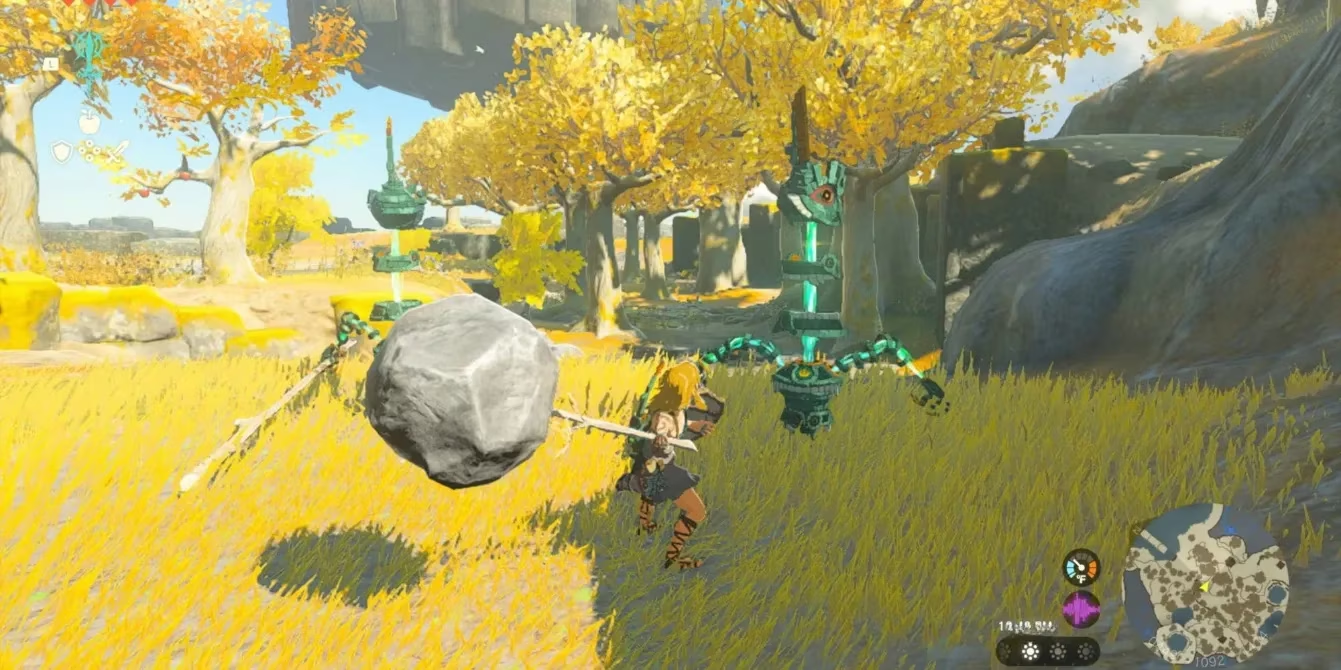
Fujibayashi and Hirose didn't stop there. They also highlighted another ingenious internal tool born from necessity: a specialized image board for the 'Fuse' ability. With Link's new power to combine over 120,000 different items, the potential for game-breaking bugs or underwhelming combinations was enormous. How do you even begin to test that?
The infrastructure engineers built a system where developers could quickly visualize and log the results of countless fuse combinations. This massive database ensured that the game's most innovative mechanic was not just creative but also robust and fun. It was a silent, behind-the-scenes engine that guaranteed every bizarre weapon and contraption worked as intended.
A Legacy of Polished Innovation
Looking back from 2026, the success of these tools is undeniable. The Rupee Bulletin Board and the Fuse testing suite were more than just software; they were manifestations of Nintendo's philosophy. They fostered a culture of clear communication, collective problem-solving, and relentless attention to detail.
The result? A game celebrated for its polished, emergent gameplay where even the wildest player ideas felt supported by the code. The next time you seamlessly fuse a mushroom to a shield or stumble upon a perfectly working complex machine, remember: it was likely born from a bug report with a lot of rupees on it and rigorously tested in a virtual lab. The true magic of Tears of the Kingdom wasn't just in the game—it was in the meticulously organized, rupee-driven process that built it.