I never expected a debug tool to become the ghost that follows me through every dungeon I enter in 2026. But three years after The Legend of Zelda: Tears of the Kingdom arrived, I still catch myself glancing at low ceilings in caverns, ruins, and tower stairwells, wishing I could simply float upward through the stone. Ascend did not look like the most dramatic power in Link's arsenal—Ultrahand got the flashy vehicle-building montages—but it quietly rewired how I think about vertical space. Using Ascend felt like being a drop of ink traveling up through wet paper, defying every rule the architecture had spent years teaching me.
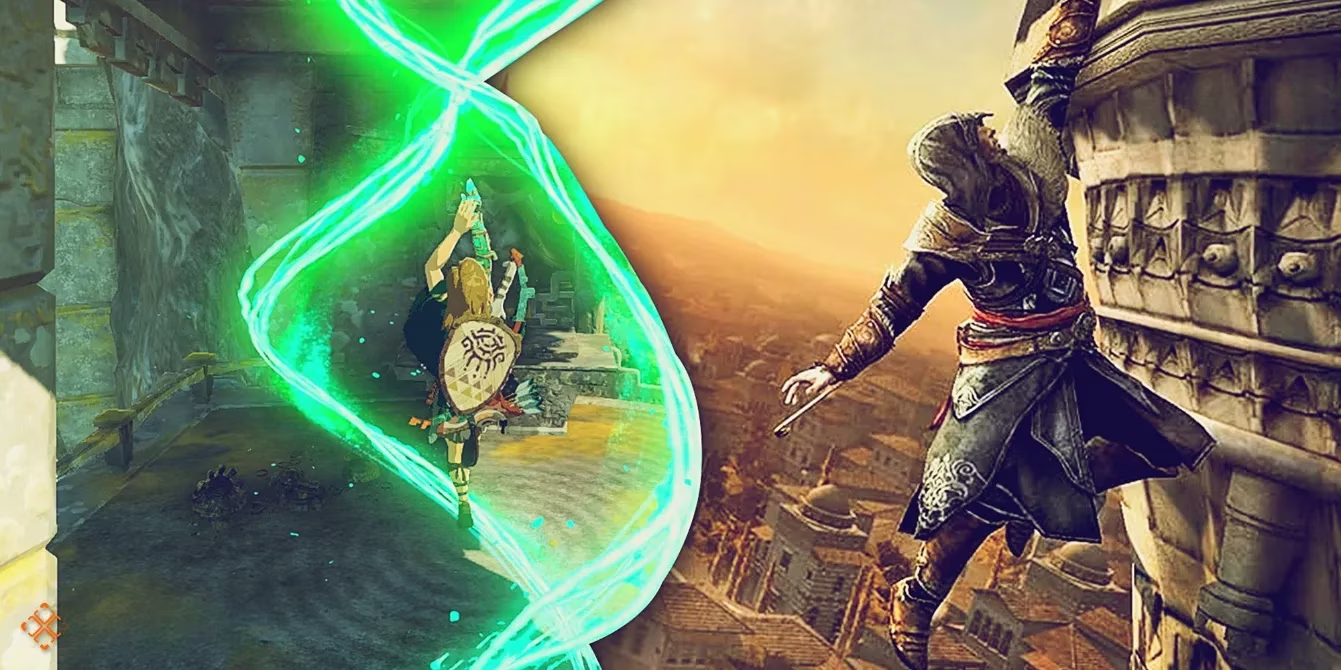
For those who missed it, Ascend allows Link to rise through any flat surface above his head. The skill began life as a developer's debug convenience, then became the most game-changing ability in the final release. It was not as sexy as Ultrahand, but it felt more groundbreaking because it eliminated friction. In the Depths, I could nope out of a sunless chasm if I found the right rocky overhang. Around Hyrule Castle, I could phase from the dungeons to the turrets without retracing a dozen staircases. Even a treasure chest dangling from a rope became a strange little platform once I learned to rise through its underside and loot it from above. Ascend turned ceilings into trapdoors, as if the whole world had been stitched together with loose seams.
That feeling followed me into Baldur's Gate 3, where I am still, in 2026, exploring Act 2 for the fourth or fifth time. Three of the early battles in that portion sprawl across multilevel structures: a derelict house, a set of ruins, and one massive multistory building I will not spoil. In a turn-based game, moving up a floor can consume multiple turns, and every time my ranger dashed toward a staircase, I thought about how a cantrip modeled on Ascend would transform combat. It would not need to break the game—maybe a third-level spell or a once-per-short-rest ability—but it could let a character slip through a wooden ceiling like a needle through fabric, turning defensive positioning into something fluid.
The desire is not new. Zelda has a long history of leaking its ideas into the wider medium. After Breath of the Wild, Horizon Forbidden West borrowed a glider, Ubisoft's Immortals: Fenyx Rising borrowed the open-ended structure, and quieter indies like A Short Hike and Sable borrowed the exploration-first philosophy while removing combat altogether. Those games proved that Zelda's influence could spread without becoming a cheap clone. Ascend could do the same. In the years since Tears of the Kingdom launched, I have played a handful of indies that toyed with ceiling-phasing or vertical shortcuts, but none has built an entire identity around it. A Metroidvania where every ceiling is a potential secret, or a platformer with one unforgettable Ascend-like level, still feels like an opportunity waiting to be claimed.
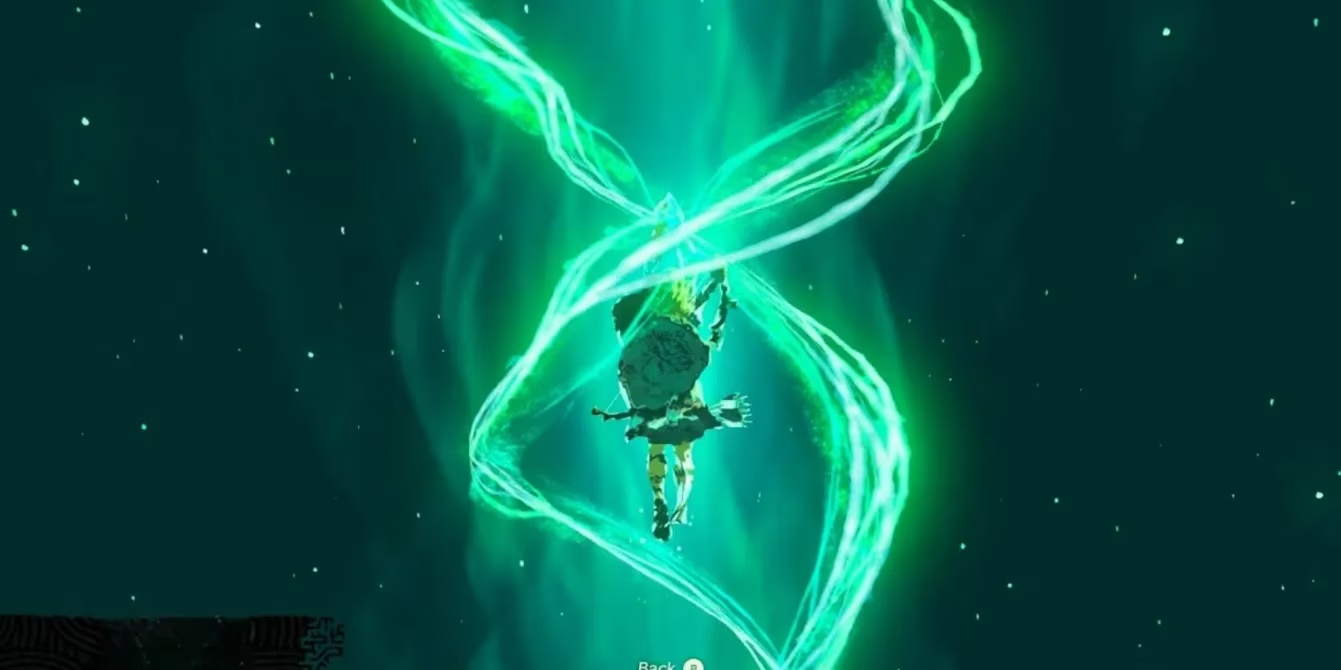
What I want most is not a wave of copycats. I want developers to treat Ascend the way they treat the glider: as a tool for removing busywork. In Breath of the Wild, reaching a high vantage point meant climbing for minutes or warping to a tower. Ascend offered the opposite—a diegetic fast travel system that covers huge distances without ever opening a menu. It was a skeleton key made of negative space, and it made the world feel more connected, not less. That is the real lesson.
Of course, Nintendo's patent filings around Tears of the Kingdom may slow the spread. The company has always protected its hardware and software ideas fiercely, and a mechanic this specific could remain locked in Hyrule for years. But games evolve through inspiration anyway. Even if the exact Ascend button never appears in another AAA title, I hope the philosophy behind it—vertical freedom, seamless traversal, fewer menus—continues to shape the next generation. Because in 2026, every time I stand beneath a wooden ceiling in an RPG and check the ability bar for something that is not there, I feel the ghost of that debug tool again, still waiting for someone else to let it rise.