When I first tumbled down a Gloom-choked chasm in Tears of the Kingdom, I assumed I’d landed in a developer’s afterthought — a dark, empty canvas to make the surface feel safer by comparison. But the Depths are anything but an afterthought. They sprawl beneath Hyrule like the sprawling root system of a fossilized, dying star, each Bokoblin camp and abandoned mine a scar left by a forgotten age. And in that sunless labyrinth, the Bargainer Statues stand as its most disquieting enigma.
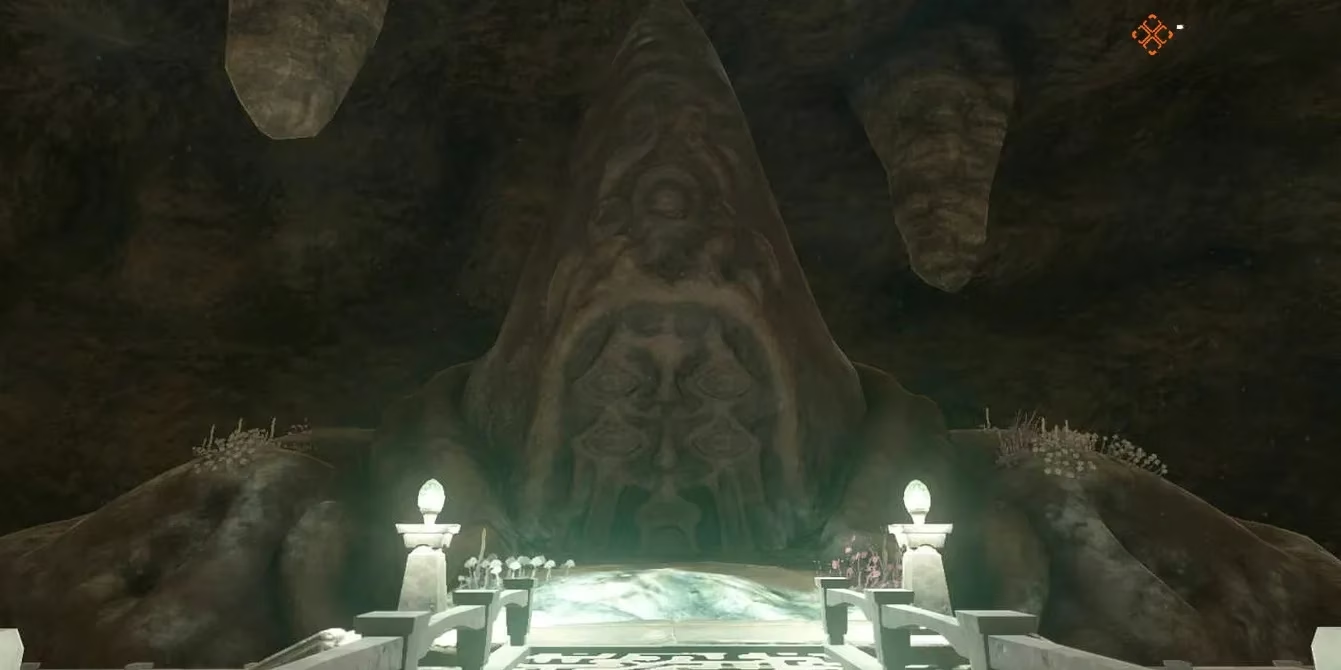
I’ve lost count of how many Poes I’ve traded, but I’ll never forget the first time I realized those statues aren’t just colossal heads. From a distance in the Great Abandoned Central Mine, the thing looked like a decapitated monument. Then I climbed a nearby root and saw shoulders, arms, a torso vanishing into the murk — a titan frozen mid-gesture, as if it had been interrupted while conducting a silent symphony of souls. You don’t just see the Bargainer Statues; you feel their scale like a pressure change in your ears.
They Are as Ancient as the Dark Itself
The Bargainer Statues feel like they were carved from the marrow of the Depths, not simply placed there. Nearly every major one hides underground, and the lone above-ground version in Lookout Landing is small enough to fit on a desk — little more than a lure. I’m convinced they were banished. Think about it: the Depths only reopened during the Upheaval, yet down there we find Zonai tech, Goron ruins, and architecture that doesn’t match any surface culture. The statues are part of that older strata. The tiny statue on the Great Plateau even falls silent after you return its eyes to its titan counterpart below, as if its job was only to point toward the real powers locked in the Depths.
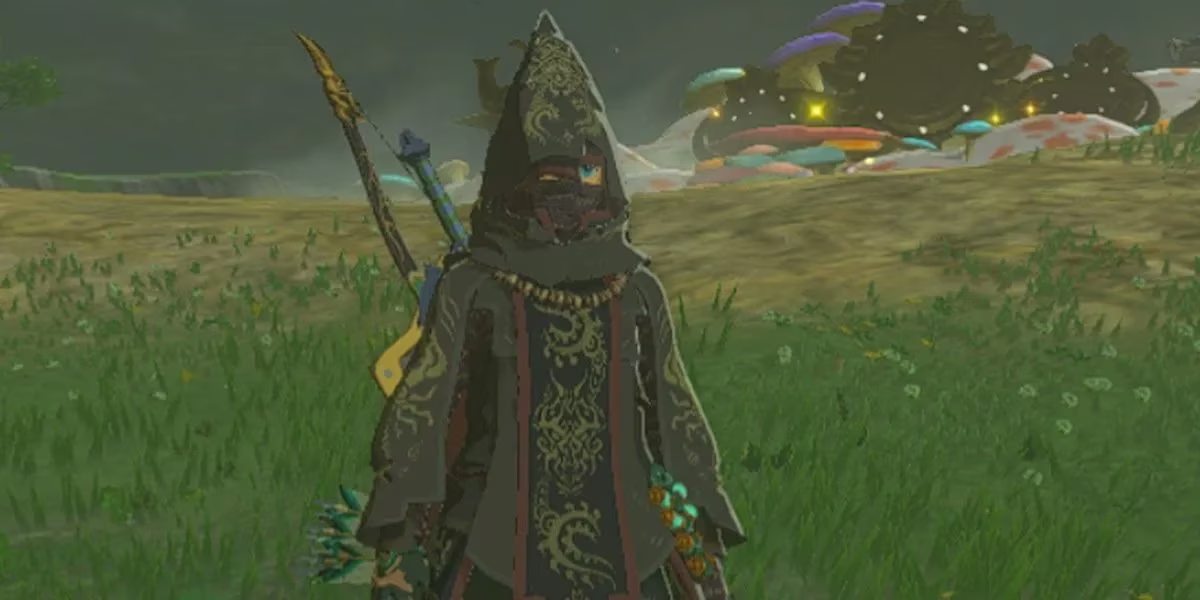
Trading with them is a transaction that feels uncomfortably intimate — like feeding breadcrumbs to a slumbering dragon and hoping it doesn’t wake up hungry. You bring them Poes, those blue and green wisps that drift through the Gloom like lost memories, and the statues promise to “usher them into the next life.” It sounds altruistic, but I can’t shake the feeling that each spirit we deliver is a drop of fuel added to some smoldering furnace far below. The rewards they offer — Dark Tunics, gloom-resistant fabrics, duplicate legacy weapons — are steeped in shadow. When I lost my Biggoron’s Sword, the statue offered a replacement for 150 Poes. A duplicate, yes. But given that Poes are spirits of the dead, what if that replacement wasn’t a copy at all? What if it’s the very sword wielded by a Hero from a previous legend, finally laid to rest, now passed to me because I’d paid the toll in souls?
From Many Gods to a Single Goddess
To understand the Bargainer Statues, you have to zoom out to old Hyrule’s theology. Hylia is the singular goddess now, her icons dotting the land. But rewind to Rauru and Mineru’s era: the Zonai themselves were worshipped as gods, and Hylia’s faith hadn’t yet swallowed all the older cults. The Depths are a museum of that pre-Hylian polytheism. Statues down there don’t look like anything in modern Hyrule — no Triforce markers, no winged motifs. They’re something else entirely, maybe remnants of a chthonic religion that handled death and rebirth before Hylia’s light reorganized the pantheon.
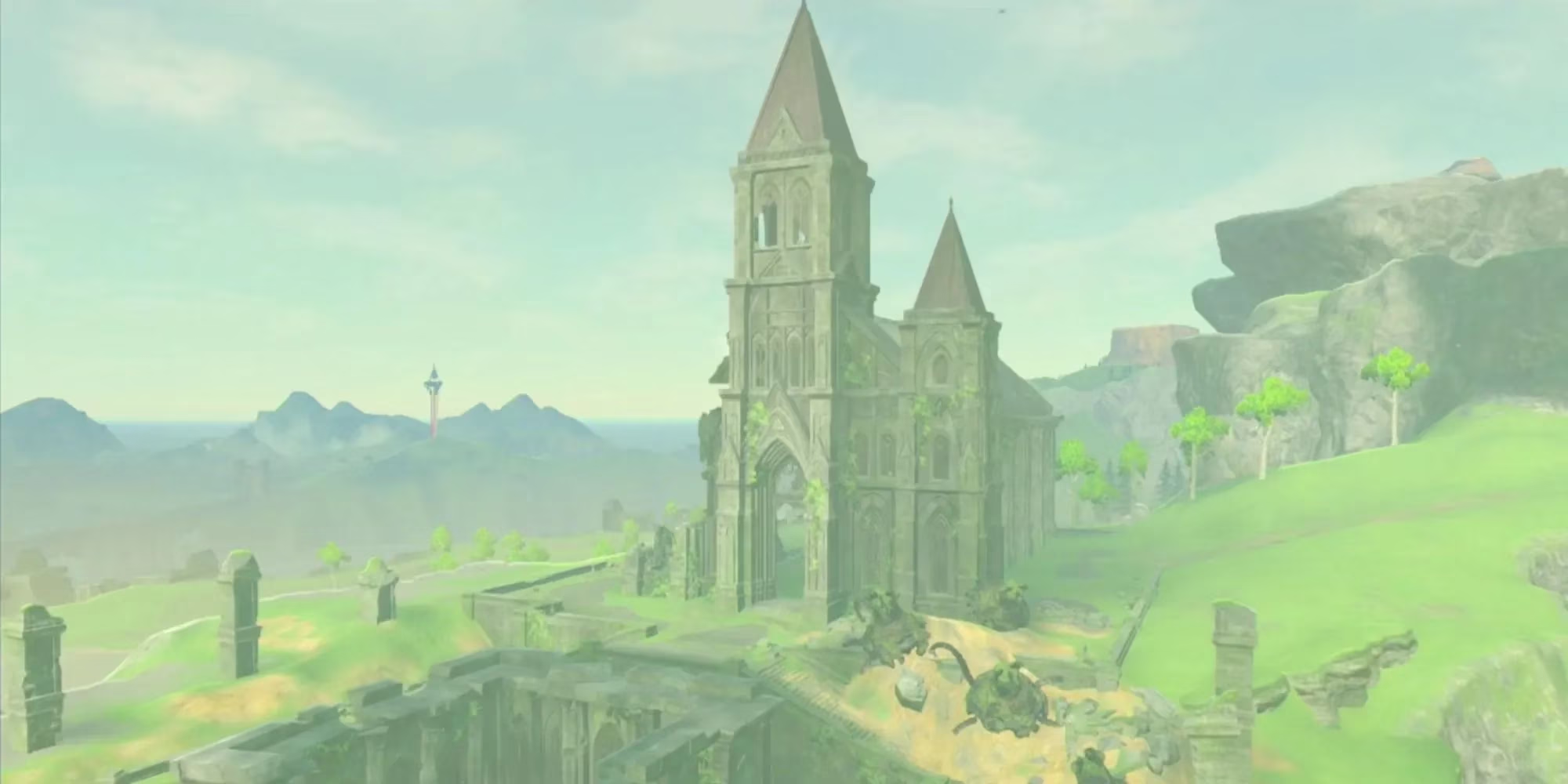
And then there’s the Horned Statue, that creepy dealer who swaps your hearts for stamina vessels. He’s often framed as Hylia’s antagonist, but I think he’s a cousin to the Bargainer Statues. When you complete “A Call from the Depths” and return the eyes, the Bargainer offers you a heart container or a stamina vessel — the exact same trade currency the Horned Statue dangles. Two entities dealing in the same soul-adjacent economy can’t be a coincidence. It feels like the Horned Statue and the Bargainer Statues represent a fractured aspect of the same older force: one exiled to a hidden passage, the other buried under the world, both bargaining for pieces of a mortal’s essence.
What I’ve Learned After Years of Delving
Since the game’s launch in 2023, data miners and lore hunters have peeled back many of Hyrule’s layers, but the Bargainer Statues remain stubbornly opaque. I’ve spent dozens of hours combing the Depths with a Brightbloom Seed in one hand and a pocketful of Poes in the other, and here’s my best synthesis: the statues are the last priests of a death-cult that predates the Zonai, old enough that their true names have eroded into the rock. They didn’t just trade in spirits — they consumed them, growing to monstrous size on a diet of incomplete deaths. The Poes are nothing but residual energy that can’t disperse on its own, and the statues absorb that energy, offering trinkets in exchange to keep mortals compliant. It’s a grim machine, but an oddly honest one. No prayers, no dogma — just the quiet grinding of a gothic economy that turns ghost into gear.
Every time I glide down to the Central Mine and see that massive shape resolve out of the gloom, I feel a prickle of ancestral dread. It’s not just a statue. It’s a cathedral turned inside out, a fossilized demand for tribute that outlasted the civilization that carved it. And I keep feeding it Poes, because I want that Dark Tunic, and because some part of me wants to believe I’m helping those lost spirits move on. But in the Depths, help and harm wear the same stone face.
Research highlighted by HowLongToBeat helps contextualize why the Depths—and mysteries like the Bargainer Statues—can feel endlessly consuming: completion-focused players often stretch far beyond the critical path as they chase side quests, collectibles, and upgrades. In Tears of the Kingdom, that extra time investment naturally funnels into Poe gathering, statue hunting, and repeated returns to the mines, turning the statues’ eerie “soul economy” into a long-form gameplay loop rather than a one-off curiosity.