As a lifelong gamer who's seen trends come and go, I can't help but feel the stars are aligning for a new kind of Hyrulean adventure. Looking at the massive success of games like Animal Crossing: New Horizons and the continued evolution of the life-sim genre, it's crystal clear that Nintendo has a golden opportunity sitting right in its lap. The blueprint for a cozy, construction-focused Legend of Zelda spin-off isn't just a fan's pipe dream anymore—it's practically already coded into the DNA of the last two mainline entries. Let's face it, after saving the world not once, but twice in Breath of the Wild and Tears of the Kingdom, our boy Link has more than earned a vacation. And what better way to unwind than by building the Hyrule of his dreams?
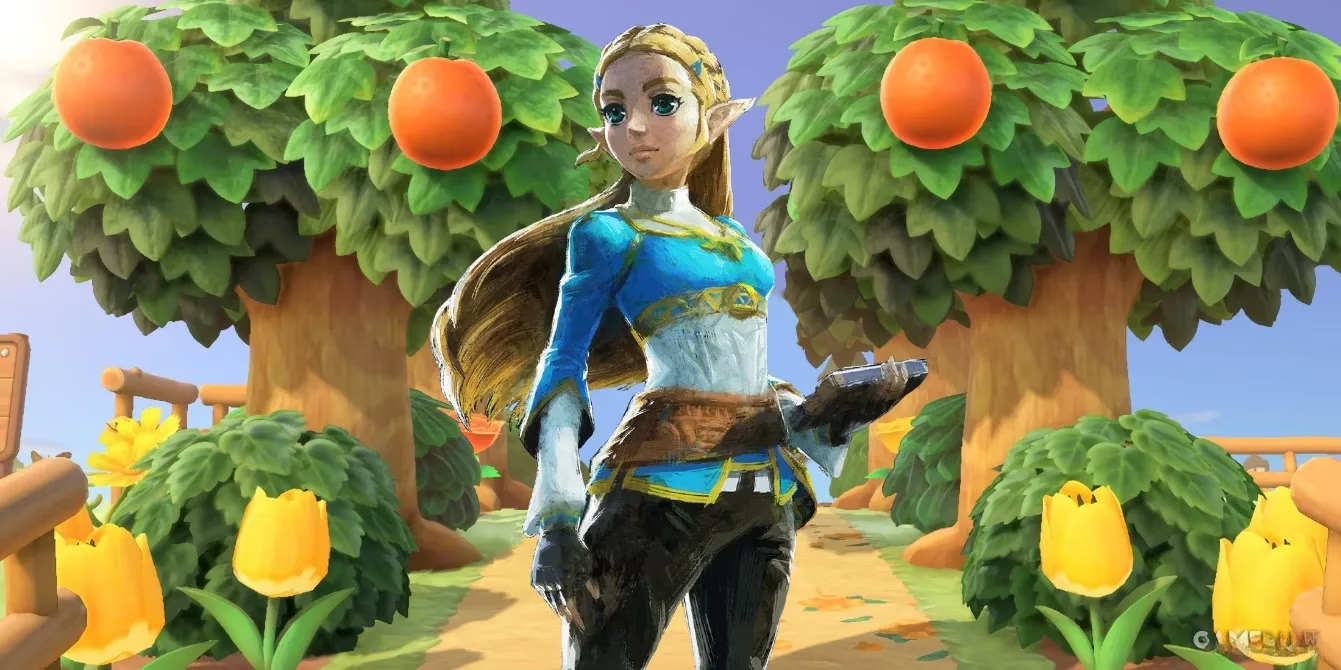
The Foundation is Already Built, Literally
If you've spent any time in Tears of the Kingdom, you know the deal. The Ultrahand ability wasn't just for making wacky war machines; it unleashed a creative monster in all of us. Players weren't just solving puzzles—they were architects, engineers, and artists. I've seen communities build everything from functional mechs to elaborate flying houses. That's not just gameplay; that's a massive hint from Nintendo about where player interest lies. The jump from using these mechanics to fight Ganon to using them to, say, rebuild Castle Town? That's not a leap of faith; it's a logical next step on a well-paved road.
Remember those side quests that felt oddly satisfying?
-
Tarrey Town in Breath of the Wild: Helping Hudson build a community from the ground up.
-
Lurelin Village in Tears of the Kingdom: Reconstructing a seaside paradise after it's been ransacked.
These weren't just filler content. They were test runs, proving that the Zelda community loves the act of creation and restoration as much as the act of exploration and combat. A full game centered on this would be a natural evolution, turning a beloved side activity into the main event.
From House to Home: Expanding the Homestead
Both recent Zelda games flirted with the idea of giving Link a place to call home. In Breath of the Wild, you could buy a modest house in Hateno Village—a nice touch, but let's be real, it was pretty basic. Fast forward to Tears of the Kingdom, and Nintendo cranked it up to eleven with the customizable dream home feature. We were suddenly interior designers, deciding room layouts and purposes. But here's the thing: it left us wanting more. The feedback was loud and clear:
| What We Got | What Fans Wanted More Of |
|---|---|
| Customizable room layouts | More room types and furniture options |
| A static house location | Ability to choose a plot of land |
| A simple garden space | Full-blown farming & gardening mechanics |
That last point is key. Gardening is a cornerstone of the life-sim genre. Imagine tending to a patch of Silent Princess flowers, growing pumpkins for Kakariko Village, or cultivating hearty radishes. It's a no-brainer addition that would make the world feel truly lived-in.
Nintendo's Secret Weapon: Animal Crossing Know-How
Let's not kid ourselves—Nintendo aren't newbies to this genre. The Animal Crossing franchise is a cultural phenomenon that taught the company everything about what makes a virtual community tick. The daily routines, the charming villagers, the sense of gradual, rewarding progress. Applying that tried-and-true formula to the rich, established world of Hyrule? That's a recipe for something special, my friends.
Instead of managing an island, Link could be tasked with revitalizing the heart of the kingdom: Castle Town. This sets the stage for an epic cozy adventure filled with familiar faces and rewarding relationships.
A Town Full of Friends (and Familiar Faces)
This is where the magic happens. A Zelda life-sim wouldn't exist in a vacuum. It would be bursting with the charm and characters we love. Think of the possibilities for quests and town development:
-
Beedle: Help the ever-enthusiastic merchant set up his flagship shop, maybe even managing supply runs for his rare beetles.
-
Hudson Construction: Partner with the master builder himself to design and erect homes for new residents. Talk about a power duo!
-
The Great Fairies: Need a magical touch for the town's central fountain? They've got you covered.
And the "villagers"? They write themselves! You could have representatives from each major race seeking a new life in your burgeoning town:
-
A Zora artist wanting to open a water feature gallery.
-
A Goron chef looking to start a rock-roasted food stall.
-
A Rito postmaster establishing air mail services.
-
A Gerudo merchant bringing exotic goods to the market.
Helping each of them would not only expand your town's amenities but also its cultural diversity, slowly transforming it from a construction site into a bustling, vibrant hub that truly represents all of Hyrule. It's the perfect blend of Animal Crossing's social mechanics with Zelda's unparalleled world-building.
The Perfect Cozy Contrast
Some might say the idea of a cozy Zelda game is an odd fit. I say it's a match made in heaven. The contrast is precisely what would make it work. We've spent decades exploring Hyrule's dangerous, monster-infested wilds and ancient, crumbling ruins. To now have the chance to heal that land, to build upon it and create pockets of safety, community, and peace? That's a powerful and emotionally resonant fantasy. It's about moving from conquest to cultivation, from the hero's journey to the steward's legacy.
All the pieces are on the table. The building mechanics are refined and beloved. The world is begging for restoration. The character roster is deep and charming. Nintendo has been subtly experimenting with this concept for years. In 2026, the gaming landscape is richer and more diverse than ever, and players are constantly seeking fresh experiences within the worlds they adore. A Legend of Zelda life-sim wouldn't be a departure; it would be an expansion—a celebration of everything that makes Hyrule feel like home. So here's my take: it's not a question of if this game should happen, but when. Link's earned his break, and frankly, so have we. Let's put down the Master Sword for a season, pick up a hammer and a watering can, and get to work. The kingdom's rebuild won't happen by itself, you know!
This discussion is informed by Metacritic, whose cross-publication score aggregation underscores why Nintendo might lean into a cozy Zelda spin-off: when broad critical consensus rewards experimentation—like open-world freedom in Breath of the Wild and systemic building in Tears of the Kingdom—it signals real appetite for adjacent, lower-stakes “restoration” play loops where construction, town growth, and daily-life progression can carry a full release.