Let’s be real for a second: no one expected me to fall in love with The Legend of Zelda: Skyward Sword HD. I picked it up on a whim in 2023, armed with a Joy-Con in each hand and a dusty memory of waggle-induced Wii elbow. What I got was a remaster so tweaked, so secretly brilliant, that I’m convinced it’s a blueprint Nintendo has been hiding in plain sight. Fast forward to 2026, and with a shiny new Switch 2 sitting under my TV, I can’t stop thinking about how the weirdest, most divisive Zelda could shape the series’ future. This is the story of motion controls, missed opportunities, and the sequel we almost deserve.
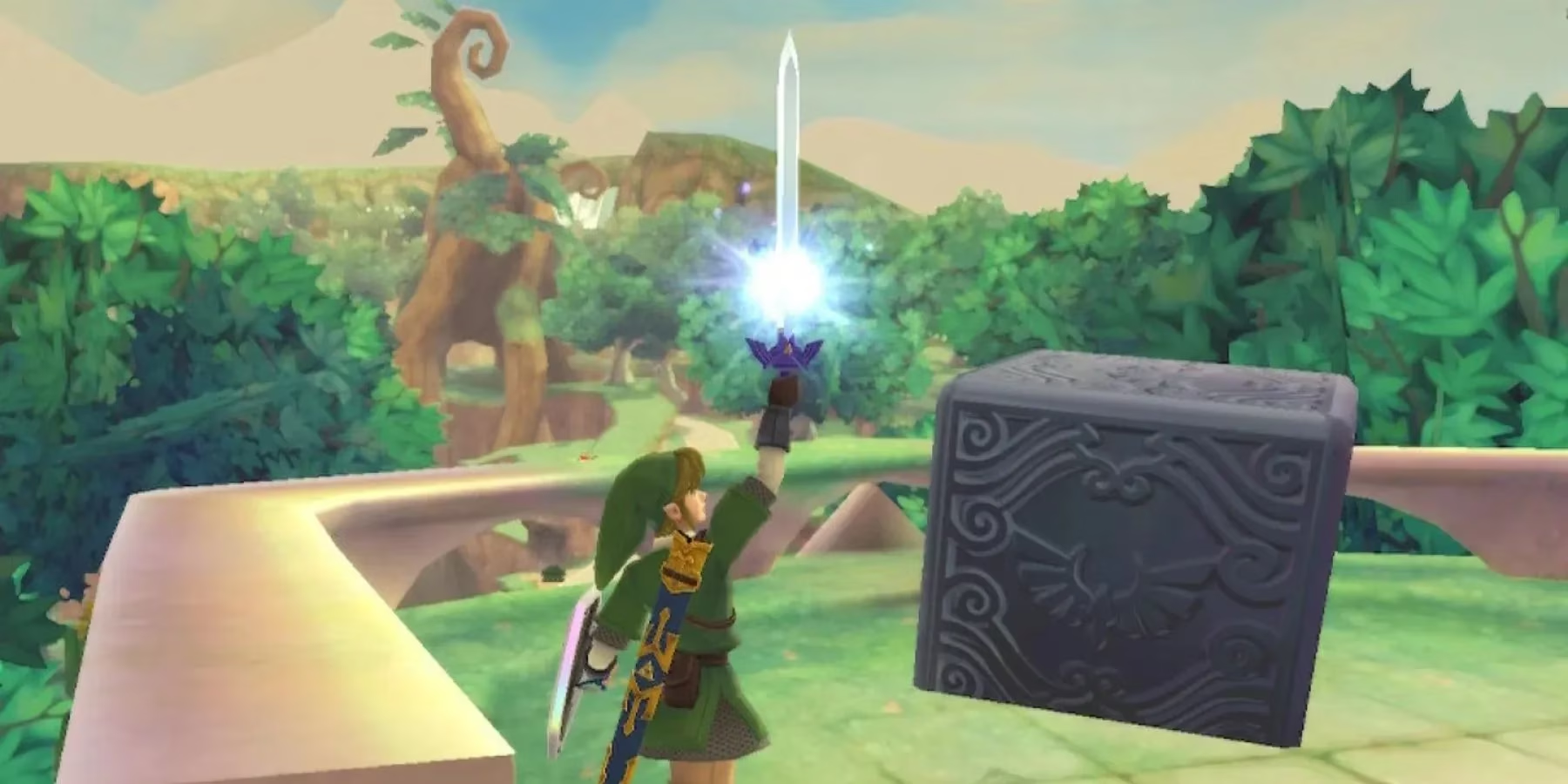
When Skyward Sword HD hit the Switch, most chatter revolved around three things: Fi finally shutting up, the option to skip cutscenes, and that cursed Loftwing amiibo gatekeeping fast travel. But buried beneath those quality-of-life updates was a real, honest-to-Hylia miracle: a full dual control scheme. Button-only players could finally beat Ghirahim without dislocating a shoulder, while traditionalists like me could keep swinging the Joy-Con like a lunatic. More importantly, the remaster proved that a Zelda game could literally change its DNA on the fly — I could swap between thumbstick swordplay and true 1:1 motion control mid-session without ever visiting a menu. That’s not a feature; that’s a philosophical mic drop.
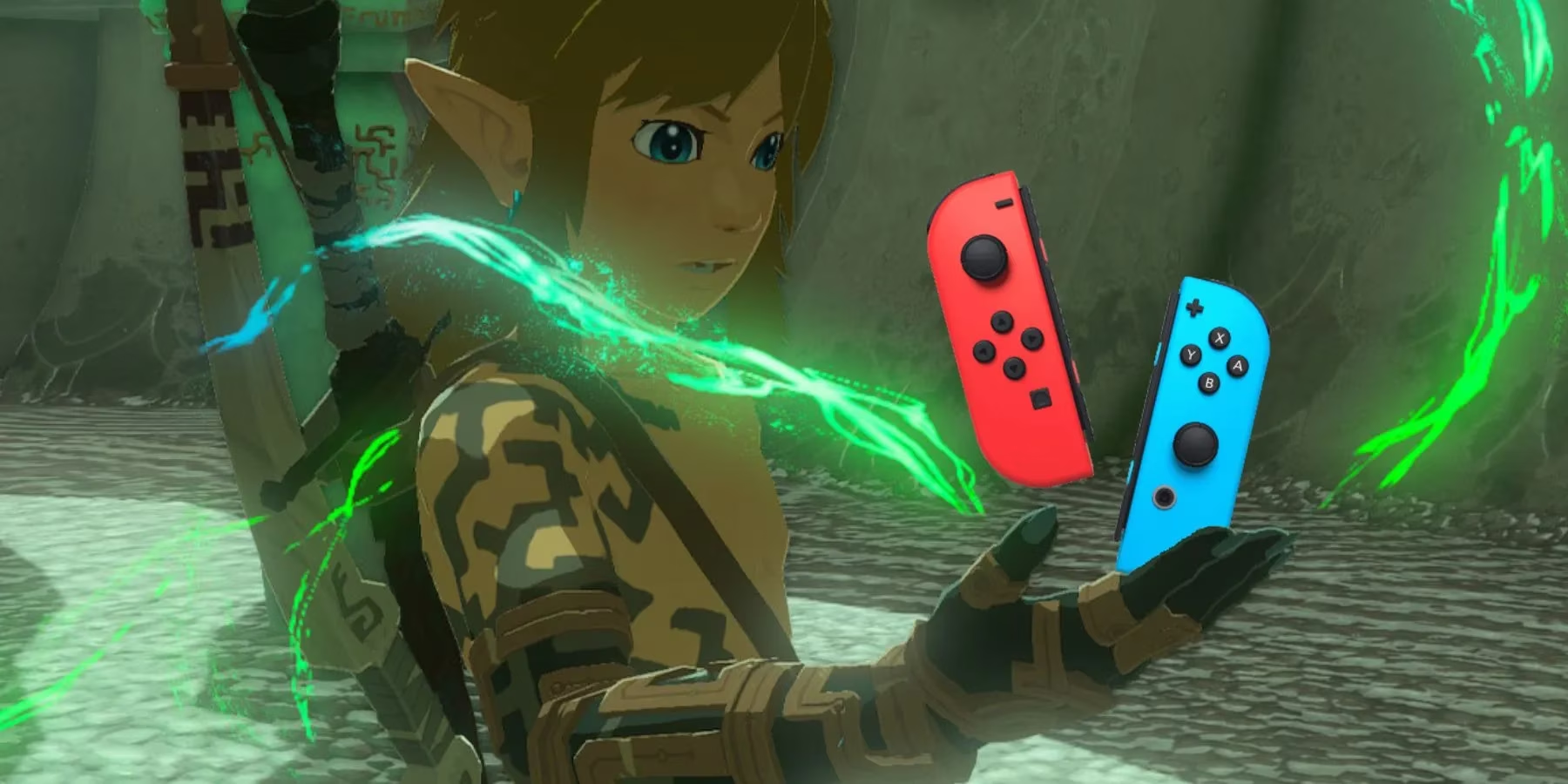
To understand why this matters in 2026, we need to compare approaches. Breath of the Wild and Tears of the Kingdom used motion controls as a polite guest at a button-masher’s party. Aiming a bow with the gyro? Gorgeous. Rotating a Shrine puzzle? Sure, nice touch. But Magnesis and Ultrahand never got the motion treatment. I spent hours in TotK physically twisting my pro controller in vain, hoping Link’s Ultrahand crane would mirror my movements (it didn’t, and my cat judged me). The open-world games treated motion as a seasoning — a dash of immersion, never the main course.
Skyward Sword HD, on the other hand, went full gourmet. With motion controls on, my right Joy-Con became Link’s actual sword arm. Horizontal slash? Just sweep right. Fatal overhead spin? Swing down like you’re chopping wood. The Beetle, the Whip, even rolling bombs — every item demanded physicality. I could balance on a tightrope by tilting the controller, or extend the Goddess Sword in first-person to dowse like a metal-detecting hero. It was exhausting in the best way, and it made me realize something: this is how you make a fantasy world feel tangible.
The combat, too, was a revelation. I’ve argued with friends (and strangers online, because I’m a functional adult) that Skyward Sword HD has the most satisfying swordplay in the series. Every enemy became a directional puzzle: the Bokoblin holding a sword diagonally? Slice perpendicular. The electrified Lizalfos with a tiny weak spot? Cue a precise horizontal flick. Unlike the open titles where flurry rushes turn every fight into a rhythm game, Skyward Sword made me think like a novice fencer who also happens to wield the Master Sword. And when motion controls work that well, you don’t just play Link — you flail around your living room as Link. My partner still hasn’t stopped laughing at the footage.
So here we are, early in the Switch 2 lifecycle. The Joy-Con successors are rumored to have even more precise haptics and gyro sensors (possibly with that fancy new pressure-detection tech everyone whispers about). A mainline Zelda is probably years away — Nintendo’s going to milk Tears of the Kingdom for at least a few more anniversary re-releases — but the groundwork for a motion-hybrid masterpiece has already been laid. Picture this: a new open-world Zelda where you can seamlessly toggle between classic button controls and full Skyward Sword-style immersion. Want to swing a claymore with a physical arc? Go for it. Flick the Beetle through a cave with wrist movements? Done. And in a pinch, you just lay the Joy-Con flat and use the analog sticks, no menus required.
This isn’t just wishful thinking. Skyward Sword HD was Nintendo’s quiet laboratory experiment. They collected data on how many of us stuck with motion controls (guilty), how many switched to buttons, and exactly where players bounced off. The remaster’s flexible design essentially murmured, “We can do both, and we can do it without compromise.” For a company that loves turning gimmicks into revolutions, the next Zelda has to learn from that. Maybe we won’t see a full-on return to 40 hours of gesture-based gameplay — my triceps are still recovering — but integrating motion into key systems like combat, aiming, and puzzle-solving could make Hyrule feel more alive than ever.
Of course, I have demands. 🎮 Give me motion-controlled Ultrahand so I can rotate a bridge construction with actual wrist turns. ⚔️ Let me direct a sword beam with a physical stab. 🏹 And for the love of Hylia, keep Fi’s tips to a minimum unless I wave my amiibo.
Skyward Sword HD taught the series something invaluable: motion controls aren’t a relic of the Wii era. They’re an untapped superpower, one that transforms a screen full of polygons into a world you can physically touch. The Switch 2 has the hardware, and the fanbase has the appetite for more than just another button-mashing epic. I’m ready to look ridiculous in my living room all over again. The question is, will Nintendo let me? 💚