In the vast, sprawling world of The Legend of Zelda: Tears of the Kingdom, players quickly notice a persistent, nagging challenge: finding a decent, unbroken weapon is a constant struggle. This isn't just a random gameplay quirk; it's the direct result of a meticulously crafted, story-driven plan by the game's primary antagonist, Ganondorf. While his overarching goal to conquer Hyrule using powerful magical artifacts is a familiar trope, the 2026 release of Tears of the Kingdom introduced subtle, brilliant narrative layers to his scheme. These layers are woven directly into the game's mechanics, creating a world where every rusted sword and decayed claymore tells a part of Ganondorf's story.
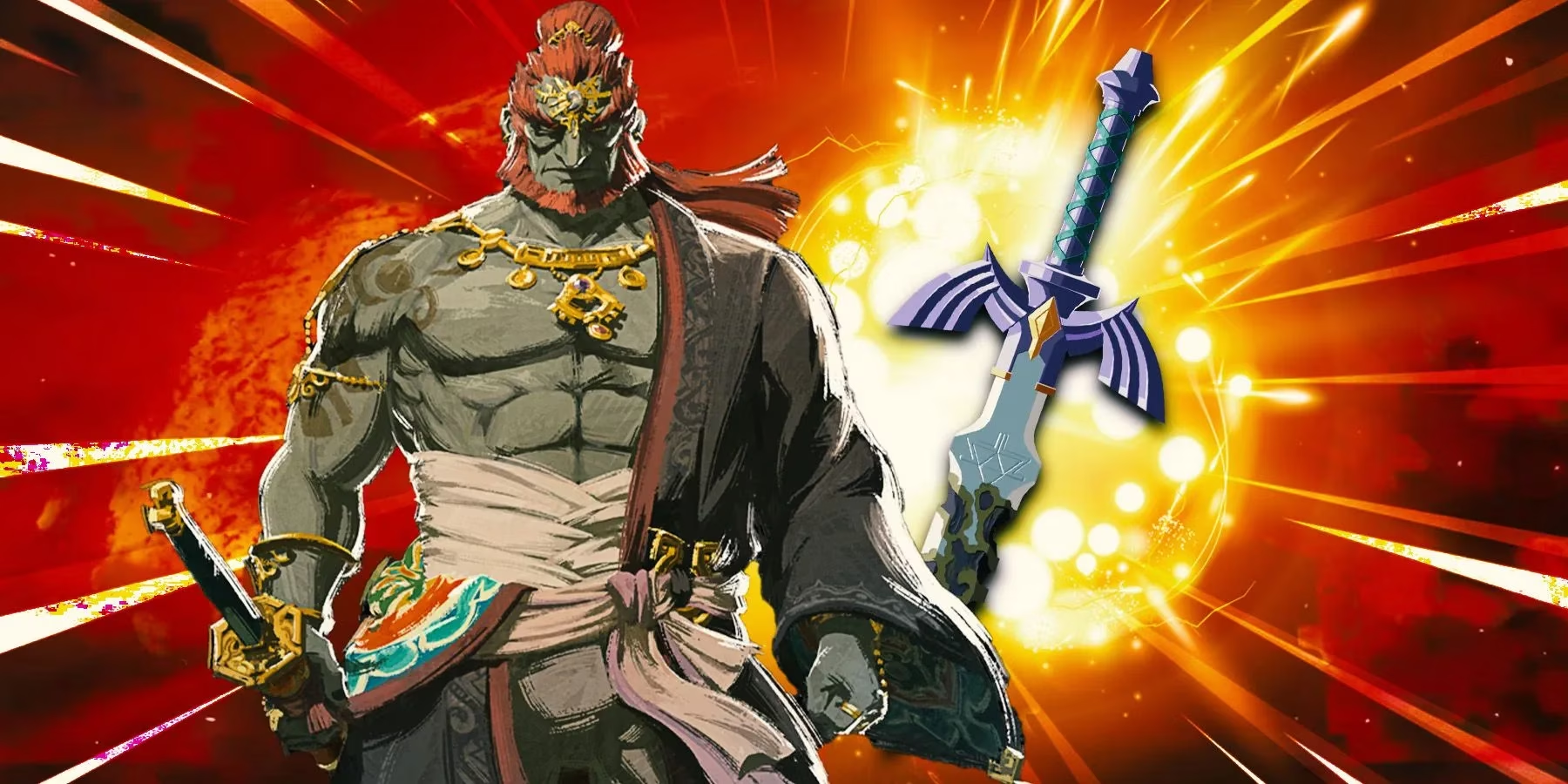
From the moment Link awakens, the evidence of Ganondorf's influence is tangible. Weapons found on the surface of Hyrule are almost universally degraded, brittle, and prone to shattering after a handful of strikes. This forces the hero to scavenge, improvise, and rely heavily on the game's new Fuse ability. Interestingly, this curse seems highly selective. Shields and armor, while not plentiful, are generally found in stable, usable condition. Why would a powerful sorcerer's magic target blades so specifically while leaving defensive gear relatively untouched? The answer lies buried in Hyrule's ancient past, in a prophecy delivered by the first king, Rauru.
Long before the events of the game, as Ganondorf's power surged and he was confronted by King Rauru, the Zonai ruler delivered a fateful warning. He foretold that Ganondorf would ultimately be defeated by a swordsman. This prophecy wasn't just dramatic flair; it became the cornerstone of Ganondorf's long-term strategy. Knowing his doom would come at the edge of a blade, the Gerudo king focused his corrupting magic on the very instruments of his prophesied defeat. He likely reasoned that armor and shields were irrelevant—they could protect a hero, but they couldn't deliver the killing blow. By systematically degrading every sword, spear, and axe in the land, he was strategically eliminating the primary threat to his reign. It was a preemptive strike against fate itself.
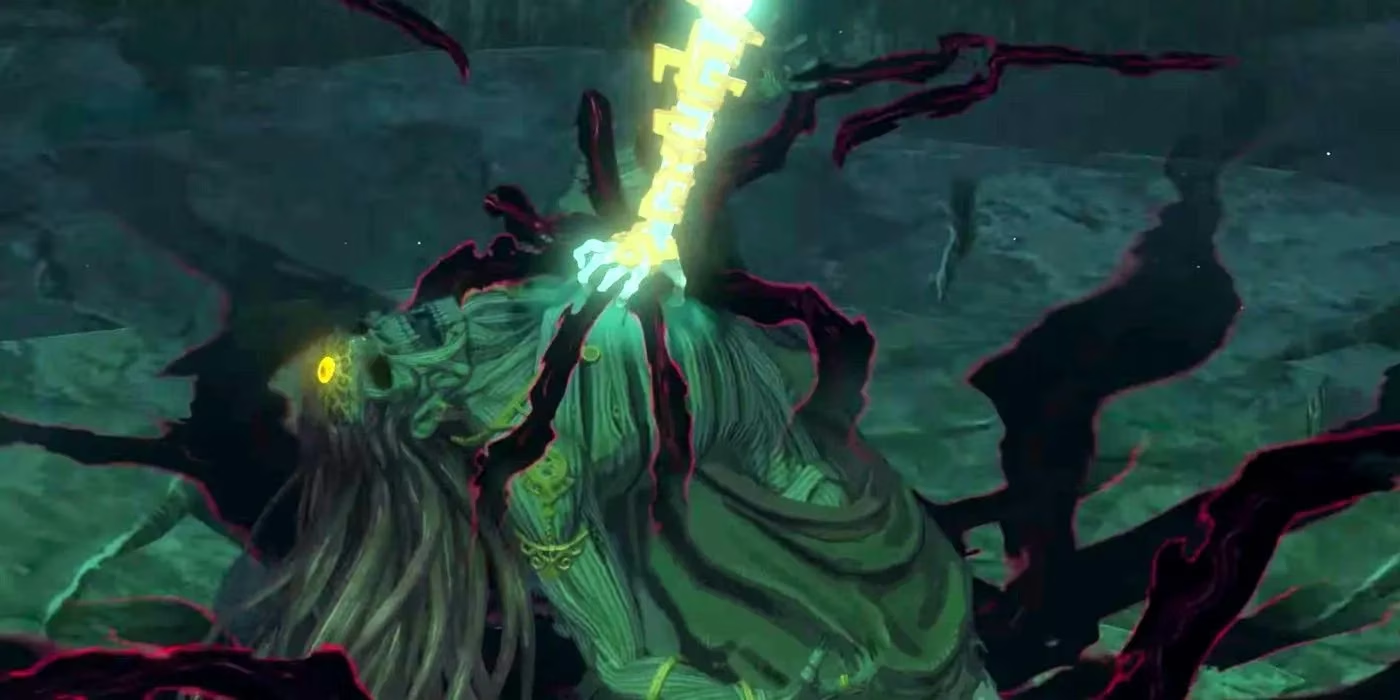
This narrative detail is masterfully validated by the game's climax. Tears of the Kingdom ultimately proves Ganondorf's fears were justified and his strategic focus was correct. In the final, epic confrontation, players face Ganondorf in his monstrous Demon Dragon form. The game makes an unequivocal statement: only the Master Sword can end this. Attempting the battle without the legendary blade is futile. Even if a player miraculously reaches this point without ever finding the Sword that Seals the Darkness, the game ensures they have it for the final strike. Zelda, in her eternal form as the Light Dragon, will descend and bestow the weapon upon Link. There is no alternative path, no clever workaround. Ganondorf's millennia-old plan to neutralize all bladed weapons was a direct response to the one weapon he could never truly destroy.
-
The Prophecy's Target: A swordsman.
-
Ganondorf's Counter: Corrupt all swords.
-
The Inevitable Outcome: Only the Master Sword remains effective.
This creates a fascinating loop of cause and effect within the lore. The prophecy prompted the action, and the action (the scarcity of good weapons) subconsciously guides the player toward the prophesied solution. It's a clever piece of environmental storytelling that blends narrative and mechanics seamlessly. While Ganondorf couldn't target the Master Sword directly—as it was either lost or protected by Zelda's light—his blanket degradation of weaponry served as the next best tactic. It forced any potential hero onto a desperate search for the one tool that could bypass his curse.
The tradition of Ganondorf's downfall being tied to the Master Sword is a long-standing pillar of Zelda lore, particularly when he appears in his classic Gerudo form. Games like Ocarina of Time, The Wind Waker, and Twilight Princess all culminate with the villain being struck down by the legendary blade. Tears of the Kingdom not only continues this tradition but ingeniously provides an in-universe reason for it. Ganondorf, aware of this pattern across history and his own timeline, took active steps to break the cycle. His plan was, in a twisted way, a mark of respect for the sword's legacy and a testament to his own cunning. He wasn't just a brute-force monster; he was a strategist who understood the rules of his world and sought to bend them to his will.
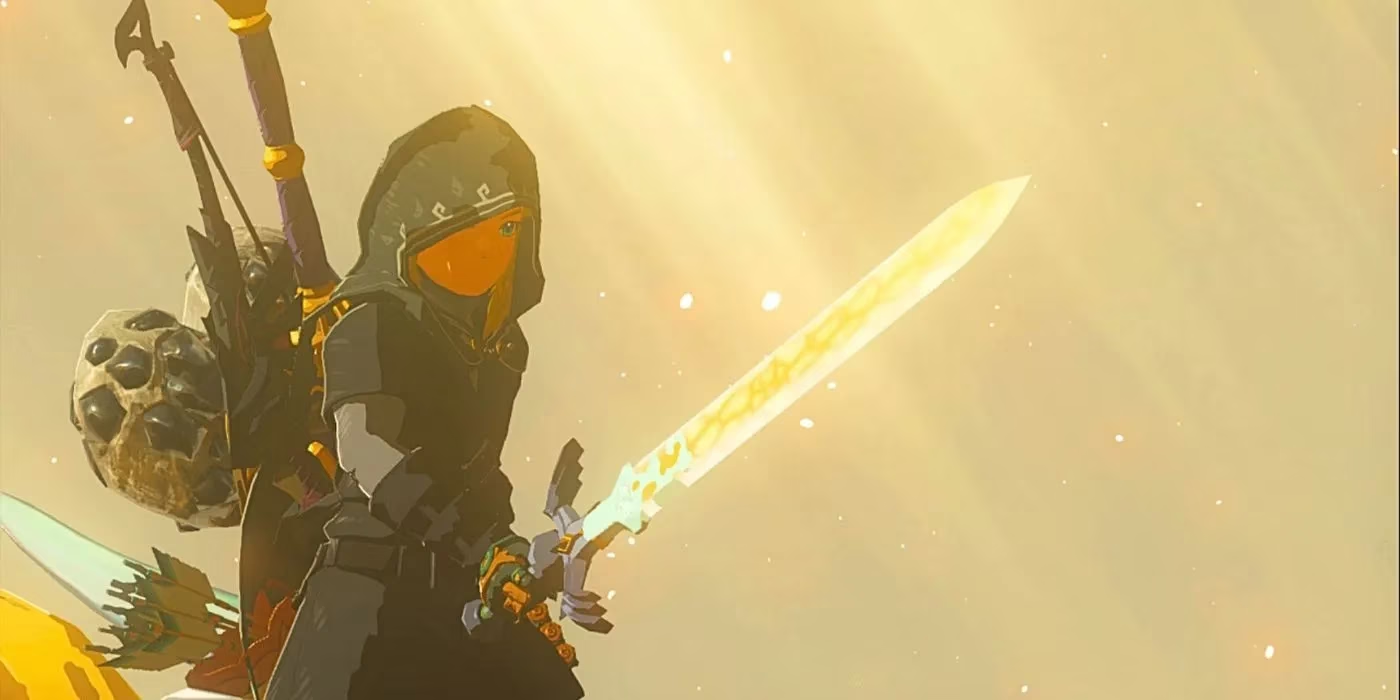
Of course, this selective decay also served a vital gameplay purpose. By limiting the player's access to powerful conventional weapons, the designers of Tears of the Kingdom encouraged creativity. The Fuse system became not just a fun novelty, but a necessary survival tool. Players learned to combine a decayed sword with a powerful monster part, creating a unique, temporary weapon that could bypass the general fragility of Hyrule's arsenal. This mechanic, born from Ganondorf's in-story plot, fundamentally shaped the player's experience, making exploration and experimentation core to progression. The ghosts of fallen Hyrule soldiers found in the Depths, guarding pristine weapons, further highlight the dichotomy—these arms were protected from Ganondorf's surface-level curse, offering rare pockets of resistance.
In the end, Ganondorf's plan in Tears of the Kingdom stands as one of his most nuanced and intelligent schemes. It was a plan that acknowledged his own mythological vulnerability and attempted to surgically remove it from the board. While he ultimately failed, as prophecy dictated he must, the lasting impact of his actions defined the entire journey. The broken weapons scattered across Hyrule are more than just objects; they are monuments to a villain who thought several steps ahead, making the victory of Link and the Master Sword feel all the more earned and significant. The game reminds us that even in a world of magic and gods, attention to detail—whether by a game designer or a demon king—can be the most powerful force of all.