As a long-time Zelda fan who's journeyed through countless dungeons and across sprawling versions of Hyrule, I can't help but feel a shift in the wind. For years, my adventures as Link were profoundly solitary—just me, my sword, and the vast, silent landscapes. The release of The Legend of Zelda: Echoes of Wisdom on the Nintendo Switch felt like the closing of a major chapter, but more importantly, it cemented a trend that Tears of the Kingdom started. Suddenly, Hyrule doesn't feel so empty anymore. I'm no longer just a lone hero; I'm building a team, strategizing with companions, and watching a new tradition being forged right before my eyes.
What's truly fascinating is how these two games, seemingly so different in perspective—one starring Link, the other Zelda—have converged on the same core idea: you shouldn't have to save the world alone. In Tears of the Kingdom, after conquering the elemental dungeons, I wasn't just handed a cool new item. I gained a Sage's Vow. Suddenly, Tulin was soaring beside me, gusting away projectiles, or Yunobo was rolling ahead to smash through rocky barriers. They weren't just cutscene characters; they were active, AI-driven partners in my open-world chaos. It was like having a squad of elemental Swiss Army knives following me around, each tool activated with a tap.
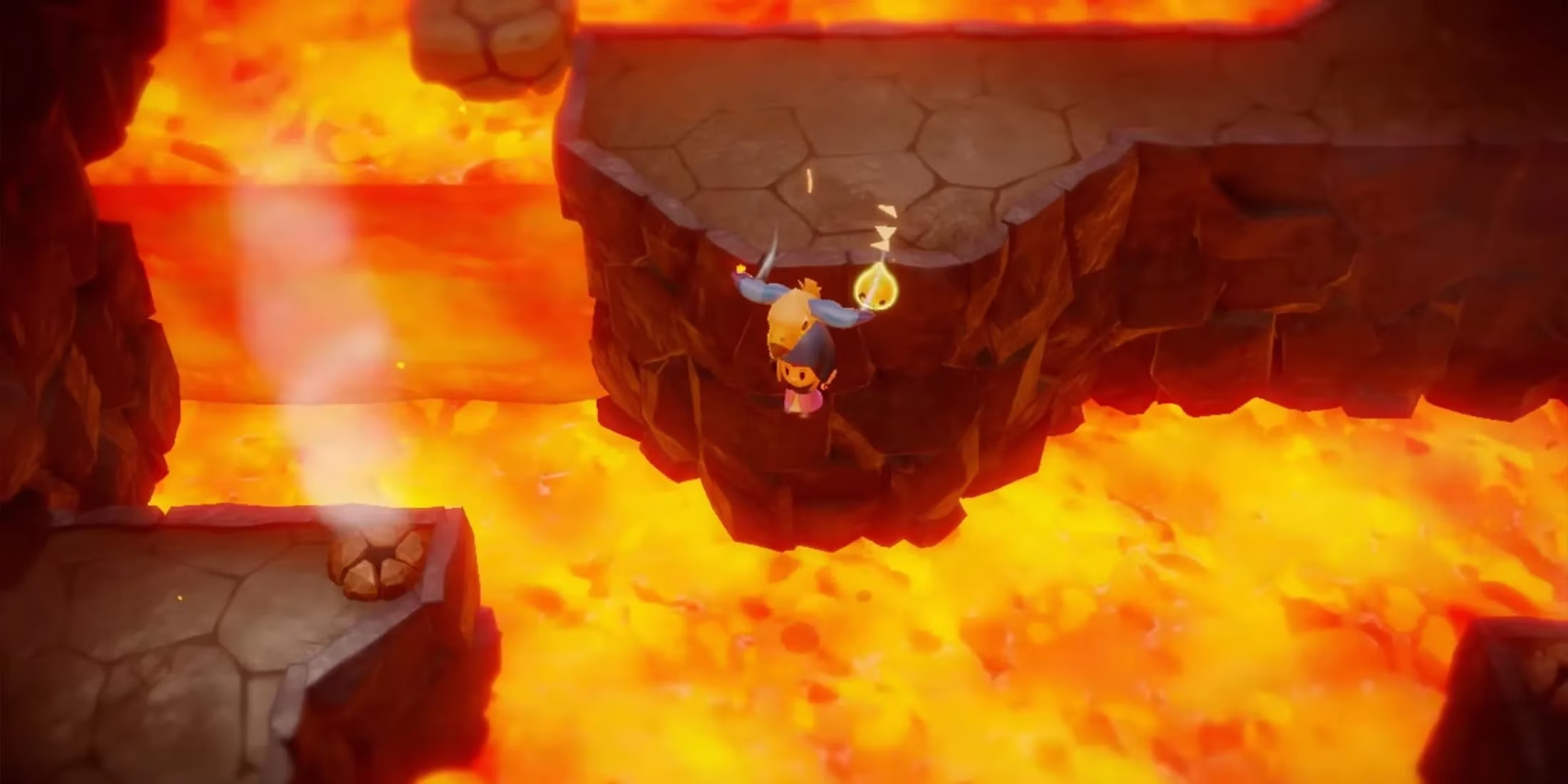
Then came Echoes of Wisdom, and the concept evolved in a brilliantly different direction. As Zelda, my power wasn't in a Master Sword, but in the Tri Rod and the ability to create Echoes. I found myself surveying a battlefield not for a weak point to strike, but for the perfect monster to copy. Need to cross a gap? Echo a flying Octorok. A swarm of Keese annoying you? Summon an Echo of a Moblin to act as your personal, grunting bodyguard. The system felt less like recruiting allies and more like conducting an orchestra of chaos, where every enemy's strength could be turned into a note in my symphony of survival. Managing these Echoes became a strategic layer deeper than simple companion AI; it was resource management and tactical planning.
This shared focus on unplayable allies is a seismic shift for the series. Before this, the most famous companion was arguably BowWow in Link's Awakening—a chain-chomping pet on a leash—or the fleeting partners in the Hyrule Warriors spin-offs. Now, in the flagship titles, companionship is a core mechanic. Tears of the Kingdom even took it a step further with the Regional Phenomena quests, where I'd sometimes have small troops of Hyrulean soldiers or researchers following me into caves or across bridges. It made the world feel alive, reactive, and like my actions had tangible, supporting consequences.
So, what does this mean for the future of Zelda? I believe Nintendo is playtesting the next major pillar of the franchise. The classic formula of Dungeon -> Item -> Boss has been wonderfully disrupted. The new loop seems to be Adventure -> Ally -> New Systemic Possibility. The Sages and Echoes aren't just power-ups; they're persistent entities that change how you interact with the world's physics, combat, and puzzles. They're like having a pocketful of living, breathing cheat codes that you've earned through story progression.
Looking ahead to the next mainline game (which, let's be honest, is probably already in development for the Switch's successor), I expect this system to be refined and expanded. Here's what I, as a player, would love to see:
-
Deeper Customization: What if I could equip my Sage allies with different gear? Giving Tulin a stronger bow or Yunobo a fiery helmet could add RPG-lite elements without complicating the core gameplay.
-
More Integrated Puzzles: Instead of just using a companion's ability to hit a switch, imagine puzzles that require coordinating two or more allies simultaneously, like a real-time strategy puzzle within the Zelda world.
-
The Choice of Solitude: Crucially, the option to dismiss your allies and tackle challenges alone should always remain. Sometimes you just want that classic, lonely hero feel. The system should empower, not force.
The potential here is as vast as the Depths beneath Hyrule. This mechanic could evolve into a full Pal System, where you befriend, train, and customize a primary companion creature. Or it could lean into the Party System, where you build a small, persistent team from a roster of characters met throughout the journey, each with unique field and combat skills.
In Tears of the Kingdom, my allies were a safety net, a comforting presence in a hostile world. In Echoes of Wisdom, they were my arsenal, a manifestation of my cleverness. Together, they represent a future where a Zelda game feels less like a solo pilgrimage and more like leading a fellowship. If Nintendo continues on this path, the lonely hero archetype might become a nostalgic memory. We're entering an era where saving Hyrule is a team effort, and honestly? I'm here for it. The silence of Hyrule Field is being replaced by the satisfying hum of a well-oiled team, and that's a change that echoes with pure, ingenious wisdom.