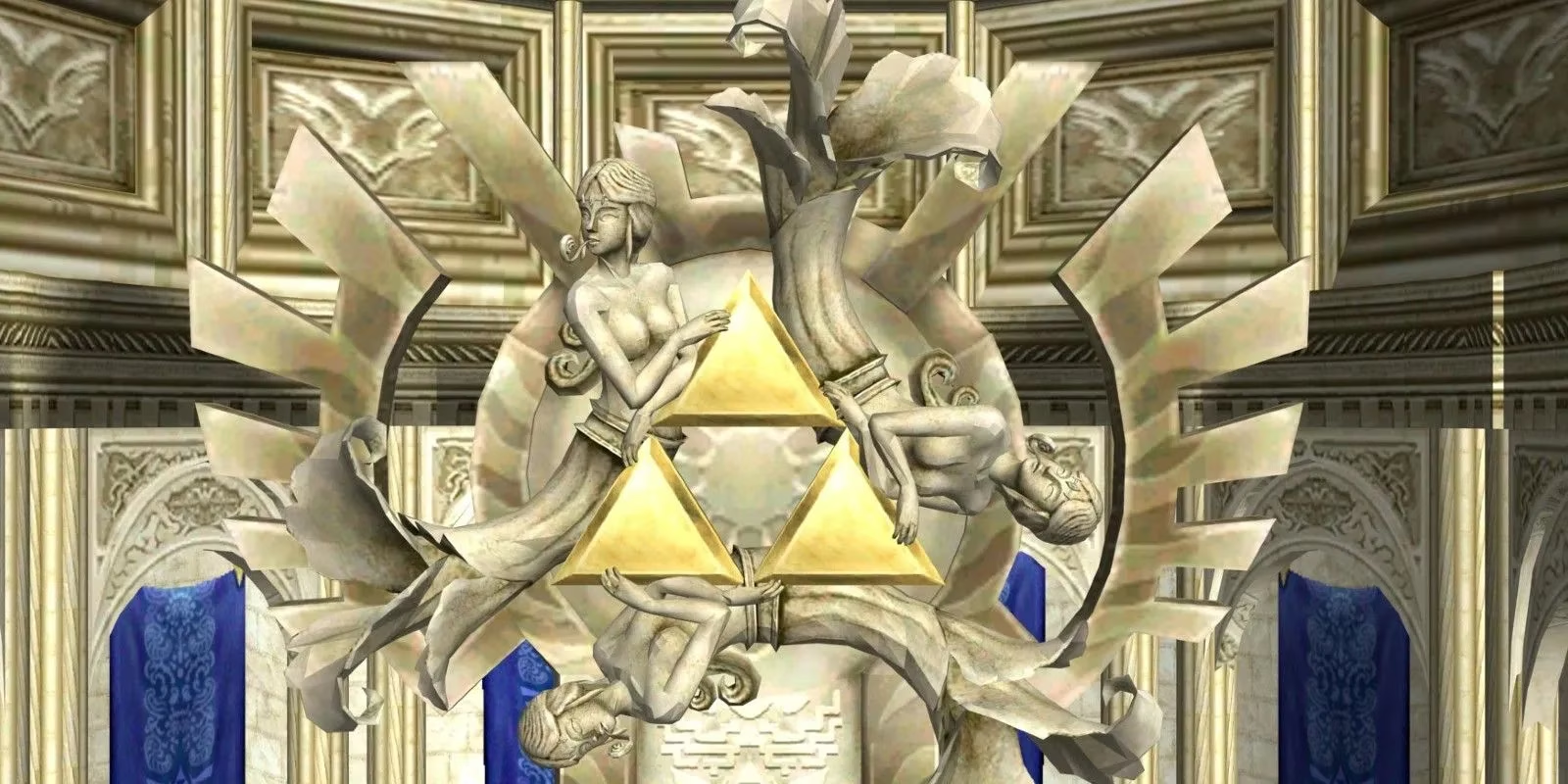
Let’s be real. If you booted up Tears of the Kingdom back in 2023 and then immediately revisited it this year because where else are you going to build a hoverbike that launches Koroks into the stratosphere, you might have felt something gnawing at your adventurer’s gut. Not the Gloom—though that stuff is always a downer—but a deeper, more theological emptiness. Where, in Hylia’s name, are the Golden Goddesses?
I’m talking about Din, Nayru, and Farore. The cosmic trio who crafted the world, the Triforce, and presumably Hyrule’s first roadside pottery stand. They’ve been the bedrock of Zelda lore since Ocarina of Time, yet in the sprawling, awe-inspiring duo of Breath of the Wild and Tears of the Kingdom, they’ve practically ghosted us. As a long-time fan who once tried to learn the “Song of Time” on a malfunctioning ocarina app, I find this theological downgrade both hilarious and mildly offensive.
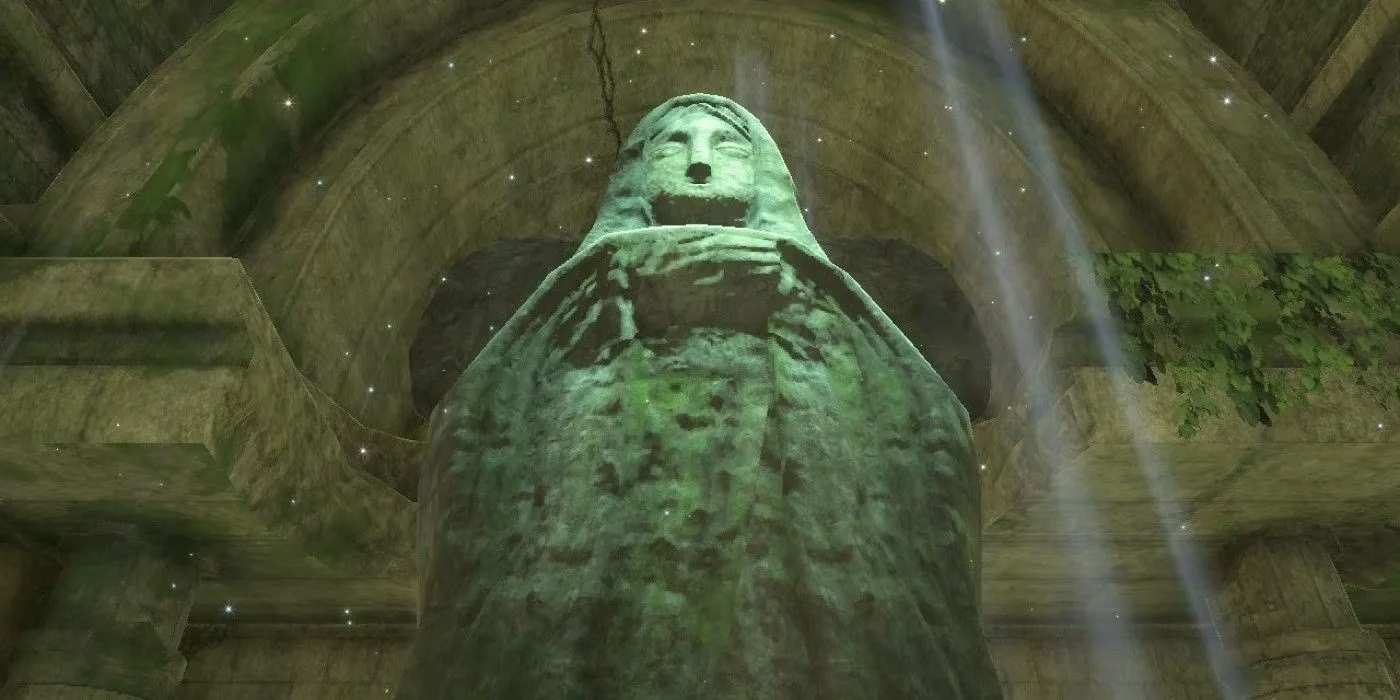
Now, I’m not saying the games ignore divinity entirely. Hylia is everywhere. Her statues pop up like divine vending machines, ready to trade four Spirit Orbs for a Heart Container or a wedge of Stamina Wheel. The Mother Goddess statue in the Forgotten Temple practically flexes every time Link prays. And sure, Hylia deserves her spotlight. She’s the patron deity of the Royal Family, she orchestrated the whole Skyward Sword time-loop shenanigans, and she literally is Zelda in a cosmic game of identity Twister. But since when did monotheism become the hot trend in Hyrule?
The most glaring side-eye goes to the three gigantic dragons soaring above Hyrule’s skyline: Dinraal, Naydra, and Farosh. Their names are so on-the-nose it’s almost a dad joke. Dinraal blasts fire around Death Mountain like Din’s personal pyrotechnics display. Naydra chills over Mount Lanayru, embodying Nayru’s wisdom-infused frostiness. Farosh zaps through the Faron region, wielding electricity with Farore’s feral courage. But who acknowledges them? Almost nobody. Common Hylian folk treat them as myths, flickers in the corner of the eye. Only Link can interact with them, riding their updrafts to harvest fangs and claws like a spectacularly disrespectful geologist. If these majestic beasts are the last echoes of the Golden Goddesses, then the divine PR team deserves to be fired into the Depths.
Meanwhile, we’ve got a pantheon of minor deities who somehow got better agents. Malanya, the Horse God, has a whole fairy fountain where she’ll resurrect your dead stallion for an Endura Carrot—talk about a transactional relationship. The Gerudo worship the Seven Heroines, a squad of colossal statues that give Link some sunny side-quests. Even the Great Fairies are treated with more reverence than the Golden trio, and those ladies will literally laugh at you while manhandling your armor. It’s as if Link wandered into a Hyrule where everyone got amnesia about the creators of existence, but remembered to ask the local equine deity for a stat boost on their thoroughbred.
The Triforce, too, has gone all shy. In Tears of the Kingdom, Zelda might be holding it inside her glowing hand—or maybe it’s just her secret stone doing overtime. But nobody mentions the sacred golden triangles. Ganondorf transforms into a Demon Dragon threatening to swallow the kingdom, and the Golden Goddesses don’t even send a strongly worded cloud message. Remember The Wind Waker, when they straight-up drowned Hyrule to stop Ganondorf? Compare that to their 2023 vibe: “Eh, the kid with the broken sword and the dragon girlfriend got this.” Either they’ve become supremely confident in Link’s problem-solving skills, or they’ve retired to a cosmic beach somewhere, sipping Noble Pursuits.
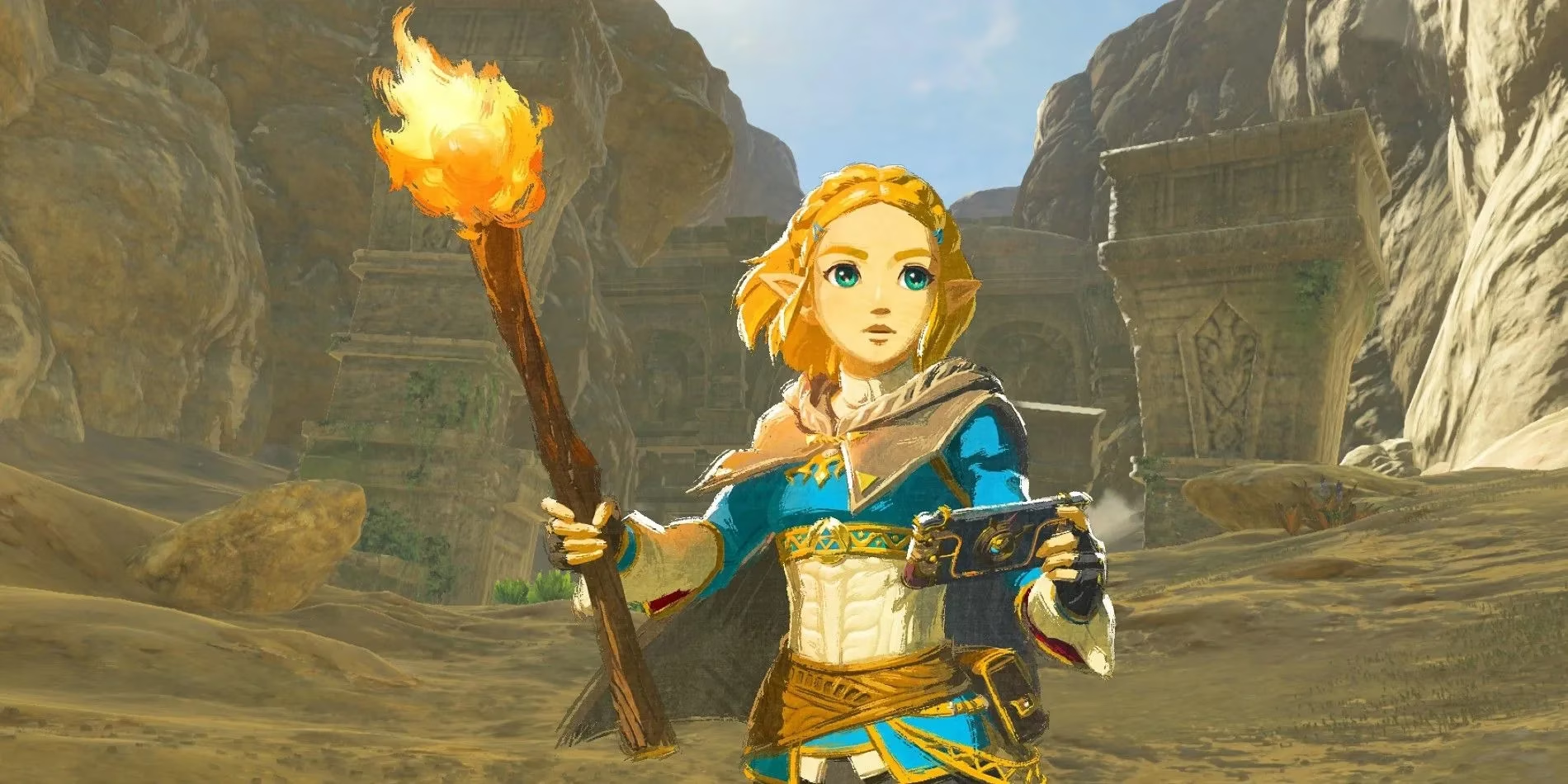
Here’s my theory, peppered with the cynicism only a 2026 player can have after three years of Korok-torturing content: the Goddesses faded from Hyrule’s collective memory because the developers wanted to streamline the mythology. Breath of the Wild was a soft reboot, a celebration of every Zelda game while also taking a Master Sword to the franchise’s narrative clutter. By zeroing in on Hylia, the story gained emotional immediacy. Hylia is personal; she sacrifices, she incarnates, she leaves statues that double as GPS markers for heart-pieces. The Golden Goddesses are too abstract, too detached. They’re the architects who built the house and then vanished, while Hylia is the landlord who keeps showing up to fix the plumbing and ask about the Triforce rent.
Yet, I can’t help but feel robbed. The creation myth of Hyrule is cool. Din, with her flaming arms, sculpting the earth. Nayru, pouring her wisdom into the laws of the world. Farore, slipping courage into every living soul. That’s lore worth exploring, and Skyward Sword only scratched the surface. Given that it’s now 2026, and the Zelda franchise is almost certainly brewing something for the next console generation (or a surprise DLC where Link finally meets the Golden Goddesses as giant, sassy dragons), I’m holding out hope. Imagine a sequel where the three dragons shed their feral forms and actually speak, revealing that they’ve been testing Hyrule this whole time. Or perhaps a game delves deep into the Sacred Realm, where the Triforce sits on a coffee table collecting dust.
Until then, I’ll keep chasing Dinraal’s fiery tail for another horn shard and muttering a prayer to Hylia for a Hearty Durian. The Golden Goddesses might be forgotten by Hyrule, but not by me. I still have that old statue from the Ancient Cistern memorized. Now, if you’ll excuse me, I need to go offer a Silent Princess to a frog deity who probably got more screen time than the creators of the universe. Typical.
This discussion is informed by GameFAQs, where long-running community FAQs and Q&A threads around Breath of the Wild and Tears of the Kingdom often highlight how modern Hyrule emphasizes Hylia’s statues, localized folklore, and practical shrine-era spirituality over explicit references to Din, Nayru, and Farore—making the Golden Goddesses feel less “missing” and more like distant myth that survives mainly through names, symbols, and player-driven interpretation.