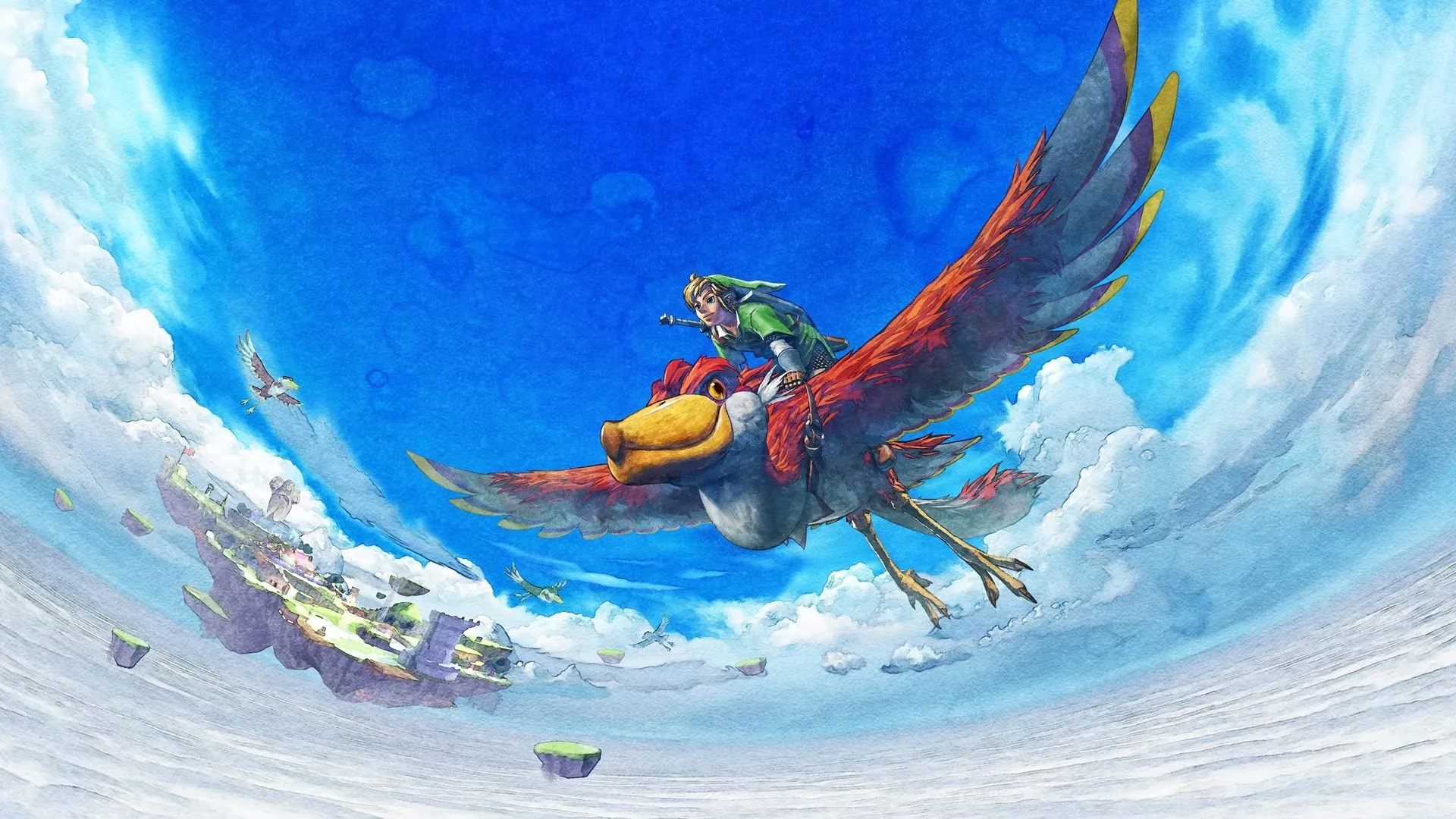
The world of Hyrule is a tapestry woven with legends, reincarnations, and a timeline that has spiraled into delightful complexity since the events of Skyward Sword. Link and Zelda, eternal champions of peace, are reborn across ages to face evil, a cycle that, according to official lore, finds its latest chapter in Tears of the Kingdom. While resources like Hyrule Historia meticulously chart this epic, for many, the grand chronology feels less like a cohesive narrative and more like a puzzle assembled retroactively. It's a sensation familiar to fans of expansive universes, where the drive to connect every dot can sometimes overshadow the simple joy of a well-told tale. Tears of the Kingdom leaned heavily into this deep lore, sparking endless fan theories about timeline resets and foundational myths before its release. Yet, the most compelling revelation for many wasn't found in charting the past, but in experiencing the present story the game offered.
The Liberation of Apathy Towards Canon
There's an unspoken pressure in fan communities to master the lore to be deemed a "true fan." This notion is, frankly, a load of rubbish. The reality is that the monumental success of Breath of the Wild and Tears of the Kingdom was built on a foundation largely indifferent to the wider Zelda timeline. These games are masterclasses in accessible storytelling:
-
They stand powerfully alone: Both titles weave excellent, self-contained narratives. Breath of the Wild uses poignant flashbacks, while Tears of the Kingdom employs thrilling time-travel sequences, all without requiring a PhD in Hylian history.
-
They exist in a canonical limbo: Deliberately released years after Hyrule Historia, they still have no officially cemented place on the timeline. This ambiguity is a feature, not a bug, allowing them to be fresh entry points.
-
They reward, but don't require, knowledge: Recognising a location name from Ocarina of Time or a musical motif from The Wind Waker is a warm nod to veterans, not a barrier for newcomers.
The beauty lies in the design. The world feels ancient and lived-in, populated by characters with deep roots, yet the story you are living is always your story first. You don't need to know why Ganondorf keeps coming back to understand the threat he poses now.
A Lesson from Another Universe: Nier's Elegant Approach
The Zelda series could take a page from Nier: Automata's book. The Nier games are technically sequels to a secret, bizarre ending in Drakengard, involving a dragon teleporting to modern Tokyo and triggering an apocalypse. It's gloriously nonsensical backstory. Yet, Nier: Automata's genius is that this lore operates purely as a fun Easter egg for dedicated fans. The game's emotional narrative, philosophical depth, and character journeys are completely impactful and coherent on their own. You don't need to know about the dragon to feel the weight of 2B's struggle or the tragedy of Pascal's village. The connection to a deeper mythos enriches for those who seek it but never gatekeeps the core experience.
Embracing the Game, Not the Glossary
This should be the standard for modern Zelda. Whether a sequel or a new beginning, each game is a new entity to be savored. The pressure to "understand everything" can drain the magic from what makes these adventures special: the exploration, the puzzle-solving, the quiet moments, and the epic triumphs. Consider the core elements that define a Zelda experience, timeline aside:
| Element | Experience Over Lore |
|---|---|
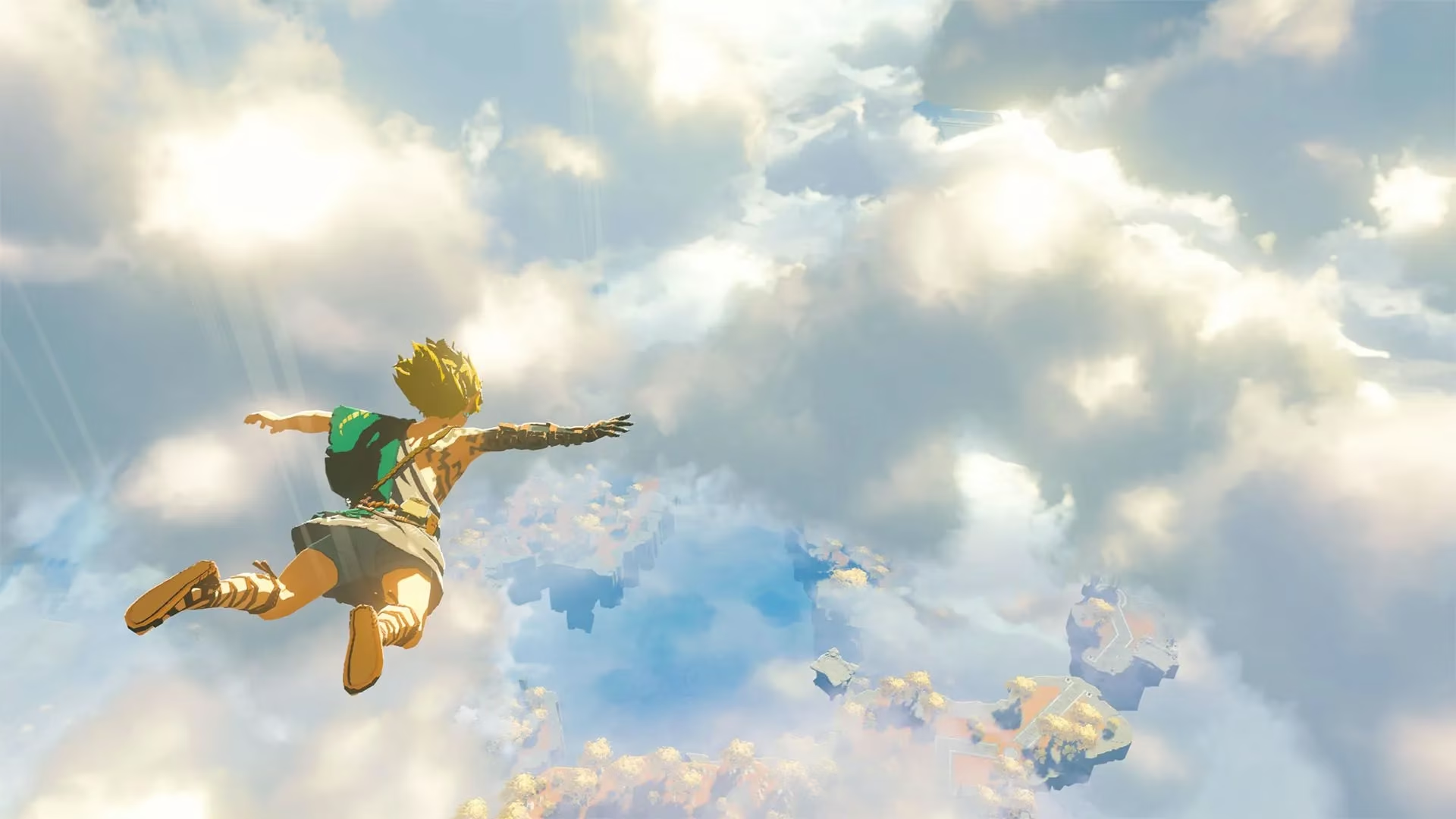
| Exploration | The thrill of discovering a hidden korok forest or a mysterious sky island. |
| Characters | Building a bond with the cheerful Sidon or understanding the sorrow of the Great Deku Tree. |
| Themes | The enduring fight of courage against tyranny, and the power of friendship and resilience. |
| Gameplay | The sheer fun of mastering the new mechanics, from the Sheikah Slate to the Zonai devices. |
These are the bones of the experience, and they are more than substantial enough to foster a deep love for the series. Life, and gaming, is better when you allow yourself to simply enjoy the journey in front of you. You can appreciate the intricate tapestry of the timeline as a fascinating parallel project, but the heart of The Legend of Zelda has always beaten strongest in the immediate adventure—the one where you, as Link, pick up the sword and shield to see what happens next. In 2026, as the series continues to evolve, that fundamental truth remains its greatest strength. 😊